
Charleston Historic District vs Mount Pleasant
 Abdul WadoodLast updated

What if the biggest decision about moving to the South Carolina Lowcountry came down not to price or schools, but to who gets a say over what color you paint your front door? That question drives the Charleston historic district vs Mount Pleasant comparison. The two places sit less than ten minutes apart across the Cooper River, yet they operate under completely different rules about old buildings, renovation, and neighborhood change. One is a tightly regulated museum piece you can live inside. The other is a fast-growing town that mostly protects its past one building at a time. Understanding that gap before you buy, rent, or renovate will save you real money and real frustration.
Two Municipalities, Two Very Different Rulebooks
Charleston’s Old and Historic District is regulated by the city’s Board of Architectural Review (BAR), created by ordinance in 1931. That makes it one of the earliest local preservation ordinances in the United States. The BAR reviews exterior changes visible from public streets inside the district, and its reach is broad: windows, roofs, fences, additions, signage, even some paint and material choices.
Mount Pleasant, incorporated in 1891, has no comparable large-scale local historic district covering its whole core. Its historic resources are handled mainly through individual designations and state or federal review rather than a Charleston-style board watching over an entire neighborhood. If you want to confirm the current inventory of local districts and overlay zones, the town’s planning department is the only reliable source, since designations change and published summaries lag behind.
This is the single most important practical difference between the two places. In Charleston, the district is a legal regime that follows the property. In Mount Pleasant, protection is usually site-specific.
How Preservation Law Shapes Daily Life
Charleston’s district was listed on the National Register of Historic Places in 1960 and designated a National Historic Landmark district the same year, with boundary expansions since. Mount Pleasant’s listings are smaller and tied to specific sites, such as the Charles Pinckney National Historic Site, authorized in 1988, and the Patriots Point area. (Best historic palace hotels where royal residences became) (National Park Service: Heritage Areas Overview)
Both municipalities sit under the federal National Historic Preservation Act of 1966, which triggers Section 106 review when federally funded or permitted projects affect historic resources. South Carolina adds a state preservation statute on top. Charleston simply adds one more layer that Mount Pleasant mostly does not.
| Factor | Charleston Historic District | Mount Pleasant |
|---|---|---|
| Local design review | Board of Architectural Review, since 1931 | Limited to specific overlay areas |
| National Register status | Large district, listed 1960 | Site-specific listings |
| Typical renovation timeline | Longer, with public hearings | Faster, fewer hearings |
| Neighborhood character protection | Strong | Uneven |
| Predictability of exterior changes | High | Lower |
| Housing era | Mostly 18th and 19th century | Mostly post-1970, with an older core |
What It Actually Costs to Renovate
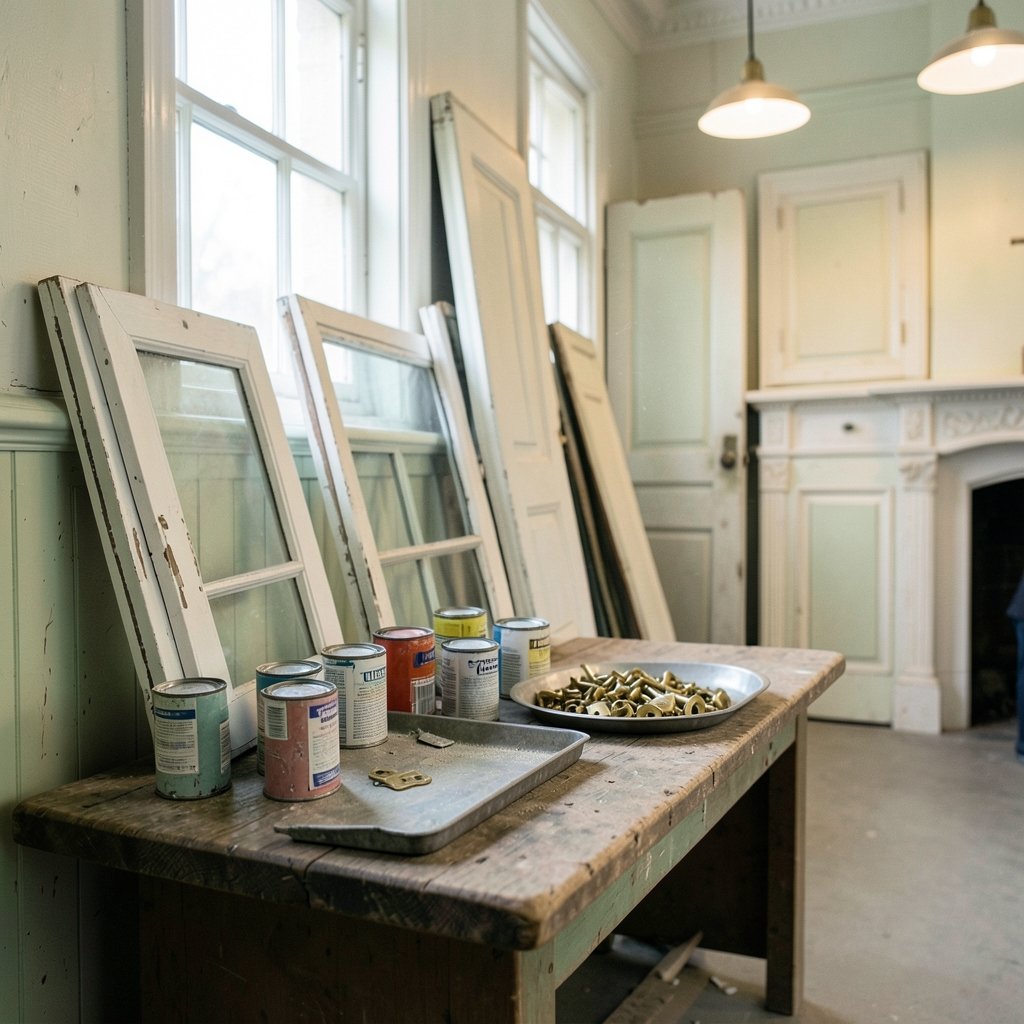
Here is where first-hand experience from owners, contractors, and agents tends to converge. In Charleston’s district, a straightforward exterior project becomes a sequence: design, submission, staff review or full BAR hearing, possible revisions, approval, permitting, then construction. Each step adds weeks. Owners routinely budget extra time and money for consultants who know what the board expects.
The most common mistakes people make are predictable. They buy a house assuming interior work is unrestricted, then discover that structural changes affect exterior elements. They order custom windows before approval and end up with a rejected submittal. They skip a pre-application conversation with preservation staff, which is free and usually the fastest way to learn what will pass.
In Mount Pleasant, the same project usually moves faster because no board reviews it outside designated areas. That speed cuts both ways: your renovation is easier, and so is your neighbor’s. If what you love about a street is its consistency, the lighter touch offers less guarantee it stays.
For anyone drawn to older properties, a broader look at historic homes open to the public is a useful way to study how preservation actually plays out in practice before committing to a regulated district.
Housing Stock and Street Character
Charleston’s district is dominated by 18th and 19th century single houses, the narrow side-hall plan built to catch river breezes, alongside antebellum commercial buildings and walled gardens. The street grid follows the colonial city footprint, with the old walled-city line running along present-day Meeting Street and the famous Four Corners of Law anchoring the center.
Mount Pleasant’s older core, the Old Village, holds 19th and early 20th century vernacular and coastal cottages. Most of the town’s housing, however, was built after 1970. That means buyers see a lot of late-20th-century subdivisions, planned communities, and new construction alongside the small historic pocket.
Practically speaking, the choice is between character with constraints and convenience with variability. Charleston gives you architecture that cannot be replicated. Mount Pleasant gives you floor plans, garages, and square footage that fit modern life more easily.
Flooding, Insurance, and the Coastal Reality
Both areas sit in low-lying coastal zones regulated through FEMA floodplain rules and state coastal zone management. Charleston’s peninsula experiences documented recurrent tidal flooding on sunny days, which affects historic structures, ground floors, and insurance costs. Older masonry and raised foundations behave differently in repeated flooding than newer construction does, and remediation in a regulated district can require approvals that slow repairs after a storm.
Mount Pleasant’s exposure varies enormously by elevation and proximity to tidal creeks. Two houses a few streets apart can carry very different flood zones and premiums. Checking the official flood map for a specific address matters more than comparing towns.
The Grand Hotel Factor
Charleston’s historic district doubles as a hospitality economy. Its concentration of landmark buildings converted into inns is part of why the area feels alive at all hours, and it explains the tourism pressure residents grumble about. The story of how Europe’s grand hotels kept historic luxury alive offers an interesting parallel for anyone curious about how old buildings get reinvented rather than torn down.
Mount Pleasant plays a different role: residential suburb, commercial corridor, and gateway to Sullivan’s Island and the Ravenel Bridge. It sends visitors into Charleston rather than hosting them overnight in the same density.
Investment, Resale, and Regulation
Regulation is not automatically bad for value. In Charleston, the BAR’s scrutiny is a large part of why the district looks the way it does, and that consistency supports prices. Buyers pay for certainty about what the street will look like in ten years. The trade-off is that your pool of buyers narrows to people willing to accept the review process.
Mount Pleasant offers more housing variety and generally fewer hurdles, which widens the buyer pool. The risk is that a neighborhood’s character can shift faster when nothing formally protects it.
A few practical habits help in either place:
- Pull the property’s designation status before making an offer, not after.
- Ask whether the address sits inside a locally regulated district or only carries a National Register listing, since the two mean very different things for permits.
- Get a pre-application meeting with preservation staff if any exterior work is planned.
- Build the approval timeline into your renovation budget as well as the construction cost.
- Check the flood zone and insurance quote for the exact address.
Schools, Commutes, and Everyday Logistics
Mount Pleasant generally appeals to households prioritizing newer housing stock, larger lots, and straightforward commutes, with the Ravenel Bridge connecting it to the peninsula. Charleston’s district appeals to people who want to walk to restaurants, galleries, and the waterfront, and who accept smaller footprints and parking challenges as part of the deal.
Neither choice is objectively better. The decision usually comes down to how much control you want over your own property versus how much predictability you want from your street.
Conclusion
The Charleston historic district and Mount Pleasant are not really competitors. They are two answers to the same question about how a community should treat its past. Charleston chose a strong, citywide, ordinance-based system in 1931 and has lived with the consequences ever since: extraordinary architecture, slower renovations, and a neighborhood that looks much as it did a century ago. Mount Pleasant chose a lighter, site-specific approach that leaves most decisions to individual owners and the market.
If you want to live inside a protected piece of history and can tolerate review boards, Charleston’s district delivers something almost nowhere else does. If you want space, flexibility, and a faster path to a finished renovation, Mount Pleasant is the practical pick. Visit both in person, talk to the planning offices, and read the fine print on the specific address before you fall for a porch.
Frequently Asked Questions
Is the Charleston historic district the same as a National Register listing?
No. A National Register listing is honorary and does not by itself restrict what a private owner does. Charleston’s Old and Historic District is a local designation enforced by the Board of Architectural Review, which does regulate exterior changes. That local layer is what carries real permitting consequences.
Does Mount Pleasant have a historic district?
Mount Pleasant does not have a Charleston-style local district covering its whole core. Its historic resources are addressed mainly through individual designations and state or federal review. Because designations change, buyers should confirm the current status of a specific property directly with the town’s planning department.
Do I need approval to renovate a house in Charleston’s historic district?
Usually yes, for any exterior change visible from a public street. That includes windows, roofs, fences, additions, and some materials. Interior work is generally less restricted, but structural changes that affect the exterior can still trigger review. A pre-application meeting with preservation staff is the fastest way to learn what applies.
How long does approval take in Charleston versus Mount Pleasant?
Charleston projects typically take longer because they pass through staff review or a full board hearing, with possible revisions and resubmittals. Mount Pleasant projects outside designated overlay areas usually move through standard permitting with far fewer steps. Owners should budget the approval timeline separately from construction time.
Is flooding worse in Charleston or Mount Pleasant?
It depends on the exact address, not the town. Charleston’s peninsula has well-documented recurrent tidal flooding that affects historic structures and insurance. Mount Pleasant’s exposure varies widely by elevation and proximity to tidal creeks. Always check the official flood map and get an insurance quote for the specific property.
Which area is better for resale value?
Both hold value, for different reasons. Charleston’s district benefits from strict regulation that keeps neighborhood character stable, which supports prices but narrows the buyer pool to people comfortable with review. Mount Pleasant offers more housing variety and fewer hurdles, widening the buyer pool but offering less protection against neighborhood change.
The practical takeaway is to treat regulation as a feature to price in, not an obstacle to work around. Buyers who understand the BAR process before they close tend to renovate calmly; those who learn it afterward tend to spend their first year frustrated. Talk to owners who have finished a project, ask contractors which boards they know well, and walk the block at different times of day. In Mount Pleasant, do the opposite homework: confirm what, if anything, protects the specific street, and ask how much vacant land or redevelopment potential sits nearby. Either way, the earlier you gather facts, the better the decision.