
Certified Pre-Owned Cars: Is the Badge Worth It in 2026?
 Abdul WadoodLast updated

A certified pre-owned car can cost thousands more than an identical used car sitting two rows over on the same lot. Same model year. Same mileage. Same color. The only visible difference is a window sticker with a checkmark and a warranty booklet. That premium is one of the most debated topics in car buying, and for good reason: sometimes it is the smartest money a shopper spends, and sometimes it is a markup for a badge and a fresh detail job.
Here is the practical breakdown of what CPO programs actually include, where the value holds up, and where buyers routinely overpay.
What “Certified Pre-Owned” Actually Means
Certified pre-owned describes a used vehicle sold through a manufacturer-backed program rather than a dealer’s own informal promise. The automaker sets the rules: which cars qualify by age and mileage, how many inspection points they must pass, what warranty comes with them, and what happens if something major fails.
That last point matters most. A CPO warranty is a contractual obligation backed by the manufacturer, not a handshake from a salesperson. If the transmission lets go eight months after purchase, the claim goes to the brand, not to a small lot that may have changed owners.
The term gets stretched, though. Some dealers advertise “certified” cars that went through an in-house inspection with no manufacturer involvement at all. That is not the same product, and the paperwork usually reveals the difference within thirty seconds of reading it. Ask directly: is this certified by the manufacturer, or certified by this dealership? (Certified pre-owned)
How a Car Earns the Badge
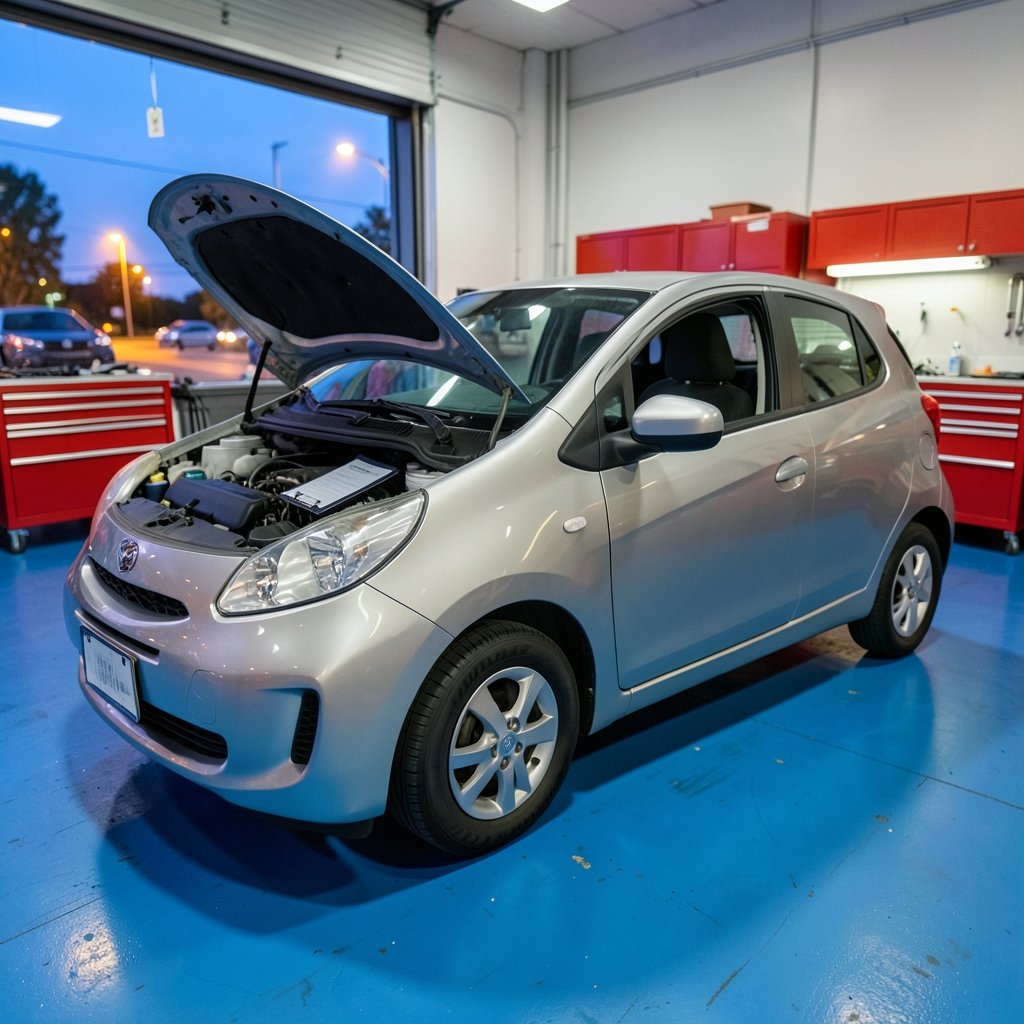
Manufacturer programs vary widely, but the general pipeline looks similar across brands:
- Age and mileage screening. Most programs cap eligibility somewhere around five to six years old and under roughly 60,000 to 80,000 miles, though the exact numbers differ by brand and change over time.
- Vehicle history review. A title check for salvage, flood, or frame damage typically disqualifies a car outright.
- Multi-point inspection. The famous “172-point” or “200-point” inspection. These figures are marketing claims set by each program, not an independent industry standard, so the number itself tells you less than the warranty behind it.
- Reconditioning. Worn brakes, tires, and fluids get replaced to meet program standards.
- Recall check. Reputable programs confirm open safety recalls have been addressed before the car is listed.
- Warranty attachment. The manufacturer adds a limited comprehensive warranty, often with a deductible, plus powertrain coverage.
That inspection number deserves skepticism. A 200-point list can include items like “check that floor mats are present.” What actually protects a buyer is the warranty terms, the deductible, and whether the coverage is transferable.
The Warranty Is the Product
Strip away the marketing and CPO boils down to one thing: extended, manufacturer-backed coverage on a used car. Everything else, from the inspection to the free trial subscription to satellite radio, is packaging.
Three details separate a genuinely valuable CPO warranty from a thin one:
| Feature | What to look for | Why it matters |
|---|---|---|
| Comprehensive term | Months or years of bumper-to-bumper coverage beyond the original warranty | Covers electronics, sensors, and infotainment, which are expensive to fix |
| Powertrain term | Often longer than the comprehensive portion | Engine and transmission repairs are the costliest failures |
| Deductible | Zero or a low per-visit charge | A $100 deductible per visit adds up fast on a car with multiple issues |
| Transferability | Coverage follows the car, not just the first buyer | Protects resale value if you sell early |
| Rental and roadside | Included loaner or reimbursement | Keeps a repair from becoming a logistics crisis |
A common structure pairs a shorter comprehensive term, often one year or 12,000 miles, with a longer powertrain term stretching to six or seven years. Read both numbers. A shopper who only hears “seven-year warranty” may be surprised when a failed infotainment unit at month eighteen is not covered.
Where the Premium Comes From
CPO cars typically sell for more than comparable non-certified used cars. The premium pays for several real things: the reconditioning work, the warranty, the administrative cost of certification, and the brand’s willingness to absorb future repair risk. (Cars)
Whether that premium is worth it depends on the gap. A few hundred dollars for a year of comprehensive coverage on a complex European sedan is close to a bargain. Several thousand dollars on a simple, reliable compact with a strong repair record is harder to justify, especially when an independent extended warranty could be purchased separately for less.
The premium also shrinks and grows with market conditions. When used inventory is tight, CPO pricing climbs with everything else. When supply loosens, dealers get more negotiable on the certified cars because they carry more margin to work with. Buyers who shop the last week of a month, or the final days of a quarter, tend to find more flexibility.
Who Benefits Most From CPO
CPO makes the most sense for a specific kind of buyer, and less sense for others.
Strong fit:
- Shoppers buying a complex vehicle with expensive electronics, such as a luxury sedan or a plug-in hybrid
- People who want one transaction, one warranty, and no third-party paperwork
- Buyers who plan to keep the car three to five years and want coverage through most of that window
- Anyone financing through the manufacturer’s lending arm, which often pairs rate incentives with CPO purchases
Weaker fit:
- Budget-focused buyers looking at simple, proven models where repair risk is already low
- Shoppers willing to pay a mechanic for a pre-purchase inspection and buy a separate warranty
- People who flip cars quickly and will not use the coverage
There is also a financing angle worth knowing. Manufacturer captive lenders frequently offer lower rates on certified inventory than on ordinary used cars, because the certification reduces the lender’s risk. Sometimes the rate difference alone offsets a chunk of the price premium. Run the numbers on total cost, not just sticker price.
The Inspection Report Is Not a Substitute for Your Own
Here is the most common mistake buyers make: treating the certification as a reason to skip due diligence. It is not.
A CPO inspection is performed by the selling dealer, on a car the selling dealer owns and wants to sell. That is not a conflict of interest in the sinister sense, but it is a conflict of interest. The inspection exists to qualify the car for a program, not to protect the buyer from every flaw.
What actually works in practice:
- Ask for the actual inspection checklist, completed and signed, not a brochure describing the program. Dealers can usually produce it.
- Hire an independent mechanic for a pre-purchase inspection, roughly $100 to $200 well spent. A second set of eyes on a lift catches things a checklist does not.
- Pull the vehicle history report yourself rather than relying on the printout handed across the desk.
- Check for open recalls using the free lookup tool from the National Highway Traffic Safety Administration at nhtsa.gov. Certification does not guarantee every recall was performed.
- Verify the warranty in writing before signing, including the deductible and what is excluded.
Exclusions are where CPO coverage gets thin. Wear items like brake pads, tires, and wiper blades are almost never covered. Cosmetic issues rarely are. Trim, glass, and sometimes the battery fall outside the terms. Reading the exclusions page takes ten minutes and prevents most post-sale disputes.
CPO vs. the Alternatives
Buyers weighing certification usually have three realistic paths. Each has a distinct risk profile.
| Path | Upfront cost | Risk carried by buyer | Best for |
|---|---|---|---|
| Certified pre-owned | Highest | Low to moderate | Complex cars, long ownership, warranty peace of mind |
| Ordinary used from a dealer | Middle | Moderate to high | Negotiation-savvy buyers who inspect carefully |
| Private party sale | Lowest | Highest | Confident buyers with a trusted mechanic and cash ready |
A fourth option gets overlooked: buying an ordinary used car and adding a third-party extended warranty. Sometimes that combination costs less than the CPO premium for similar coverage. Sometimes it costs more and pays out worse, because third-party warranty companies vary enormously in quality and claims handling. The manufacturer-backed route is generally the more predictable of the two.
For readers comparing models and trim levels before committing, resources like Voozon Cars — Reviews, Comparisons & Car Guides can help narrow the shortlist before the warranty conversation even starts. Knowing the specific model’s reliability record changes how much certification is worth to you.
Common Mistakes That Cost Buyers Money
A few patterns show up again and again in CPO transactions.
Paying for the badge on the wrong car. Certification adds the most value on vehicles with expensive failure modes. On a model with a rock-solid reputation and cheap parts, the premium buys less protection than it appears to.
Ignoring the deductible math. A $0 deductible versus a $100 deductible sounds trivial until a car needs four separate warranty visits in two years. That is $400 out of pocket on a policy the buyer already paid for in the purchase price.
Assuming certification covers everything. It does not cover maintenance, wear items, or cosmetic flaws. A certified car with bald tires is still a car with bald tires, and tires are almost never part of the deal.
Skipping the test drive specifics. Drive the exact car, not a similar one. Listen for transmission hesitation, feel for brake pulsation, and test every electronic feature, including the ones nobody uses, because those are the ones that break unnoticed until the warranty expires.
Forgetting to confirm the program is active. Occasionally a car is advertised as certified but the certification paperwork was never completed, or the eligibility window lapsed. Confirm the coverage is registered to the vehicle identification number before signing.
The broader question of how much a car’s character and ownership experience should factor into a purchase is worth sitting with. A warranty protects against financial surprises, but it does not make a car enjoyable to live with. That distinction shapes smarter buying decisions than any inspection checklist. Buyers thinking through that trade-off may find the perspective in the cars built around experience useful before they start comparing warranty terms.
Negotiating a CPO Deal
Certification is not a fixed-price product, despite how dealers present it. A few tactics work reliably.
Ask what the same car would cost without certification. Some dealers will quote a lower non-certified price for an identical vehicle, which reveals the actual premium. From there, negotiate on the out-the-door number rather than monthly payment.
Ask whether the warranty can be extended at a discount as part of the deal. Manufacturer extended coverage is often marked up heavily at the finance office, but dealers have room to move when it is bundled into a purchase.
Get competing quotes from other dealers in the region, including dealers of the same brand. CPO inventory is searchable nationally, and a printout of a lower-priced comparable from another store is a legitimate negotiating tool.
Finally, check whether the manufacturer is running a CPO-specific incentive. These appear regularly as low-rate financing or cash allowances and are separate from new-car programs. A buyer who does not ask will not be told.
Conclusion
Certified pre-owned cars are neither a scam nor a guaranteed smart buy. They are a bundled product: reconditioning, a manufacturer-backed warranty, and convenience, sold at a premium. The badge is worth real money when the underlying car is complex, the warranty terms are strong, and the price gap over a comparable used car is modest. It is worth much less when the car is simple and reliable, the coverage is thin, or the premium balloons into the thousands.
The reliable approach is unglamorous. Read the warranty terms, confirm the certification comes from the manufacturer, get an independent inspection anyway, check for open recalls, and negotiate on total cost. Do those things and the badge becomes a useful tool rather than a marketing line. Skip them, and it becomes an expensive sticker. For buyers still building their shortlist, browsing Voozon Cars — Reviews, Comparisons & Car Guides – Voozon — Discover, Review & Explore alongside the warranty paperwork is a reasonable way to keep model research and coverage details in the same conversation.
Frequently Asked Questions
Is certified pre-owned worth the extra money?
It depends on the car and the price gap. CPO coverage tends to pay off on complex vehicles with expensive electronics or powertrain risk, where a single major repair can exceed the premium. On simple, reliable models with cheap parts, the extra cost often buys less protection than it appears to.
What is the difference between certified pre-owned and just used?
A certified pre-owned car comes with a manufacturer-backed warranty and a program-defined inspection, while an ordinary used car comes with whatever the dealer offers, often nothing beyond a limited state-mandated guarantee. The key distinction is who stands behind the coverage: the automaker or the individual dealership.
How long does a CPO warranty usually last?
Terms vary by brand, but a common structure is a shorter comprehensive period, often around one year or 12,000 miles, paired with a longer powertrain term that can run to six or seven years from the original in-service date. Always confirm both numbers and the deductible in writing.
Can I negotiate the price of a certified pre-owned car?
Yes. CPO pricing carries margin, and dealers negotiate on it regularly. Asking what the same car would cost without certification, gathering competing quotes from other dealers, and shopping near the end of a month or quarter all create room to move.
Does CPO cover maintenance and wear items?
Generally no. Oil changes, brake pads, tires, wiper blades, and similar consumables are almost always excluded, and cosmetic issues rarely qualify. CPO coverage targets mechanical and electrical failures, not routine upkeep.
Should I still get an inspection on a certified car?
Yes. The certification inspection is performed by the selling dealer, which is not the same as an independent review. A pre-purchase inspection by your own mechanic, typically $100 to $200, is cheap insurance and frequently catches items a program checklist does not.