
Cadillac Escalade IQ vs Mercedes EQS SUV: 2026 Comparison
 Abdul WadoodLast updated
The first time most people see an electric full-size luxury SUV up close, the question isn’t about range or horsepower. It’s about presence. And few vehicles carry presence like these two. One is a rolling statement of American scale, the other a study in European restraint. Both are electric. Both cost well over $100,000 in most configurations. Yet they solve the same problem in almost opposite ways.
The Cadillac Escalade IQ and the Mercedes-Benz EQS SUV sit at the top of the electric luxury SUV market. Buyers cross-shop them constantly, and the comparison is more interesting than a spec sheet suggests. This guide breaks down how they differ in size, range, technology, comfort, and ownership reality, so the choice comes down to what a buyer actually values.
The Core Difference in One Sentence
The Escalade IQ is a traditional full-size SUV that happens to be electric, while the EQS SUV is an electric vehicle designed from the ground up to feel like a lounge on wheels. That single distinction explains most of the differences below.
Size, Space, and Road Presence
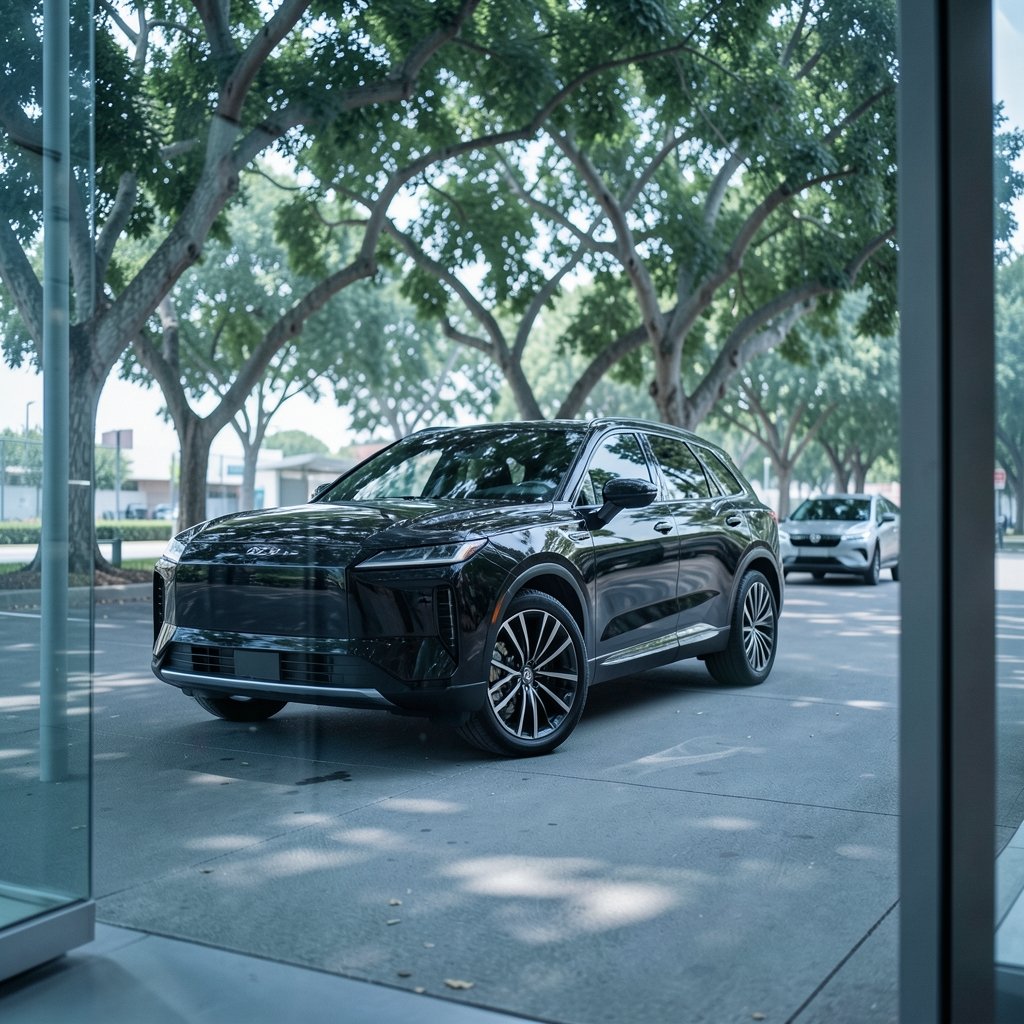
The Escalade IQ is enormous. It stretches well past 224 inches in length, making it one of the longest passenger vehicles on the road. It seats up to eight in some configurations and offers a genuinely usable third row plus serious cargo space behind it. If a family regularly hauls people, gear, and luggage at the same time, this is the vehicle built for that job.
The EQS SUV is smaller but not small. It runs roughly 201 inches long, seats up to seven, and prioritizes passenger comfort over raw volume. The third row exists, but it’s best suited to children or short trips. Cargo space behind the third row is modest.
| Feature | Cadillac Escalade IQ | Mercedes-Benz EQS SUV |
|---|---|---|
| Body style | Full-size body-on-frame-style SUV | Midsize-to-large unibody SUV |
| Seating | Up to 8 | Up to 7 |
| Third-row comfort | Genuinely usable | Best for kids or short trips |
| Design philosophy | Bold, blocky, unmistakable | Smooth, aerodynamic, understated |
| Typical buyer | Families, livery, statement buyers | Executives, empty-nesters, tech lovers |
A practical note from real-world ownership: the Escalade IQ’s size is a genuine daily consideration. Parking garages, narrow driveways, and older residential streets can turn a simple errand into a maneuver. The EQS SUV threads through cities far more easily. Buyers who test drive only on highways often miss this until week one of ownership.
Range, Power, and Charging
Both vehicles use large battery packs, and both deliver more than enough performance for their weight. The Escalade IQ was announced with an estimated range around 460 miles and roughly 750 horsepower in its highest-output mode. The EQS SUV’s EPA-estimated range lands in the 330 to 350 mile range depending on variant, with the single-motor rear-drive version going furthest.
That gap matters less than it looks. In practice, a 330-mile EV covers the vast majority of daily driving and most road trips with one planned charging stop. The Escalade IQ’s extra range is a real advantage for long-haul drivers, towing owners, and anyone covering rural stretches with sparse charging infrastructure.
Charging speed is where the comparison gets interesting. Both support DC fast charging at high rates, and both can add meaningful range in the time it takes to eat lunch. But charging curves vary by state of charge, temperature, and charger condition. The number on the spec sheet is rarely the number you experience on a cold January morning.
A common mistake: buyers compare peak charging kilowatts and ignore the charging curve. A vehicle that holds high power from 10% to 60% often beats one with a higher peak that tapers quickly. Check independent charging tests, not marketing figures.
Cabin Technology and Interface
Cadillac went big on screens. The Escalade IQ features a sweeping curved display spanning the dashboard, plus a lower control screen and an available rear entertainment system. Physical buttons are minimal. The look is dramatic, and the learning curve is real.
Mercedes took a different route with the MBUX system, including the optional Hyperscreen that stretches across the entire dash. The interface is polished, voice control is genuinely useful, and the menu structure rewards a little patience.
| Area | Escalade IQ | EQS SUV |
|---|---|---|
| Screen layout | Curved panoramic display plus lower screen | Optional full-width Hyperscreen |
| Physical controls | Very few | A few retained, mostly touch |
| Voice assistant | GM’s system, improving steadily | MBUX, among the best in the industry |
| Rear-seat tech | Available large rear displays | Available tablet-style rear screens |
The honest verdict from most reviewers: both are impressive, both frustrate occasionally, and neither replaces the simplicity of a well-placed knob. Buyers who value tactile controls will prefer the Mercedes approach slightly, though both lean heavily on touch.
Ride Comfort and Driving Feel
Here the EQS SUV pulls ahead for most drivers. Its air suspension and rear-axle steering make a large vehicle feel smaller than it is. Rear-wheel steering shrinks the turning circle dramatically, which transforms tight parking lots and multi-point turns. The cabin is exceptionally quiet, and the ride is tuned for calm.
The Escalade IQ counters with a commanding driving position, strong straight-line power, and a ride that prioritizes isolation over agility. It feels like a luxury truck in the best sense. It also offers four-wheel steering, which helps, but physics is physics. A vehicle this long will never feel nimble.
For drivers who spend most of their time on highways and value serenity, the Mercedes wins. For drivers who want to sit high, see over traffic, and feel the sheer mass of the vehicle, the Cadillac delivers something the Mercedes cannot.
Cost of Ownership and Depreciation
Both vehicles sit in the six-figure range, and both have seen pricing shifts since launch. Neither is a value purchase in the conventional sense. But ownership costs diverge in ways buyers should consider.
- Insurance: Full-size SUVs with high repair costs typically carry higher premiums. Get quotes before committing.
- Tires: The Escalade IQ’s size and weight mean expensive tires that wear faster than a lighter vehicle’s.
- Depreciation: Large luxury EVs have shown steep depreciation in recent years. Leasing often makes more sense than buying for this segment.
- Home charging: Both benefit enormously from a Level 2 home charger. Without one, ownership gets inconvenient fast.
- Incentives: Federal and state EV incentives have changed repeatedly. Eligibility depends on price caps, income limits, and assembly location, so check current rules before assuming a credit applies.
A practical tip that saves real money: price insurance and confirm home charging installation costs before signing anything. These two numbers surprise more buyers than any other line item.
Who Should Buy Which
The choice usually comes down to a handful of honest questions.
- Do you regularly carry six or more people plus cargo? Choose the Escalade IQ.
- Do you park in tight urban garages? Choose the EQS SUV.
- Do you drive long rural routes with limited charging? The Escalade IQ’s extra range helps.
- Do you value a quiet, effortless ride above all? The EQS SUV wins.
- Do you want maximum road presence? Nothing matches the Cadillac.
- Do you want the most efficient large luxury EV? The Mercedes is generally the more efficient design.
For a deeper look at how these vehicles fit into broader buying decisions, resources like Voozon Media cover automotive and consumer topics with practical framing.
Common Mistakes Buyers Make
A few patterns show up again and again in this segment.
The first is buying instead of leasing. Large luxury EVs have depreciated sharply, and a lease transfers that risk. Buyers who plan to keep a vehicle for eight years may still prefer ownership, but they should go in with clear eyes.
The second is skipping the overnight test. A 20-minute test drive doesn’t reveal how a vehicle handles a school pickup line, a tight garage, or a 300-mile road trip. Ask for an extended drive or a weekend loaner. Dealers in this price range often accommodate it.
The third is overvaluing peak specs. Horsepower figures and peak charging rates dominate marketing. Real ownership is shaped by charging curve shape, seat comfort on hour three, and how often the infotainment system makes sense without a manual. (FuelEconomy.gov)
The fourth is ignoring the second-row and third-row experience. Adults who will never sit back there still haul people who will. Sit in every row before deciding.
A Note on Reliability and Service
Both brands have complex electric platforms, and early-production EVs across the industry have seen software bugs and service delays. Cadillac’s dealer network is broad, which helps for service access. Mercedes has a strong luxury service reputation but fewer locations in some regions.
Owners should ask specific questions at the dealership: How many certified EV technicians work here? What’s the typical wait for a software update appointment? Is a loaner guaranteed during warranty repairs? These answers vary widely by location and matter more than brand reputation alone.
Conclusion
The Cadillac Escalade IQ and Mercedes-Benz EQS SUV are both excellent vehicles that solve the same problem in opposite ways. The Escalade IQ wins on space, presence, third-row usability, and long-haul range. The EQS SUV wins on efficiency, maneuverability, ride refinement, and interface polish.
Neither is objectively better. A large family that regularly fills eight seats will find the Mercedes cramped. An urban driver who parks in a tight garage will find the Cadillac stressful. The right answer depends on how the vehicle will actually be used, not on which one wins a spec comparison.
The smartest move for anyone shopping this segment is to drive both, park both, and charge both before deciding. That single day of testing will answer more than any review can.
Frequently Asked Questions
Which is bigger, the Cadillac Escalade IQ or the Mercedes EQS SUV?
The Escalade IQ is significantly larger in every dimension. It is one of the longest passenger vehicles on the road, offers more cargo volume, and provides a genuinely usable third row. The EQS SUV is smaller and easier to maneuver in tight spaces.
Which has more range, the Escalade IQ or the EQS SUV?
The Escalade IQ was announced with an estimated range of roughly 460 miles, while the EQS SUV’s EPA-estimated range sits in the 330 to 350 mile range depending on variant. Exact figures vary by trim, wheel size, and driving conditions, so check current official ratings.
Is the Mercedes EQS SUV a seven-seater?
Yes, the EQS SUV offers up to seven seats. The third row is best suited to children or shorter trips, and cargo space behind it is limited. The Escalade IQ offers up to eight seats with a more spacious third row.
Which is better for families?
For families who regularly carry six or more people plus luggage, the Escalade IQ is the more practical choice. For smaller families who prioritize comfort, efficiency, and easy parking, the EQS SUV is often the better fit.
Are these vehicles eligible for federal EV tax credits?
Eligibility depends on price caps, income limits, and where the vehicle is assembled, and the rules have changed repeatedly. Many high-priced luxury EVs exceed the price cap for certain credits. Check current rules and confirm with a dealer before assuming any credit applies.
Should I lease or buy a large luxury EV?
Leasing is often the lower-risk choice in this segment because large luxury EVs have shown steep depreciation. Buyers who plan to keep the vehicle for many years may still prefer ownership, but they should confirm insurance costs and home charging setup first.