
Bumper Cars: How Dodgems Work & Stay Safe in 2026
 Abdul WadoodLast updated
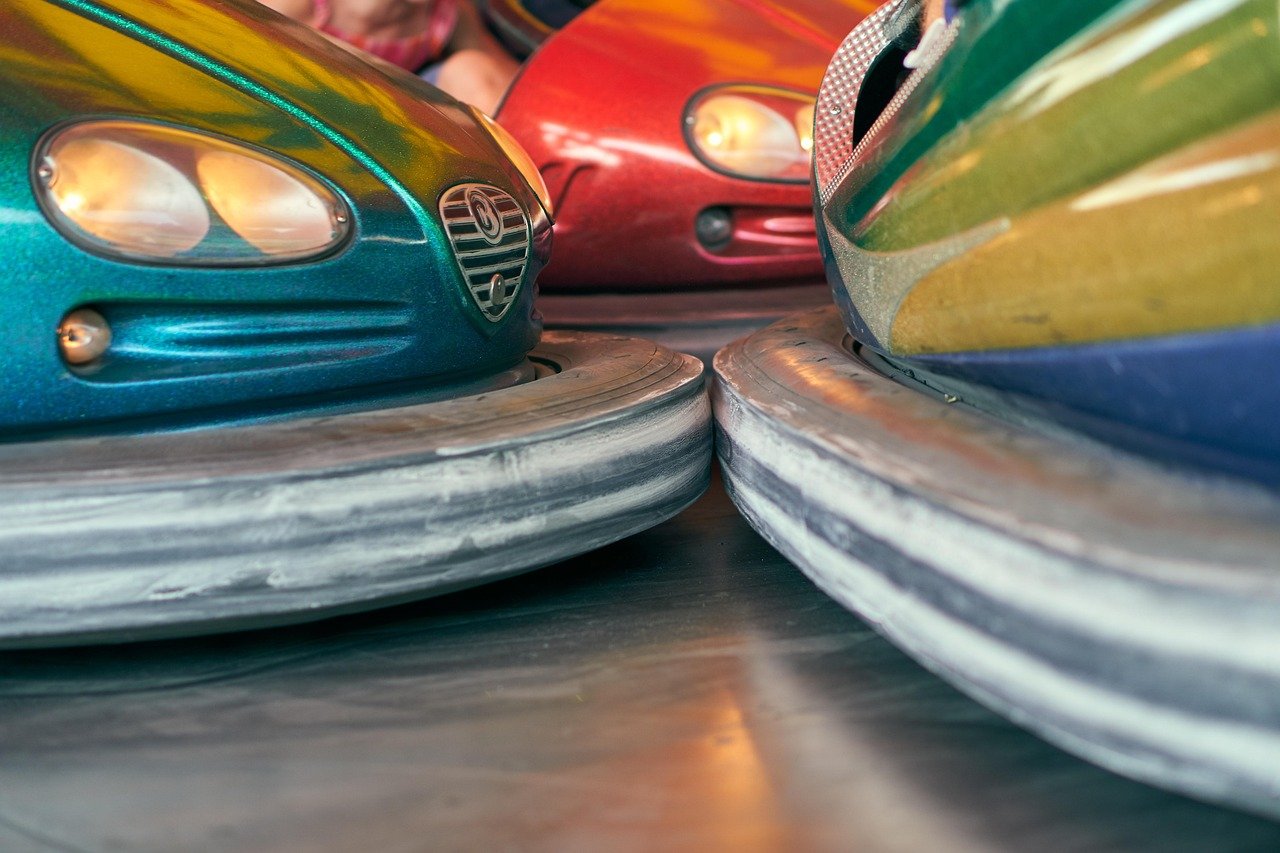
Roughly a century after the first electric dodgem cars began spinning around fairground floors, bumper cars remain one of the most reliable crowd-pleasers in the amusement industry. They are simple, loud, a little chaotic, and almost impossible to walk past without wanting a turn. But behind the grinning collisions sits some genuinely clever engineering: a floor that delivers power, a ceiling that completes a circuit, and a set of safety rules that keep a controlled crash from becoming a real one. This guide breaks down how bumper cars actually work, what to check before you ride, how operators keep them safe, and why the ride has outlasted so many flashier attractions.
What Are Bumper Cars, Exactly?
Bumper cars (also called dodgems, particularly in the UK and Australia) are small, electrically powered vehicles driven on a flat, walled arena. The point is not speed. The point is steering, bumping, and the cheerful chaos of a dozen people all trying to go in different directions at once.
The ride is usually classified as a flat ride in amusement-industry terms, meaning it stays on the ground and doesn’t invert or lift riders. That classification matters for safety rules, because flat rides tend to have different inspection requirements than high-thrill coasters. (U.S. Consumer Product Safety Commission)
Two features define the experience:
- A conductive floor that supplies electricity to each car
- A flexible bumper ring around each vehicle that absorbs impacts and spreads force across a wide surface
Most arenas run sessions of two to four minutes. Riders queue, board, get a quick safety check, and then the power comes on. The best operators manage the floor like a traffic controller, watching for stuck cars and over-aggressive drivers.
How Do Bumper Cars Get Their Power?
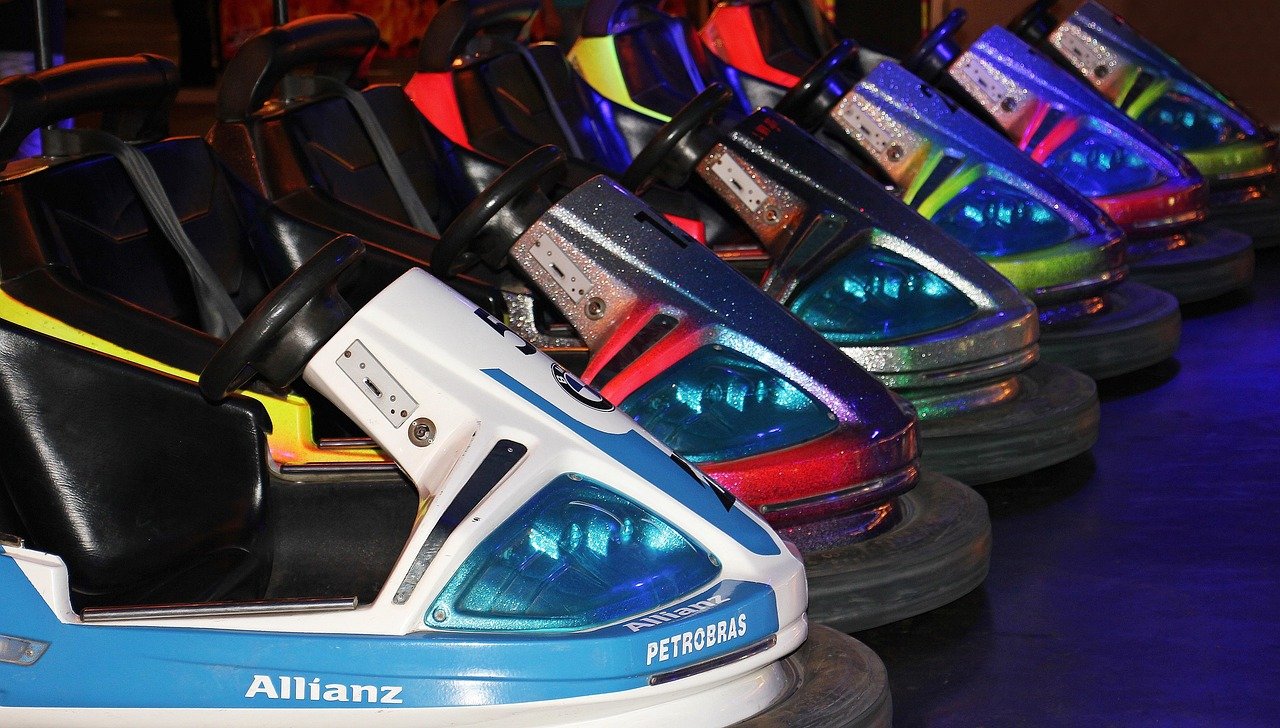
This is the part most riders never think about, and it’s the most interesting engineering on the whole ride. There are three main systems in use today, and they behave quite differently.
The classic floor-and-ceiling grid
In the traditional setup, the metal floor acts as one electrical pole and a wire-mesh ceiling acts as the other. Each car carries a pole assembly that reaches up to the ceiling grid. When the pole touches the mesh, the circuit closes and the motor runs. The result is that a car only moves when its pole is in contact with the ceiling, which is why you’ll sometimes see a car stutter or stop when it passes under a gap in the mesh.
Single-floor systems
Newer arenas often use a single conductive floor with two alternating polarities built into it. The car picks up power through multiple contact points underneath. These systems remove the ceiling hardware entirely, which makes the hall easier to light and cheaper to maintain.
Battery-powered cars
Some modern installations skip the live floor altogether and run on rechargeable batteries. These cars work in almost any venue, including temporary setups and outdoor events, and they remove the shock risk of a live floor. The trade-off is charging downtime and heavier vehicles.
| Power System | Best For | Main Trade-off |
|---|---|---|
| Floor and ceiling grid | Permanent indoor arenas | Ceiling hardware and pole maintenance |
| Single conductive floor | New-build indoor halls | Careful floor cleaning required |
| Battery powered | Temporary and outdoor events | Charging cycles and heavier cars |
A Short History of the Dodgem
The bumper car’s family tree runs back to the early decades of the twentieth century, when amusement parks were experimenting with powered ride vehicles. The Dodgem name became closely tied to the ride’s spread through British and American fairgrounds, and the basic layout, a walled floor with small electric cars, has barely changed since.
What has changed is everything around it. Early installations were often open-air and loosely regulated. Today’s versions sit inside purpose-built halls with dedicated power systems, rubberized wall panels, and detailed operating procedures. The ride survived because it hits a sweet spot: it’s competitive without being scary, social without requiring skill, and short enough that queues keep moving. If you want to see how the wider car world handles the same tension between fun and function, the cars built around experience make an interesting parallel read. (Voozon Cars) (Bumper cars)
What to Check Before You Get In
Practical experience on the floor counts for a lot here. Anyone who has ridden a few dozen times learns a handful of things the signage doesn’t always spell out.
Watch one full session before you queue. You’ll learn the arena layout, spot the dead zones where cars tend to stall, and see how the attendant handles collisions. It also tells you whether the operator is paying attention, which is the single best safety indicator you have.
Check your seatbelt or restraint. Most modern cars use a lap belt. Fasten it snugly, not loosely. A belt that rides up on your stomach instead of sitting across your hips is doing very little.
Keep your hands inside the ring. The bumper is designed to take hits. Your arms are not. Riders who trail a hand outside the car are the most common cause of minor injuries on the ride.
Mind smaller riders. Children often need to ride with an adult or meet a height requirement. If the operator says a child is too small to ride alone, that’s not box-ticking; it’s about whether the child’s body sits properly behind the restraint.
Sit back and brace lightly. The classic mistake is gripping the wheel with locked arms. You want a relaxed grip and your back against the seat, so the impact is absorbed by the car rather than your wrists.
Don’t chase the same car relentlessly. The most common cause of a jarring hit is one driver lining up a long run at another. Short, gentle bumps are the etiquette, and most attendants will call out drivers who turn it into a demolition derby.
Safety: What Actually Keeps Rides Safe
Bumper car safety rests on three layers, and understanding them helps you judge whether a particular installation is well run.
Design and engineering
Cars are built with rounded, padded bumper rings, low centers of gravity, and speed limits well below anything that could cause a serious collision. The arena walls are lined with impact-absorbing panels. Electrical systems are designed so that the exposed conductive surfaces are either out of reach or at low voltage.
Standards and inspection
In the United States, amusement ride regulation is handled largely at the state level, which means requirements vary considerably from one jurisdiction to the next. Many operators and manufacturers reference voluntary consensus standards for amusement rides and devices developed through ASTM International, the standards body whose F24 committee works on amusement ride and device standards. In practice, a well-run arena will have documented daily pre-opening checks, routine maintenance logs, and periodic inspections by a qualified third party.
Operations
This is the layer riders actually see. Good operators:
- Run a clear pre-ride briefing before every session, including later sessions on the same day.
- Enforce height and restraint rules consistently.
- Watch the floor continuously and stop the ride if a car stalls or a rider stands up.
- Keep the floor clean and dry, since debris and moisture both affect grip and power pickup.
- Limit session length so fatigue doesn’t lead to sloppy driving.
The biggest real-world risk isn’t the collision itself. It’s riders standing up mid-session, reaching outside the car, or ignoring the belt. Nearly every incident report on this kind of ride traces back to a behavior the briefing already covered.
Riding With Kids: What Works in Practice
Family sessions are where bumper cars earn their reputation as a gateway ride. A few practical notes help:
- Height rules exist for a reason. A child who can’t sit with their back against the seat and their feet forward won’t be properly restrained. Don’t push the attendant on this.
- Double-up cars are usually the better first experience. Riding with a parent gives a small child the sensation without the steering burden.
- Pick quieter sessions. Mid-afternoon on a weekend is loud and crowded. Early sessions tend to be calmer and easier for nervous first-timers.
- Set the tone. A parent who bumps gently and laughs teaches a child that the ride is playful. A parent who rams teaches something else.
For families comparing ride options across a park, a broader look at car reviews, comparisons and car guides can help frame how vehicle design choices, from restraints to visibility, shape the experience.
Common Mistakes Riders and Operators Make
A few patterns show up again and again, and they’re worth naming plainly.
Riders treat it as a race. Bumper cars reward steering, not speed. The drivers who have the most fun are usually the ones making small, deliberate moves rather than flooring the pedal into a wall.
Riders ignore the pole. On ceiling-grid systems, the pole is what keeps you moving. Yanking on it, ducking under it, or grabbing it is both pointless and unsafe.
Operators skip the floor check. A damp floor or a scatter of debris causes stalls and erratic power pickup. The best arenas sweep and dry-check between sessions, not once a day.
Venues under-light the hall. Shadows hide stalled cars and make it harder for attendants to spot a rider who has unbuckled. Good lighting is a safety feature, not a design flourish.
Everyone forgets the exit. The end of a session is when people stand up early. Attendants who hold the floor until power is fully off prevent most of the minor tumbles that happen on the way out.
Why the Ride Endures
Amusement technology has moved a long way since the first dodgems spun around a fairground floor. Parks now offer launch coasters, immersive dark rides, and motion simulators that would have seemed impossible a generation ago. And yet the bumper car hall still fills.
The reason is social. Almost every other ride is a solo or small-group experience where the machine does the work. Bumper cars hand control to the rider, put a dozen strangers in the same small space, and let them interact. That’s rare. It’s also why the ride works for almost every age group, from a five-year-old in a double car to a grandparent taking a slow, deliberate lap.
The engineering has quietly improved too. Battery systems have made the ride portable. Better restraints and clearer operating procedures have made it safer. The core idea, a small electric car, a walled floor, and permission to bump, hasn’t needed to change.
Conclusion
Bumper cars have survived for a simple reason: they deliver a genuinely social experience that few other rides can match. Understanding the power system, the restraint design, and the operating rules makes you a better rider and a sharper judge of which arenas are run well. Watch a session before you queue, fasten the belt properly, keep your arms inside the ring, and bump gently. Do those things and the ride stays what it was always meant to be: a few minutes of cheerful, low-stakes chaos that almost everyone leaves smiling. For anyone who enjoys comparing how vehicles are designed around the people inside them, the same curiosity applies here, just at a much smaller scale and a much lower speed.
Frequently Asked Questions
How fast do bumper cars go?
Most run at roughly 3 to 6 miles per hour, which is walking pace or a little above. The ride is designed around steering and collisions, not speed, and the low speed is a core part of the safety design.
Are bumper cars safe for pregnant riders?
Most operators advise against riding during pregnancy, and many post signage to that effect. The sudden jolts and the risk of another car hitting from an unexpected angle make it a ride to skip. When in doubt, ask the attendant before boarding.
What is the difference between bumper cars and dodgems?
They’re the same ride under different names. Dodgems is the common British and Australian term, while bumper cars is standard in North America. The underlying design, a walled floor with small electric cars, is identical.
Do bumper cars run on a track?
No. They run freely on a flat arena floor, steered entirely by the driver. Some versions use a conductive floor grid and others a ceiling mesh to deliver power, but neither restricts where the car can go.
Why do bumper cars sometimes stop suddenly?
On ceiling-grid systems, a car loses power briefly when its pole passes under a gap in the mesh. On floor-grid systems, a stall usually means a dirty or damp contact patch. Either way, the car restarts as soon as contact is restored.
Can you ride bumper cars in the rain?
Only if the installation is designed for it, which usually means battery-powered cars under a covered area. Traditional live-floor and ceiling-grid arenas are indoor rides, and running them wet is a genuine electrical hazard. Outdoor carnivals typically pause the ride in rain.