
What Is Bidirectional Charging? EV Power Explained
 Abdul WadoodLast updated
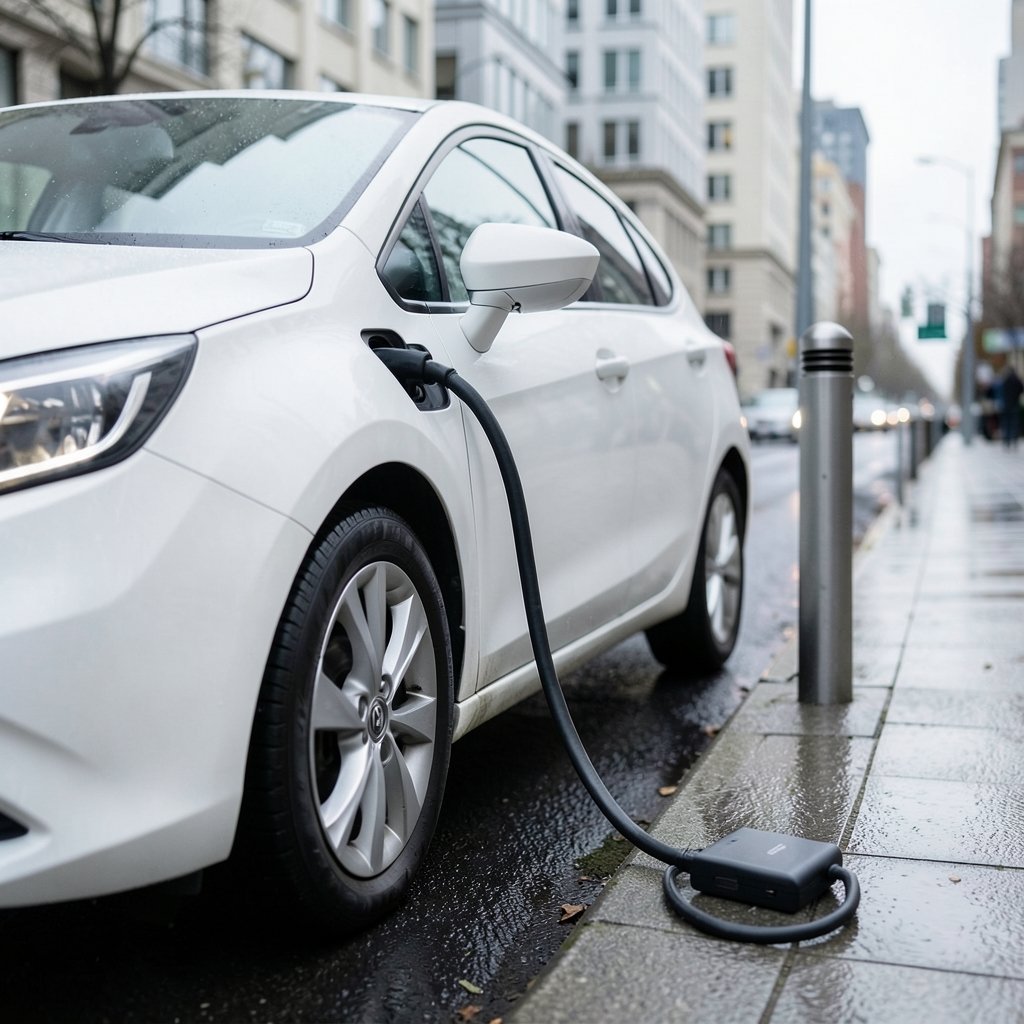
Quick Answer: What is bidirectional charging?
Bidirectional charging is a technology that lets an electric vehicle’s battery both receive electricity and send it back out. Instead of a one-way flow from the grid into the car, the energy can move in reverse to run appliances, power a home, or feed the grid. Drivers encounter it in three main forms: V2L (vehicle-to-load) for tools and devices, V2H (vehicle-to-home) for backup power, and V2G (vehicle-to-grid) for selling energy back to utilities.
These modes differ in hardware, wiring, and scale. V2L usually needs only an adapter or built-in outlet, while V2H and V2G require a dedicated charger and, often, utility approval. Before relying on it, check vehicle compatibility, charger requirements, warranty terms, local grid rules, and the cost of home integration equipment.
A single electric car can store enough energy to run a typical household for days. That fact has quietly turned the EV from a simple consumer of electricity into a potential supplier of it. Bidirectional charging sits at the center of that shift, and it is changing how drivers, utilities, and automakers think about what a car battery is actually for.
The idea sounds futuristic, but the hardware already exists in showrooms and driveways. The real story is messier than the marketing suggests: some features ship, some get announced and delayed, and the rules vary wildly from one region to the next. This guide breaks down what bidirectional charging is, how its modes differ, what works in practice, and the mistakes people make when they assume their car can power a house out of the box.
How Bidirectional Charging Actually Works
A standard EV charger is a one-way street. Alternating current (AC) comes from the grid, gets converted to direct current (DC), and flows into the battery. When you unplug, the flow stops. Bidirectional charging adds a return lane.
The key component is an onboard inverter or an external one in the charger that can convert DC battery power back into usable AC electricity. Not every car has this hardware. Some vehicles support it natively; others need a specific wall unit to make it work.
There are two broad architectures:
- AC-based systems rely on power electronics built into the car itself. They are cheaper to install at home but limited in output.
- DC-based systems put the heavy conversion equipment in an external charger. They can deliver more power but cost far more and require professional installation.
The communication layer matters just as much as the copper. Standards such as ISO 15118 define how a vehicle and charger negotiate, including the extensions that support discharging. The CHAdeMO standard supported bidirectional discharge early on, which is why some older EVs could power a home long before the feature became mainstream on other connector types.
In practice, this means two cars with similar batteries can behave very differently. One might run a coffee maker from a trunk outlet; another might keep the lights on during an outage. The difference is not the battery. It is the inverter, the connector, and the software that decides what is allowed.
The Three Modes: V2L, V2H, and V2G
The terminology overlaps, and manufacturers are not always consistent. Still, three modes cover most real-world use.
| Mode | What It Powers | Typical Hardware | Real-World Example |
|---|---|---|---|
| V2L (vehicle-to-load) | Tools, appliances, laptops, camping gear | Built-in outlets or a small adapter | Running a power drill or a cooler from the car |
| V2H (vehicle-to-home) | A whole house or selected circuits | Dedicated home charger and transfer switch | Keeping lights and a fridge on during an outage |
| V2G (vehicle-to-grid) | The wider electricity grid | Utility-approved charger and interconnection | Selling stored energy back during peak demand |
Vehicle-to-Load (V2L)
V2L is the most accessible form. Many modern EVs include household-style outlets or support an adapter that plugs into the charge port. Output is usually modest, often enough for small appliances but not for a central air conditioner.
This is where most drivers first experience bidirectional charging without even realizing it. Plugging a laptop into a car during a roadside emergency is a small but genuine act of two-way energy flow.
Vehicle-to-Home (V2H)
V2H is the headline feature. It turns the car into a backup battery for the house. The catch is that it almost always requires a specialized charger and a transfer switch to isolate the home from the grid safely. Without that isolation, power could backfeed onto lines and endanger utility workers.
Some automakers market V2H heavily. The Ford F-150 Lightning, launched in 2022, became famous for its home backup capability, though it requires specific home integration equipment to deliver the full function. Power ratings and equipment requirements vary, so buyers should confirm details on the manufacturer’s official documentation rather than relying on advertising.
Vehicle-to-Grid (V2G)
V2G is the most ambitious mode. Instead of just powering one home, the car sends electricity back to the grid, ideally when demand peaks and prices are high. The concept has roots in research going back to the late 1990s and 2000s, with early work associated with the University of Delaware and researcher Willett Kempton.
The barrier is not technology alone. V2G depends on utility interconnection rules, local electrical codes, and metering arrangements. These differ enormously between jurisdictions, so a feature that is routine in one country may be effectively unavailable in another.
What Works in Practice, and What Doesn’t
Here is where enthusiasm meets reality. Plenty of drivers buy an EV expecting plug-and-play home backup, then discover the fine print.
The feature is often market-specific. A car sold in one country may support V2H while the identical model in another does not. Early Nissan Leaf models supported bidirectional discharge through CHAdeMO in some markets, but availability varied sharply by model year and region. Always verify against the specific vehicle identification number and local documentation.
Announcements are not shipping products. Several major automakers, including Hyundai, Kia, Volkswagen, GM, and Tesla, have announced or shipped bidirectional features at various points. But an announcement is not the same as a feature you can buy today. Check the current status on each manufacturer’s official pages before committing.
Warranty terms can surprise you. Some manufacturers limit warranty coverage for heavy V2G use, reasoning that constant cycling adds wear to the battery. Terms differ by automaker and model year, so read the official warranty document rather than assuming your battery is fully covered under aggressive use.
Installation costs add up. A V2H setup needs more than a charger. It involves a transfer switch, possible panel upgrades, permits, and an electrician. Budget for the whole system, not the box on the wall alone.
A practical tip that saves headaches: ask the dealer for the exact equipment list required to enable bidirectional charging on your specific trim, then get an independent electrician’s quote before signing. Many buyers discover the true cost only after the car is in the driveway.
Why Bidirectional Charging Matters for the Grid
The appeal goes beyond convenience. As more renewables come online, the grid needs flexibility. Solar produces abundantly at midday and little at night. Wind is unpredictable. Batteries help smooth those gaps, and millions of parked EVs represent a vast, distributed storage network that sits idle most of the day.
The U.S. Department of Energy has highlighted vehicle-to-grid and bidirectional charging as tools for grid resilience and emergency preparedness. The logic is straightforward: a typical EV battery holds several times the daily electricity use of an average home, so a fraction of the fleet could absorb surplus renewable energy and release it when needed. (Vehicle-to-grid)
For drivers, the incentive is financial as well as practical. In markets that allow it, V2G can turn a parked car into a small revenue stream. The trade-off is battery wear and the complexity of enrolling in utility programs.
The concept is not new. Research into using electric vehicles as grid resources has been underway for decades, and pilot projects have tested the idea in several countries. What has changed is the hardware: bidirectional chargers are becoming more available, and standards are maturing.
The Standards and Rules Behind the Scenes
Bidirectional charging only works when the car, the charger, and the grid all agree on the ground rules. That is what standards are for.
ISO 15118 governs communication between vehicles and charging infrastructure, including the extensions that support bidirectional energy flow. Editions and dates evolve, so anyone relying on a specific version should check the standards body directly.
CHAdeMO supported bidirectional discharge early, which gave some vehicles a head start. CCS implementations of bidirectional charging arrived later and continue to develop.
On top of the technical standards sit regulatory ones. Utility interconnection rules determine whether a home system can legally send power to the grid. Local codes govern the transfer switch and wiring. These rules change frequently, so citing a specific regulator or utility is more reliable than general claims.
For anyone planning a purchase around bidirectional features, the practical advice is to start with the local electricity provider, not the car brochure. A quick call about interconnection requirements can save months of frustration.
Common Mistakes Buyers Make
A few patterns show up again and again when people explore bidirectional charging.
- Assuming all EVs support it. They do not. Many popular models cannot discharge at all, and even within a model line, support may depend on trim and model year.
- Confusing V2L with V2H. A car with a household outlet cannot necessarily power a house. The two require very different hardware.
- Ignoring the transfer switch. Skipping proper grid isolation is inefficient, it is dangerous and often illegal.
- Overlooking warranty language. Heavy discharge cycles may affect coverage. Read the fine print before building a routine around V2G.
- Forgetting installation costs. The charger is only part of the bill. Permits, panel upgrades, and labor can rival the hardware price.
The pattern is consistent: the technology works, but the details decide whether it works for you. A careful buyer treats bidirectional charging as a system, not a checkbox.
What to Check Before You Buy
Before treating bidirectional charging as a deciding factor, run through a short checklist.
- Vehicle compatibility: Confirm the exact model, trim, and model year support the mode you want.
- Charger requirements: Identify the specific wall unit needed and whether it is included or sold separately.
- Local grid rules: Ask your utility about interconnection and any program enrollment.
- Warranty terms: Read the official warranty document for language on discharge and cycling.
- Total installed cost: Get quotes for the charger, transfer switch, permits, and labor.
- Backup expectations: Decide whether you need whole-home backup or just a few critical circuits.
That list is unglamorous, but it is what separates a satisfying purchase from an expensive disappointment. For broader context on how energy and technology stories get covered, resources like Voozon Media track these shifts as they develop.
Conclusion
Bidirectional charging turns an electric vehicle from a one-way consumer into a two-way energy asset. The concept is simple: let the battery send power back out. The execution is where things get complicated, because V2L, V2H, and V2G each demand different hardware, different rules, and different expectations.
The technology is real and increasingly available, but it is not uniform. Availability varies by market, model year, and trim. Installation costs and warranty terms can reshape the math. Utility rules can block features that the car itself supports.
For drivers, the smart approach is to verify rather than assume. Confirm the vehicle, price the full system, check the local rules, and read the warranty. Do that, and bidirectional charging becomes a genuinely useful capability rather than a line item on a spec sheet. The car in the driveway may one day keep the lights on, but only if the pieces around it are in place.
Frequently Asked Questions
Can any electric car do bidirectional charging?
No. Support depends on the vehicle’s onboard hardware and software, and it often varies by model year and trim. Some cars offer only V2L through an outlet, others support full V2H with the right charger, and many support neither. Always confirm against the manufacturer’s official documentation for the specific vehicle. (Green Vehicle Guide)
Is vehicle-to-grid the same as vehicle-to-home?
They are related but distinct. V2H sends power to a single home, usually during an outage or to offset peak use. V2G sends power back to the wider grid, typically through a utility program. V2G generally requires more regulatory approval and a utility interconnection agreement.
Does bidirectional charging hurt the battery?
It can add cycling, and some manufacturers limit warranty coverage for heavy discharge use. The actual impact depends on how often the battery cycles, the depth of discharge, and the vehicle’s battery management system. Check the official warranty terms for your model before building a routine around it.
How much does a home bidirectional charging setup cost?
Costs vary widely by region and equipment. A full V2H system typically includes a specialized charger, a transfer switch, possible electrical panel upgrades, permits, and professional labor. The charger alone is only part of the total, so request an itemized quote from a licensed electrician.
Do I need special permission to send power to the grid?
In most places, yes. Utility interconnection rules govern whether a home system can legally export electricity, and local codes cover the wiring and isolation equipment. Contact your electricity provider early in the process, because requirements differ significantly between jurisdictions.
Why isn’t bidirectional charging available everywhere?
The barriers are a mix of hardware, standards, and regulation. Vehicle support varies by market, charger availability differs, and utility rules change from place to place. Standards such as ISO 15118 continue to evolve, and manufacturers often roll out features region by region rather than globally.