
Best Luxury Cars with Rear Seat Entertainment 2026
 Abdul WadoodLast updated
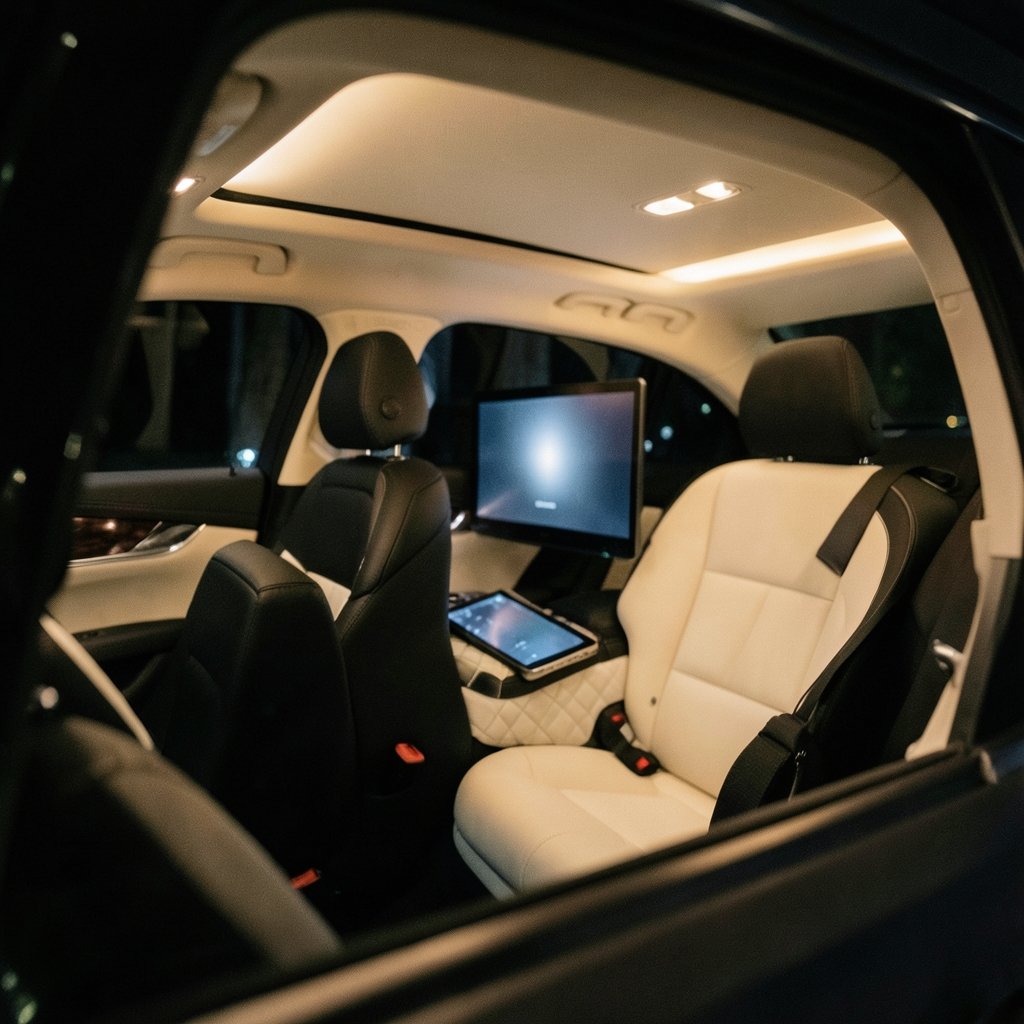
A rear-seat screen can turn a two-hour traffic jam into a private cinema. That is exactly why chauffeur-driven buyers now treat rear seat entertainment as a must-have, not a novelty. The global in-car entertainment market is projected to keep climbing through the decade, and luxury sedans and SUVs sit at the premium end of that growth. Yet “best” is slippery here. Screen size, streaming apps, input options, seat comfort and cabin quiet all matter, and packaging changes by model year and market. This guide breaks down the flagships that do it well, explains what to check before buying, and flags the mistakes that catch people out.
What Counts as Rear Seat Entertainment
Rear seat entertainment (RSE) usually means one of three setups: dual screens mounted on the headrests or seat backs, a large central fold-down display, or a rear tablet that controls media and climate. Some systems add HDMI and USB inputs, built-in streaming apps, and phone mirroring.
Here is the catch: brands define RSE differently. One maker counts a rear tablet as entertainment; another insists on physical screens. Always confirm what is actually included rather than trusting a trim name. If you want a broader look at how premium cabins are evolving, the piece on the new language of modern luxury is a useful primer.
The Best Luxury Cars With Rear Seat Entertainment

Mercedes-Benz S-Class and Maybach
The S-Class has long been the benchmark for rear-seat comfort, and rear entertainment has been part of its executive package for years. Screens pair with a rear tablet that controls media and cabin settings. Maybach versions push further, emphasizing reclining seats and acoustic isolation. The S-Class remains the safest default for buyers who want proven rear luxury.
BMW 7 Series
The 7 Series introduced a large fold-down Theatre Screen in recent generations, turning the rear bench into a cinema. Availability varies by trim and market, so verify before ordering. When it is fitted, it is one of the most dramatic rear displays in any sedan. For context on how cabins are being built around experience rather than specs, see the cars built around experience.
Audi A8
The A8 offers rear displays and a rear remote as part of its comfort options. It is quieter and more understated than the BMW, which suits buyers who want technology without theatre. Packaging is market-dependent, so ask the dealer for the exact option code.
Range Rover
The Range Rover pairs rear screens with executive seating, making it a favorite for families and chauffeur fleets alike. The upright seating position and high roofline make screen viewing comfortable on long trips. If you are weighing an SUV over a sedan, the luxury resorts and getaway guide pairs well with long-distance travel planning.
Bentley and Rolls-Royce
Bentley and Rolls-Royce treat rear entertainment as part of bespoke rear-cabin configuration. Specifics vary heavily by commission, so the screen setup you see in a show car may not be standard. These are the most flexible options and the most expensive.
Lexus LM and LS
The Lexus LM, a chauffeur-focused MPV, and the LS sedan have offered rear display systems in some markets. The LM’s layout is purpose-built for rear passengers, with a partition and reclining seats in higher trims. Market availability varies, so confirm locally.
Genesis G90
The G90 has become a credible value alternative in the flagship class, offering rear comfort features at a lower price than European rivals. Feature sets differ by market, so check the specification sheet carefully.
Quick Comparison of Rear Entertainment Setups
| Model | Typical RSE Format | Best For | Watch Out For |
|---|---|---|---|
| Mercedes-Benz S-Class / Maybach | Rear screens plus tablet controller | Proven, polished rear luxury | Options add up fast |
| BMW 7 Series | Large fold-down Theatre Screen | Cinema-style viewing | Trim and market availability |
| Audi A8 | Rear displays with remote | Understated tech | Packaging varies by market |
| Range Rover | Seat-back screens, executive seating | Families and chauffeurs | Option bundles |
| Bentley / Rolls-Royce | Bespoke rear cabin setups | Maximum customization | Cost and lead time |
| Lexus LM / LS | Rear displays, partition in LM | Chauffeur-focused comfort | Market availability |
| Genesis G90 | Rear comfort features | Value in the flagship class | Feature sets differ by market |
What Actually Matters in Practice
Screen Size vs. Viewing Distance
A huge screen sounds great until it sits too close to the passenger’s face. Practical rule: the farther back the seat reclines, the more a large display makes sense. In tighter rear cabins, dual headrest screens often beat one giant panel.
Inputs and Streaming
Check for HDMI, USB-C, and built-in streaming apps. A screen without easy inputs becomes a paperweight once the novelty fades. Phone mirroring is increasingly common, but support differs by brand and model year.
Audio Without Headphones
Rear passengers often want to hear the movie without disturbing the driver. Look for separate rear audio channels or a headphone jack. Some systems support wireless headphones; others do not.
Seat Comfort and Quiet
A screen is only as good as the seat under it. Reclining seats, footrests, and acoustic glass matter as much as the display. Buyers who prioritize the whole cabin experience should read the future of luxury living for how these priorities are shifting.
Common Mistakes Buyers Make
- Assuming RSE is standard. On most flagships it is an option or part of a package, not base equipment.
- Trusting the trim name. A name like “Executive” does not guarantee screens. Ask for the option code.
- Skipping the input check. Confirm HDMI, USB, and streaming support before signing.
- Ignoring model-year changes. Hardware and software can change between model years, so verify the specific build.
- Forgetting the driver. Rear screens can distract. Confirm the system can be locked or dimmed from the front.
How to Test Rear Entertainment Before You Buy
A showroom demo is not enough. Do this instead:
- Sit in the rear seat in your normal posture and check screen distance and angle.
- Play a video with the cabin lights on and off to judge glare.
- Test the audio with and without headphones.
- Plug in a phone and a streaming stick to confirm inputs work.
- Ask the dealer to show the exact option code on the order sheet.
- Confirm what happens during a model-year change or software update.
What actually works in practice is boring: verify the option code, test the inputs, and sit in the seat. Buyers who follow that routine rarely regret the purchase.
The Trend: Screens Are Shrinking, Software Is Growing
Automakers are shifting from fixed screens toward bring-your-own-device streaming and rear tablets, even as large displays remain in flagship sedans and SUVs. The direction is clear: software and connectivity matter more than raw screen size. That shift mirrors what is happening across premium goods, from watches to cabins, which the Voozon luxury section covers in depth. For buyers, the practical takeaway is simple: prioritize a system that can be updated and that accepts the devices you already own.
Conclusion
The best luxury cars with rear seat entertainment are not defined by the biggest screen. They are defined by a system that fits the seat, the inputs, and the way passengers actually travel. The Mercedes-Benz S-Class remains the safest default, the BMW 7 Series offers the most dramatic display, and the Range Rover suits families and chauffeurs. Bentley and Rolls-Royce win on customization, while the Lexus LM and Genesis G90 deliver strong value. Verify the option code, test the inputs, and sit in the seat before you buy. Do that, and the rear cabin becomes the best seat in the house.
Frequently Asked Questions
Is rear seat entertainment standard on luxury cars?
No. On most flagship sedans and SUVs, rear seat entertainment is an option or part of a rear-comfort package rather than standard equipment. Packaging varies by brand, model year, and market, so always confirm the specific option code before ordering.
Which luxury car has the best rear seat entertainment?
There is no single winner. The Mercedes-Benz S-Class is the most proven, the BMW 7 Series offers the largest fold-down display, and Bentley and Rolls-Royce offer the most customization. The best choice depends on whether you prioritize screen size, seat comfort, or flexibility.
Do rear seat entertainment systems support streaming apps?
Many recent systems include built-in streaming apps and phone mirroring, but support differs by brand and model year. Some systems rely on HDMI or USB inputs instead. Check the specific build rather than assuming app support. (Consumer Reports)
Can rear passengers use wireless headphones?
Some systems support wireless headphones, while others use wired jacks or separate rear audio channels. Confirm headphone compatibility during the test drive, since this varies widely between models.
Is rear seat entertainment safe for children?
It can be, provided the system allows the front row to lock or dim the screens and the display does not obstruct the driver’s view. Check that the system can be controlled from the front and that volume limits are available.
Does rear seat entertainment affect resale value?
It can help in the chauffeur and family segment, where buyers actively look for rear comfort features. However, outdated hardware can date a car quickly. Systems that support updates and standard inputs tend to age better.
What to Watch Next in Rear Cabin Tech
The direction of travel is worth watching if you plan to keep the car for years. Two developments stand out. First, over-the-air updates are becoming the norm on flagship platforms, which means the entertainment experience you buy on day one is no longer frozen at delivery. A system that receives software updates will stay relevant longer than one that ships with fixed firmware, so ask the dealer directly whether the rear entertainment module is updateable and how updates are delivered. (In-car entertainment)
Second, bring-your-own-device streaming is quietly replacing fixed hardware in some segments. Rather than paying for built-in screens, several brands now mount tablet docks or provide high-speed rear Wi-Fi so passengers use their own devices. This approach is cheaper to upgrade and ages better, but it depends on a strong connectivity package and a mounting system that does not rattle or obstruct the seat. Weigh it against a factory screen if you regularly carry passengers who expect a turnkey setup.
A third factor is integration with cabin controls. The best systems let rear passengers adjust climate, massage, and audio from the same interface as the screen, rather than juggling two remotes. During your test, check whether the rear tablet or remote controls the whole cabin or only the display. The former is a genuine convenience; the latter is a novelty.
Finally, consider service and warranty. Screens, hinges, and rear tablets are mechanical and electronic parts that can fail, and replacement costs are rarely trivial. Confirm that the rear entertainment hardware is covered under the standard warranty and ask what a replacement screen or tablet costs out of pocket. That single question tells you more about long-term ownership than any brochure photo.
None of this changes the core advice: the best rear seat entertainment is the one that fits how your passengers actually travel. A modest, well-integrated system with working inputs and comfortable seats will serve you better than a spectacular display that is awkward to reach, hard to update, and expensive to repair. Buy for the seat, the software, and the support behind it, and the rear cabin will earn its place as the best seat in the house for years to come.