
Best Independent Bookshops in Europe: 2026 Guide
 Abdul WadoodLast updated
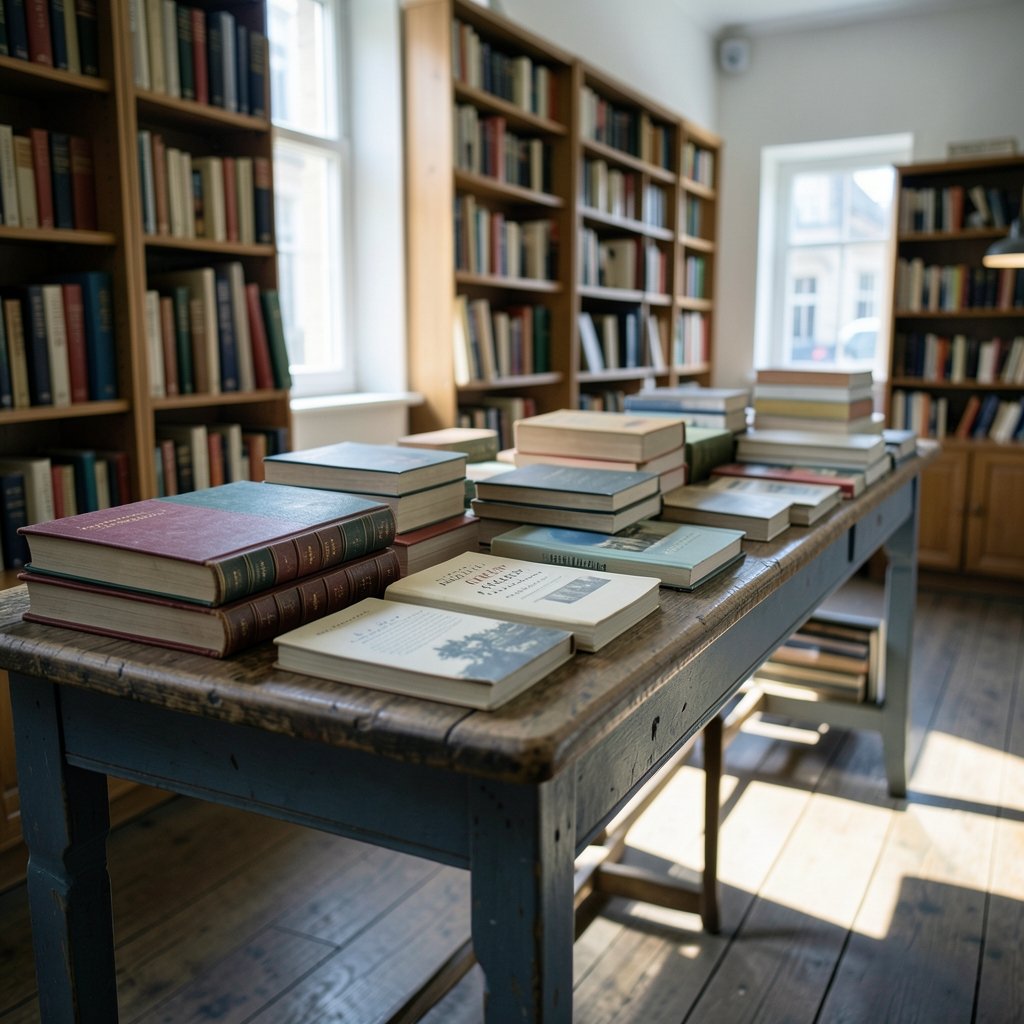
Independent bookshops in Europe do something the big chains struggle to replicate: they curate. One London shop sells nothing but travel writing. A Lisbon store stocks only Portuguese poetry. A Berlin basement specializes in philosophy and serves coffee while you argue about it. That focus is why readers plan trips around bookshops the way other travelers plan around museums.
This guide covers the shops worth seeking out, what makes each one distinct, and the practical details that separate a great visit from a wasted afternoon. It also covers the mistakes first-time bookshop tourists make, since a little planning goes a long way.
Why Europe’s Independent Bookshops Are Worth the Detour
Europe has an unusually dense network of independent booksellers, and several countries protect them through policy. Germany, France, the Netherlands, and others use fixed book price systems, which prevent large retailers from undercutting small shops on new titles. The effect is that a neighborhood bookshop in Munich can compete on something other than price: knowledge, curation, and service.
That structural support matters. In markets without it, independents often survive on events, coffee, and loyal communities rather than book sales alone. In Europe, many shops still make their living from books first. For a visitor, that means walking into rooms where the staff genuinely read the stock and can recommend a title for a nine-hour train ride without reaching for a bestseller list.
The result is a bookshop culture with real range. You can find centuries-old institutions with hand-written catalogs, tiny shops run out of apartments, and modern stores that treat bookselling as a form of publishing. The best ones share one trait: they reflect a specific person’s taste rather than a buyer’s spreadsheet. (Bookselling)
The Best Independent Bookshops in Europe

No single list settles the question, because the “best” shop depends on what you read. The selections below are grouped by what each does exceptionally well.
| Bookshop | City | Known For | Best For |
|---|---|---|---|
| Shakespeare and Company | Paris | Literary history, events, resident writers | Atmosphere and browsing |
| Livraria Lello | Porto | Stained glass, ornate staircase, historic interior | Architecture and photos |
| Daunt Books | London | Travel-focused layout by country | Trip planning and gifts |
| Atlantis Books | Santorini | Cliffside location, hand-picked stock | Destination browsing |
| Libreria Acqua Alta | Venice | Books stacked in bathtubs and gondolas | Novelty and souvenirs |
| Cafebrería El Péndulo | Mexico City | Bookshop-cafe hybrid (a benchmark for the format) | Long afternoons |
| Lello & Irmão alternatives (e.g., Livraria Bertrand) | Lisbon | Old-world interiors, deep local catalog | Portuguese literature |
A note on that last row: Lisbon’s Livraria Bertrand holds a Guinness record as the oldest bookshop still operating in the same location, and it remains a working shop rather than a museum piece. It is a useful reminder that “historic” and “commercial” can coexist.
Shakespeare and Company, Paris
The most famous English-language bookshop in Europe sits on the Left Bank facing Notre-Dame. Its reputation rests on a specific history: the original shop, opened by Sylvia Beach in 1919, published James Joyce’s Ulysses when no one else would. The current incarnation, opened in 1951 by George Whitman, carries that legacy forward with readings, a writing residency program, and the cheerful chaos of a shop where people actually sleep among the shelves.
Practical tip: arrive at opening time. By mid-afternoon the narrow staircases become a queue, and the upstairs reading room, where you can sit with a book, is the part worth protecting. The shop’s own history is documented on Wikipedia’s Shakespeare and Company page, which is worth a read before you go so you understand what you’re looking at.
Daunt Books, London
Daunt’s Marylebone branch is the shop that changed how many people think about bookshop design. Instead of organizing by genre, it arranges most stock by country, so the France section holds French history, French fiction, French cookbooks, and French travel writing together. For anyone planning a trip, this is a revelation: you can assemble an entire reading list for a destination in one aisle.
The chain has expanded, but the original Edwardian building, with its oak galleries and skylights, remains the one to visit. Staff recommendations are handwritten and genuinely opinionated. If you want a broader sense of the London scene, there’s a useful roundup of independent labels and shops to know now that covers the same instinct for curation in a different retail world.
Livraria Lello, Porto
Lello is the rare bookshop that has become a tourist attraction in its own right, complete with timed tickets and a queue that can stretch around the block. The interior, with its crimson staircase and stained glass ceiling, is genuinely spectacular, and it reportedly influenced the visual design of a certain famous wizarding film franchise.
The honest advice: go early, buy the ticket online, and treat the visit as architecture first and bookselling second. The shop does stock real books, including a strong Portuguese literature section, but the crowd density makes browsing hard. If you want a quieter Porto bookshop experience, the city has plenty of smaller shops in the Cedofeita neighborhood.
Atlantis Books, Santorini
Perched on a cliff in Oia, Atlantis Books was founded by two friends who reportedly opened it with a suitcase of books and a hand-painted sign. It has since become one of the most photographed bookshops in the world. The stock is small but sharp, heavy on literature, poetry, and books about Greece, and the shop runs a small festival and a resident-writer program. (Books)
Go at sunset if you want the view, or mid-morning if you want to actually talk to the booksellers. The shop is tiny, so a crowd of ten feels like a crowd of fifty.
Libreria Acqua Alta, Venice
Venice floods, and this shop has turned that problem into its identity. Books are stacked in bathtubs, in a full-size gondola, and in waterproof bins. The back courtyard has a staircase built from old encyclopedias that visitors climb for a canal view. It is playful, slightly chaotic, and completely unlike a conventional bookshop.
Set expectations: the English-language selection is limited, many titles are secondhand, and the shop is crowded. It works best as a five-minute detour rather than a destination. For a deeper Venice reading list, the shops around Campo Santa Margherita are a better bet.
How to Find Great Bookshops Beyond the Famous Names
The famous shops are worth visiting, but the real pleasure of European bookshop travel is discovering places nobody has photographed for social media. A few reliable methods:
- Ask a librarian, not a hotel concierge. Library staff know which local shops specialize in what, and they have no incentive to send you to a tourist trap.
- Search by subject, not by city. Searching “poetry bookshop Berlin” or “architecture bookshop Copenhagen” surfaces specialists that general guides miss. Specialist shops almost always have deeper stock and more knowledgeable staff.
- Check the events calendar. A shop with weekly readings is a shop with a real community, which usually means better curation.
- Look for handwritten shelf talkers. Cards written by staff, with actual opinions, are the single best signal of a well-run shop.
- Visit on a weekday. Weekend staff at famous shops are often seasonal hires; weekday staff are more likely to be the buyers and owners.
For travelers who like the hunt, there’s also value in exploring smaller cities. A guide to hidden gems in Europe makes the same case for towns that don’t appear on standard itineraries, and the logic holds for bookshops: secondary cities have lower rents, which means more experimental shops.
Common Mistakes Bookshop Tourists Make
The most frequent error is treating a bookshop visit like a museum stop: fifteen minutes, photos, out. Independent shops reward time. Staff notice browsers who linger, and conversations start more easily when you’re not blocking a doorway.
The second mistake is buying nothing. Independent bookshops survive on margin, and a shop that gets a thousand visitors a day and sells ten books will not last. If you visit, buy something, even a postcard. It’s the cheapest way to keep the place alive for your next trip.
The third mistake is expecting English-language stock everywhere. In France, Germany, Italy, and Spain, the local-language catalog is the point. Ask for the English section, but also ask what the shop is known for locally. The answer is usually more interesting.
What Independent Bookshops Do That Chains Can’t
The economics of independent bookselling are brutal, and the survivors tend to share a few traits. They run events that build loyalty. They sell non-book items, from tote bags to coffee, at healthy margins. They specialize narrowly enough to become the default destination for a specific reader. And they build relationships with publishers who can supply signed editions, small-press titles, and books that never appear in chain distribution.
There’s a parallel in other retail categories. Just as readers seek out bookshops with a point of view, shoppers in other niches hunt for specialists rather than generalists, which is why guides on finding the right hair shop near you emphasize the same principle: know what you need, then find the person who specializes in it. The same logic applies when you’re comparing hair stores near you and trying to skip the bad ones: expertise beats convenience every time. Bookshops are no different.
The best independents also function as cultural infrastructure. They host launches for debut authors, run reading groups for schools, and provide the kind of Third Place that cities increasingly lack. That role is hard to quantify, which is exactly why it’s easy to undervalue until a shop closes.
Planning a Bookshop-Focused Trip
A few practical notes for anyone building an itinerary around shops:
- Check opening hours on the day. Many European independents close for lunch, shut on Sundays, or keep winter hours that differ from summer. A shop that’s closed when you arrive is the most common disappointment in bookshop travel.
- Bring a tote bag and a luggage allowance. Books are heavy, and shipping from Europe is expensive. A foldable tote and a spare kilo in your suitcase solve most problems.
- Buy the local edition. A novel in its original language, even if you can’t read it well, makes a better souvenir than an English translation you could buy at home.
- Ask for the shop’s own recommendation list. Many keep a printed sheet of staff picks. It’s free, it’s specific, and it’s the best souvenir a bookshop can give you.
Conclusion
The best independent bookshops in Europe aren’t a fixed list. They’re the ones where someone has made a decision about what belongs on the shelf, and where that decision reflects genuine reading rather than a sales report. Shakespeare and Company earns its fame through history and hospitality. Daunt Books earns it through a layout that solves a real problem for travelers. Atlantis and Acqua Alta earn it through personality and place.
The practical takeaway is simple: pick two or three shops that match what you actually read, give each one real time, and buy something. The shops that survive will be the ones that readers treated as destinations rather than photo opportunities.
Frequently Asked Questions
What is the most famous independent bookshop in Europe?
Shakespeare and Company in Paris is the most widely known, largely because of its connection to the 1920s expatriate literary scene and its role in publishing James Joyce’s Ulysses. Livraria Lello in Porto and Daunt Books in London are close behind in recognition.
Do I need tickets for Livraria Lello?
Yes. Lello uses timed entry tickets, and the cost is typically redeemable against a book purchase. Book online in advance, because walk-up availability is unreliable in peak season.
Are European independent bookshops expensive?
Prices vary by country. In markets with fixed book pricing, such as Germany and France, new books cost roughly the same everywhere, so you’re paying for curation and service rather than a discount. Secondhand and remaindered stock is usually cheaper at independents than at chains.
What is the best time to visit popular bookshops?
Weekday mornings. Famous shops like Shakespeare and Company, Lello, and Acqua Alta fill up by midday, and the experience degrades quickly once the aisles are crowded. Off-season visits in November through February are noticeably calmer.
Can I find English-language books in European bookshops?
Most sizable independents in major cities carry an English section, though its size varies widely. Shops in Paris, Berlin, Amsterdam, and Lisbon tend to have the strongest English stock. Smaller shops may carry only a shelf or two.
How can I support independent bookshops as a visitor?
Buy a book or two, attend a reading if the timing works, and skip the souvenir-only visit. If you can’t carry books home, ask whether the shop ships or sells gift cards. Word of mouth also helps: telling other travelers which shops are worth the detour keeps the ecosystem alive.