
Audi Q6 e-tron Review: Real Range, Charging & Daily Life
 Abdul WadoodLast updated

Audi’s first electric SUV on the Premium Platform Electric arrived with a promise that sounds almost too neat: charge from roughly 10 to 80 percent in about the time it takes to drink a coffee and stretch your legs. That single claim tells you where the Q6 e-tron‘s priorities sit. This isn’t an EV built to win drag races or to look like a spaceship. It’s built to remove the small frictions that make people nervous about going electric, and then wrap the result in something that still feels unmistakably Audi.
This review looks at what the Q6 e-tron actually is, how it behaves in the situations owners face every week, where it falls short, and who should think twice before signing.
What the Audi Q6 e-tron Actually Is
The Q6 e-tron is a mid-size electric SUV that sits between the smaller Q4 e-tron and the larger Q8 e-tron in Audi’s lineup. It’s the brand’s first model built on the Premium Platform Electric, a architecture co-developed with Porsche and shared with the electric Macan.
The headline hardware is an 800-volt electrical system, the same voltage class used by Porsche’s Taycan. Higher voltage means less heat and thinner cables, and in practice it means the battery can accept a much higher charging rate than a typical 400-volt EV. Audi has quoted a peak DC figure in the region of 270 kW for launch versions, though the exact number varies by variant and model year, so check the specification sheet for the car you’re actually buying.
Battery capacity is roughly 100 kWh gross, with a usable figure slightly lower. Range figures vary widely between variants, wheel sizes and driving conditions, and official test cycles flatter every EV. Treat the brochure number as a ceiling, not a forecast.
The launch range centered on the Q6 e-tron quattro and the sportier SQ6 e-tron, with rear-wheel-drive versions following in some markets. Production has been based at Audi’s Ingolstadt plant.
The Charging Story Is the Real Selling Point
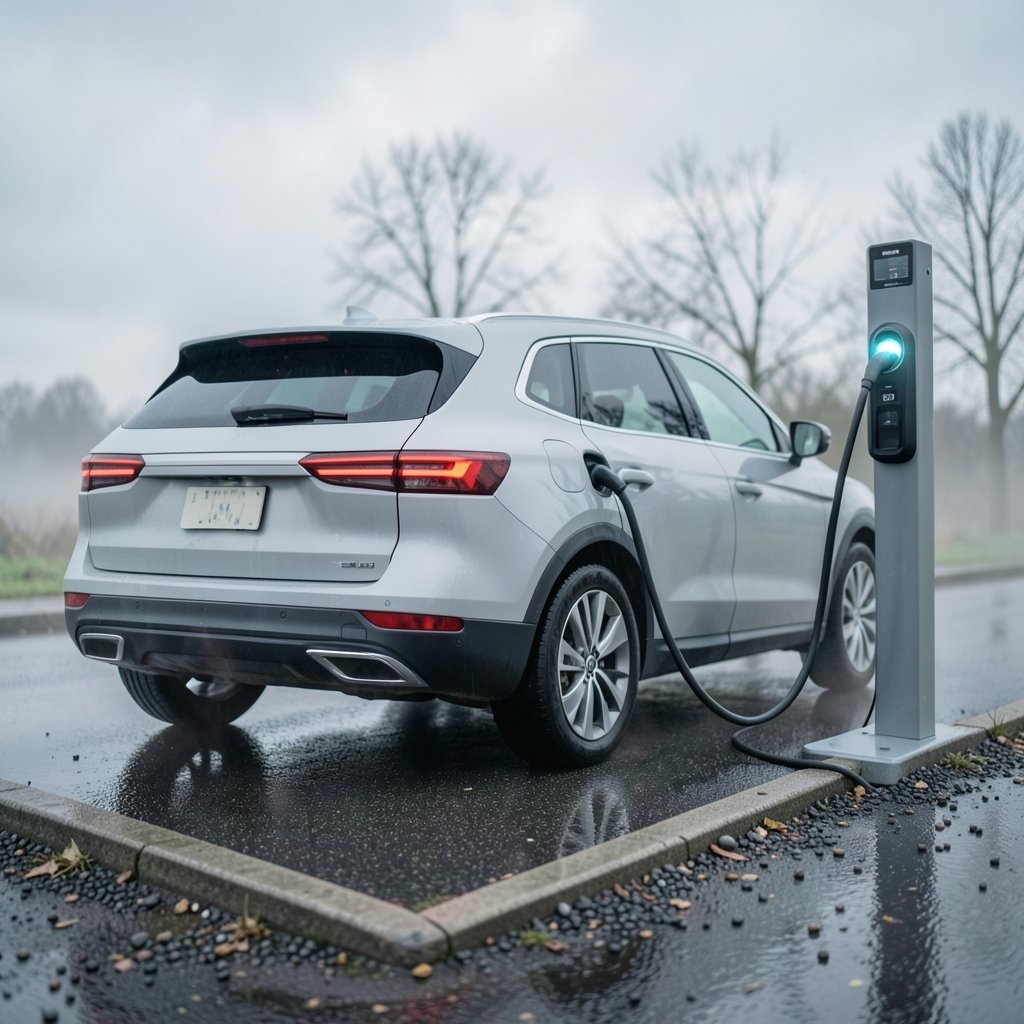
Most electric SUV reviews spend their energy on acceleration. That’s the wrong emphasis here. The Q6 e-tron’s most useful attribute is how quickly it recovers range on a long trip.
On a capable DC fast charger, the car’s charge curve holds high power for a meaningful stretch rather than spiking and collapsing. That matters more than a peak figure, because a brief 270 kW spike followed by a long slow tail is worse in real life than a steady, lower rate. Owners report that the practical outcome is a stop of roughly 20 to 25 minutes for a substantial top-up, which is genuinely close to a normal petrol station routine.
A few practical notes that don’t appear in press packs:
- Precondition the battery. Use the car’s charging preconditioning function before arriving at a fast charger, especially in cold weather. A cold pack charges slowly no matter how good the hardware is.
- Don’t chase the last 20 percent. Charging slows sharply above roughly 80 percent. On road trips, two shorter stops usually beat one long one.
- Home charging changes everything. A 7 to 11 kW wallbox overnight makes the fast-charging spec almost irrelevant for daily use.
The honest caveat: the 800-volt advantage only exists if you can find a charger that supports it. On a 50 kW unit, the Q6 e-tron charges like any other EV. The hardware is future-proof; the network around you may not be.
Driving the Q6 e-tron: Refinement Over Drama
Behind the wheel, the Q6 e-tron behaves like a well-sorted luxury SUV rather than a performance statement. The ride is composed, the cabin is quiet at motorway speed, and the steering has enough weight to feel planted without pretending to be a sports car.
The quattro all-wheel-drive versions deliver immediate, smooth acceleration. It’s brisk rather than violent, which suits the car’s character. The SQ6 adds more power and a firmer setup, but unless you specifically want the quicker variant, the standard car is the more coherent package.
Regenerative braking is adjustable, including a mode that lets the car coast and a mode that harvests energy more aggressively. The system is easy to live with, though the paddle-based controls take a week or two to become second nature.
Where the car draws criticism, consistently, is the control interface. Audi has moved much of the climate and vehicle control onto touchscreens, and the result is a cabin that looks clean but demands more glances away from the road than a set of physical knobs. It’s not a dealbreaker, but it’s the single most common complaint in owner discussions, and it’s worth spending real time with during a test drive rather than a five-minute spin.
Interior, Space and Everyday Usability
The cabin is genuinely well made. Materials feel appropriate to the price, the seats support long drives, and the layout is logically arranged once you’ve learned it.
Space is competitive for the class. Front occupants have plenty of room, rear passengers are comfortable for adults on medium journeys, and the boot is a practical shape with a useful underfloor compartment for cables. A front luggage area adds a little extra storage.
Two things to check on a test drive:
- Sit in the back yourself. Legroom is fine, but the roofline affects headroom for taller passengers.
- Bring your phone and your usual apps. The infotainment system supports smartphone integration, but the native interface has a learning curve.
If you’re weighing colour and trim choices, the same practical logic applies as with any premium car: light metallics hide road grime better than dark solids, and interior colour affects resale more than most buyers expect. Guides like this look at light brown hair shades and care for a different context, but the underlying principle holds everywhere: the finish you choose determines how much upkeep you sign up for.
Running Costs and the Ownership Reality
Electric SUVs in this class aren’t cheap to buy, and the Q6 e-tron is no exception. The case for it rests on running costs and convenience rather than sticker price.
| Cost area | What to expect |
|---|---|
| Home charging | Lowest cost per mile if you use an off-peak tariff |
| Public rapid charging | Much more expensive, sometimes close to fuel costs |
| Servicing | Fewer moving parts, generally lower routine costs than a combustion SUV |
| Tyres | Heavier car, so expect faster wear than a lighter vehicle |
| Insurance | Higher than a comparable petrol SUV in most markets |
The biggest variable is where you charge. Owners with a driveway and a cheap overnight tariff report very low running costs. Owners relying on public rapid chargers report figures that erode the advantage considerably. Work out which group you’re in before you buy, not after.
Common Mistakes Buyers Make
A few patterns show up repeatedly among people who end up disappointed with an electric SUV purchase.
- Buying on the brochure range. Real-world range drops in cold weather, at motorway speeds, and with roof bars fitted. Budget for 15 to 25 percent less than the official figure in mixed conditions.
- Skipping the home charger survey. Installation costs vary enormously depending on where your consumer unit sits and how far the cable has to run.
- Assuming every public charger is fast. A 50 kW unit will not exploit this car’s architecture.
- Not testing the touchscreen properly. Fifteen minutes of use in traffic tells you more than any spec sheet.
- Ignoring the tyre and insurance quotes. Both can surprise buyers moving from a smaller car.
How It Compares
The Q6 e-tron’s closest rival is the Porsche Macan Electric, which shares its platform but targets a sportier brief and a higher price. Other competitors include established premium electric SUVs from German and Swedish brands.
| Priority | Better fit |
|---|---|
| Sharpest handling | Sportier platform-mates |
| Smoothest ride and quiet | Q6 e-tron |
| Lowest purchase price | Smaller premium EVs |
| Fastest charging | Q6 e-tron, on a capable charger |
| Simplest controls | Rivals that keep physical buttons |
The pattern is clear: this car wins on refinement and charging speed, and loses ground on interface design and price. (EPA)
What to Check Before You Buy
If you’re shopping, a little preparation saves a lot of regret. Searching for hair salons near you is a trivial errand compared with choosing a dealer, but the method is the same: read reviews, check specifics, and don’t rely on a single source. The same discipline applies to cars.
Ask the dealer for:
- The exact WLTP or EPA range for the specific variant and wheel size.
- The confirmed peak DC charging rate and the charge curve, rather than only the headline number.
- Whether the software is on the latest version and whether over-the-air updates are supported.
- A written quote for insurance and a tyre replacement.
- A test drive long enough to include a motorway stretch and a parking manoeuvre.
For buyers considering a used example, check the battery health report and confirm the service history. Battery degradation is usually modest on modern EVs, but it’s the one component you can’t inspect visually.
Conclusion
The Audi Q6 e-tron is a genuinely good electric SUV that makes one part of EV ownership, fast charging, feel solved. It’s quiet, comfortable, well built, and quick in a way that never feels aggressive. The 800-volt architecture is a real engineering advantage, not a marketing line, and it changes how a long journey feels.
It is not perfect. The touch-heavy cabin demands patience, the price is firmly premium, and the charging advantage only materialises on the right hardware. Buyers who mostly charge at home will find the fast-charging spec less relevant than they expect, while buyers who regularly drive long distances will find it the most valuable thing about the car.
The verdict is straightforward: test drive it properly, check the real-world range for your route, confirm your charging situation, and then decide. If the answers line up, the Q6 e-tron is one of the more sensible premium electric SUVs on sale. If they don’t, no amount of badge appeal will fix it.
Frequently Asked Questions
How fast does the Audi Q6 e-tron charge?
On a high-power DC charger that supports its 800-volt architecture, a 10 to 80 percent charge takes roughly the length of a short coffee break, in the region of 20 to 25 minutes. On a 50 kW charger, it charges at the same pace as any other EV in the class.
What is the real-world range of the Q6 e-tron?
Official figures vary by variant, wheel size and model year. In practice, expect 15 to 25 percent less than the brochure number in cold weather or at sustained motorway speeds. Roof bars and heavy loads reduce it further.
Is the Q6 e-tron the same as the Porsche Macan Electric?
They share the Premium Platform Electric, co-developed by Audi and Porsche, along with an 800-volt electrical system. They are not the same car: the Porsche is tuned for sharper handling and positioned at a higher price.
What do owners complain about most?
The control interface. Moving climate and vehicle functions onto touchscreens means more glances away from the road than physical buttons would require. It’s the most consistent criticism of the car.
Should I buy the SQ6 instead of the standard Q6?
Only if you specifically want more power and a firmer chassis setup. The standard car is the more balanced package for most buyers, and it delivers the same charging advantage and refinement.
Do I need a home charger to own one?
Not strictly, but it transforms the ownership experience. Home charging on an off-peak tariff is dramatically cheaper than relying on public rapid chargers, and it removes the weekly routine of finding a working charging point.