
What Is Art Nouveau Architecture? Key Features & Examples
 Abdul WadoodLast updated
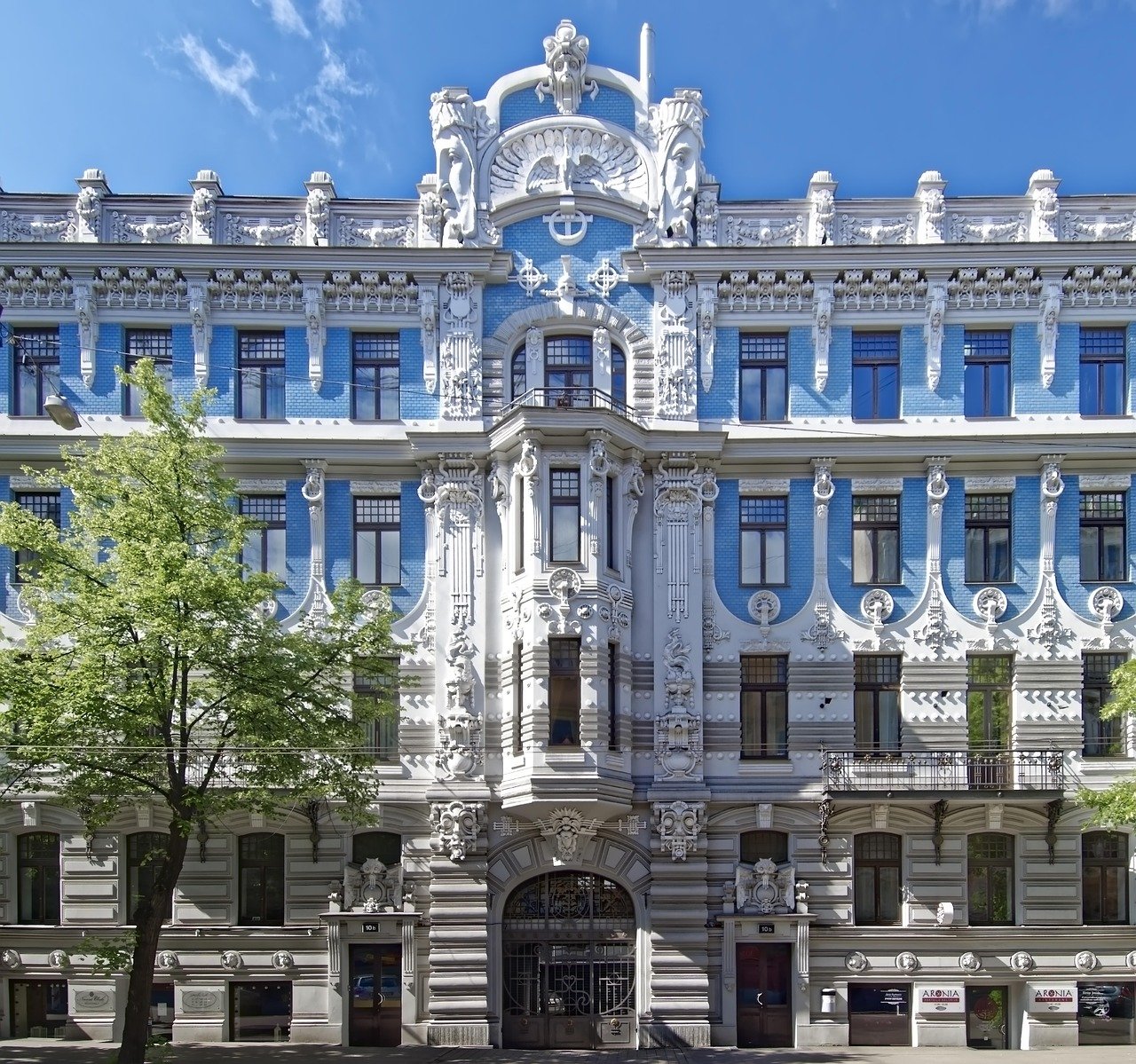
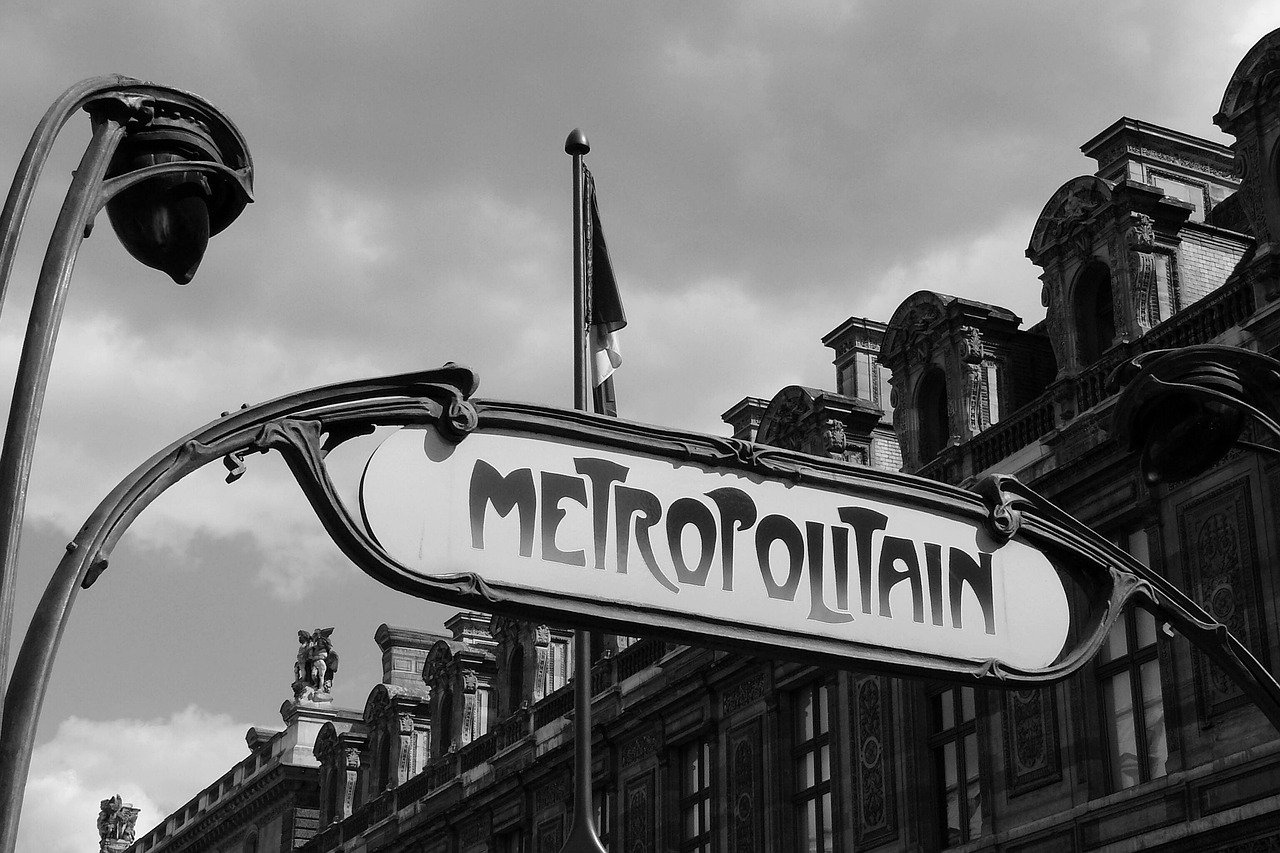
When the Paris Métro opened for the 1900 World’s Fair, riders descended into the underground through entrances shaped like plant stems, crowned with glass and cast-iron flowers. More than a century later, those entrances remain among the most photographed objects in the city. They are also one of the clearest answers to a question that still puzzles many visitors: what is Art Nouveau architecture, and why does it look so different from everything built just twenty years earlier?
Quick Answer: What is art nouveau architecture?
Art Nouveau architecture is a design style from roughly 1890 to 1910 that used flowing, organic lines, plant and floral motifs, asymmetry, and exposed iron to turn buildings into total works of art. You can see it in Brussels townhouses, Paris Métro entrances, and Barcelona’s undulating facades, and you can still visit most of these landmarks today.
The movement went by different names in different countries: Jugendstil in German-speaking regions, Secession in Vienna, Modernisme in Catalonia, and Stile Liberty in Italy. Each variant shares the same appetite for ornament drawn from nature, but the local results look surprisingly distinct.
Before planning a visit or a design project, compare the building’s year of construction, the architect’s regional school, the role of iron and glass, the survival of original interiors, and any heritage protection status.
A Movement Named After a Shop
The name itself is a clue to how Art Nouveau worked. It comes from Maison de l’Art Nouveau, the Paris gallery and workshop of the dealer Siegfried Bing, which opened in the mid-1890s and promoted a new, unified approach to design. Bing sold furniture, textiles, glass, and jewelry in a single aesthetic, and the label stuck to the whole international movement.
What made this style so radical was its refusal to separate the fine arts from the applied arts. A chair, a stair rail, a door handle, and a facade were all treated as parts of one composition. Architects designed the furniture, the wallpaper, the light fixtures, and often the cutlery. This idea of the Gesamtkunstwerk, or total work of art, is the beating heart of the movement.
It was also a reaction. Art Nouveau architects were pushing back against the heavy historicism of the nineteenth century, with its endless recycling of Gothic, Renaissance, and classical forms. Instead, they looked at stems, tendrils, insect wings, and waves, and they drew those shapes with a line that critics nicknamed the whiplash curve: a taut, asymmetrical S-shape that snaps and curls.
The Signature Features of Art Nouveau Architecture
Once you know what to look for, the style is easy to spot from across a street. The most reliable markers include:
- Organic, flowing lines, especially the whiplash curve, used on facades, ironwork, and interior plasterwork
- Plant and floral motifs, from stylized lilies and poppies to seed pods and vines
- Asymmetry, both in plan and in elevation, where a doorway or bay may sit deliberately off-center
- Exposed structural iron, often left visible and treated as decoration rather than hidden
- Mixed materials, combining iron, glass, brick, stone, timber, and ceramic tile
- Craft integration, where furniture, stained glass, mosaic, and metalwork are designed as a set
- Light, airy interiors, built around glazed roofs, skylights, and open stair halls
The movement’s timeline is usually given as roughly 1890 to 1910, though start and end dates shift from country to country. The style faded as Art Deco and early modernism rose, then returned to public attention through a revival of interest in the 1960s and through later heritage listing.
Victor Horta and the Brussels Breakthrough
If one building can be called the opening statement of Art Nouveau architecture, it is the Hôtel Tassel in Brussels, completed in 1893 by the Belgian architect Victor Horta. Horta took the iron columns that engineers had been hiding in industrial buildings and brought them into the domestic interior, shaping them like plant stems and letting them flare into the ceiling. The floor plan flows, the stair hall glows under a glazed roof, and the wall paintings echo the iron curves.
Horta’s major Brussels townhouses, including the Hôtel Tassel, the Hôtel Solvay, the Hôtel van Eetvelde, and his own house and studio, were inscribed on the UNESCO World Heritage List in 2000. That recognition matters for travelers: it means these buildings are protected, documented, and in several cases open to visitors. For anyone building an itinerary around design, they are the essential starting point.
Practical tip: many of Horta’s houses are still private or have limited opening hours. Check tour schedules well in advance and book early, because small rooms mean small visitor caps. A common mistake is assuming every listed house is a museum; some can only be seen from the street.
Hector Guimard and the Paris Métro
In Paris, the movement found its most democratic canvas. From 1900, Hector Guimard designed the entrances to the new Métro system in cast iron, glass, and enameled lava stone. The result was a set of street furniture that turned infrastructure into ornament: slender stems rising from the pavement, a lamp that looks like a bud, and the famous lettering that curves with the frame.
Guimard’s Métro work is a useful reminder that Art Nouveau was not only for wealthy clients. It was also a public style, applied to stations, shopfronts, and department stores. The same design language that filled a private salon could greet a commuter stepping off a tram.
Gaudí, Modernisme, and a Debate Worth Knowing
Barcelona is where the question gets interesting. Antoni Gaudí designed buildings such as Casa Batlló (1904–1906) and Casa Milà (1906–1912) that share Art Nouveau‘s love of curves, nature, and craft, yet belong to a distinct regional movement: Catalan Modernisme. Many scholars treat Modernisme as a parallel current rather than a simple subset of Art Nouveau, and Gaudí’s deeply personal, structural, and religious vision sits at the edge of any category.
That debate is not academic nitpicking. It changes how you read a building. If you visit Barcelona expecting French-style whiplash curves, you may miss what makes Gaudí different: his interest in catenary arches, recycled ceramic shards, and structural experiments that anticipate modern engineering. The honest answer is that Art Nouveau is a family of related movements, not a single uniform style, and Gaudí is its most brilliant outlier.
Regional Names and How They Differ
The same impulse produced different local dialects. This table gives a quick comparison for travelers and design students:
| Region | Local name | Typical character |
|---|---|---|
| Belgium and France | Art Nouveau | Whiplash curves, exposed iron, unified interiors |
| German-speaking countries | Jugendstil | Graphic, linear ornament, strong print culture |
| Vienna, Austria | Secession | Geometric restraint, flat pattern, white surfaces |
| Catalonia, Spain | Modernisme | Structural experiment, mosaic, organic sculpture |
| Italy | Stile Liberty | Floral ornament, decorative ceramics, shopfronts |
Notice how the Viennese version moves toward geometry while the Belgian version stays organic. Both are Art Nouveau, but they pull the same idea in opposite directions. That range is exactly what makes the movement so rewarding to study and so hard to define in one sentence.
Art Nouveau Versus Art Deco and Modernism
People confuse Art Nouveau with Art Deco constantly, partly because the names sound alike. The two styles are separated by roughly two decades and by a fundamental shift in attitude.
| Feature | Art Nouveau | Art Deco |
|---|---|---|
| Peak years | c. 1890–1910 | 1920s–1930s |
| Dominant line | Curved, organic, asymmetrical | Straight, geometric, symmetrical |
| Motifs | Plants, flowers, insects, waves | Sunbursts, zigzags, stepped forms |
| Materials | Iron, glass, ceramic, carved wood | Chrome, lacquer, exotic veneers, mirrored glass |
| Attitude | Craft revival and total design | Machine-age glamour and luxury |
Where Art Nouveau curls, Art Deco marches. Where Art Nouveau celebrates the handmade, Art Deco celebrates the machine. Early modernism then stripped away ornament almost entirely, which is why both styles looked old-fashioned to architects by the 1930s. The broader story of how design movements rise and fall, and how revivals bring them back, is a theme explored in coverage of a fresh perspective on contemporary art, where the afterlife of historical styles gets a modern reading.
How to Read an Art Nouveau Building in Practice
Architectural tourism rewards a method. A few habits make the style legible even on a short visit:
- Start at the doorway. Door frames, handles, and bells are often the most intact original elements.
- Look up at the ironwork. Balconies, canopies, and railings show the whiplash line at its purest.
- Follow the stair. The stair hall is usually the heart of the composition, lit from above.
- Check the glass. Stained and etched glass often carries the color scheme of the whole interior.
- Ask about interiors. A facade tells you a little; a preserved room tells you everything.
The most common mistake is photographing only the exterior and skipping the interior tour. Another is visiting in the middle of the day, when crowds fill narrow stair halls; early mornings and late afternoons are calmer and the light through glazed roofs is better. Wear shoes you can stand in for an hour, since many house museums have limited seating.
If you want to go deeper into how a single aesthetic decision ripples through a building, the way a design language shapes objects and spaces is explored in inside the art of modern fragrance, which traces the same logic of total composition in a different medium. And for a wider view of how style movements travel across borders, the culture section at art, design and modern trends is a useful companion read.
Why Art Nouveau Still Matters
Art Nouveau architecture matters today for three practical reasons. First, it is a heritage and tourism asset: the UNESCO listings in Brussels and Barcelona draw visitors specifically for the style. Second, it is a design lesson in integration, showing what happens when structure, ornament, and craft are planned together instead of layered on at the end. Third, it is a reminder that new technology, in this case structural iron and plate glass, does not have to produce cold buildings. The Art Nouveau architects used industrial materials and made them feel alive.
The movement’s decline after about 1910 was swift, but its influence was not. Contemporary designers still borrow the whiplash curve, and the idea of the total work of art survives in branding, interiors, and product design. The style also left a practical legacy: it proved that ornament could be modern.
Conclusion
Art Nouveau architecture is best understood as a short, intense experiment in making buildings feel organic, unified, and alive. It ran from roughly 1890 to 1910, took root in Brussels with Victor Horta, reached the street in Paris with Hector Guimard, and pushed toward structural adventure in Barcelona with Antoni Gaudí. Its whiplash curves and plant motifs are easy to recognize, but its real contribution was the insistence that every part of a building, from the stair rail to the door handle, belongs to the same idea. Learn to read those details, and a walk through Brussels, Paris, or Barcelona becomes a tour of one of design history’s boldest moments.
Frequently Asked Questions
Is Art Nouveau the same as Art Deco?
No. Art Nouveau peaked around 1890 to 1910 and favors curved, organic, asymmetrical forms drawn from nature. Art Deco flourished in the 1920s and 1930s and favors straight lines, geometry, and machine-age materials like chrome and mirrored glass. The names sound similar, but the visual language is nearly opposite.
Which city has the best Art Nouveau architecture?
Brussels is the strongest single destination because of Victor Horta’s townhouses, several of which are UNESCO World Heritage sites. Paris offers Guimard’s Métro entrances, Vienna has its Secession buildings, and Barcelona has Gaudí’s Modernisme works. A short trip combining Brussels and Paris covers the movement’s core landmarks.
Why is it called Art Nouveau?
The name comes from Maison de l’Art Nouveau, the Paris gallery and workshop run by the dealer Siegfried Bing in the mid-1890s. The term spread internationally, even though other countries used their own names, such as Jugendstil, Secession, Modernisme, and Stile Liberty.
What materials defined Art Nouveau buildings?
Architects combined exposed structural iron with glass, brick, stone, carved wood, ceramic tile, and mosaic. Iron was the key innovation: it allowed slender columns and large glazed areas, and it could be shaped into plant-like curves instead of being hidden inside walls.
Can you visit Art Nouveau buildings today?
Many are open to the public. Horta’s house and studio in Brussels operates as a museum, several of his townhouses offer guided tours, and Gaudí’s buildings in Barcelona are major attractions. Some private houses can only be viewed from the street, so check opening days and book tours in advance.
Why did Art Nouveau go out of fashion?
The style declined after about 1910 as architects turned toward Art Deco and early modernism, which rejected heavy ornament in favor of geometry and machine production. Handcrafted interiors also became expensive to build and maintain. Interest revived in the 1960s, and heritage listing later secured the survival of key buildings.