
How to Arrange Candles for Entertaining: 2026 Guide
 Abdul WadoodLast updated
A single taper candle can throw enough light to change the mood of an entire dinner table. Multiply that by a well-planned cluster, and you have one of the cheapest, most effective tools for making a room feel intentional. Yet candle arrangement is where many hosts quietly stumble: flames that sit too high, holders that wobble, wicks that smoke, and centerpieces that look better in a photo than they do across a dinner conversation.
This guide covers the practical decisions that matter: grouping and height, draft control, scent strategy, and fire safety. It is for hosts who want a table that looks composed and behaves safely rather than a pretty arrangement that lasts ten minutes before the first candle tips over.
Why Candle Placement Matters More Than Candle Choice
Hosts tend to spend their budget on the candles themselves, then place them almost as an afterthought. In practice, placement does more work than price. A modest set of unscented tapers arranged with deliberate spacing will read as more sophisticated than an expensive, mismatched collection scattered across a table.
Light direction shapes the mood. A cluster of flames at the center of a table creates a pool of warm light that draws people in. A ring of candles around the room’s perimeter creates a soft, even glow that feels calm but less intimate. Deciding which effect you want before you place a single holder saves a lot of rearranging later.
Flames change how food looks. Low, warm light flatters almost everything on a plate, but flames placed directly in front of a guest’s face can be uncomfortable and can make conversation awkward. The goal is light around the table, not light at people.
Placement is a safety decision. Most candle mishaps at home come down to location: too close to fabric, too near a draft, or on a surface that gets bumped. Getting the arrangement right is as much a risk-management exercise as a design one.
Start With the Room, Not the Table
Before arranging anything on the table itself, survey the space. Walk the room the way a guest would: enter the doorway, find a seat, reach for a glass.
Identify drafts first
Drafts are the single most common reason candles behave badly at a party. A wick in moving air burns unevenly, tunnels down one side, smokes, and drips. Check for:
- Doorways and open windows, including the path between the kitchen and the dining room
- HVAC vents and returns, especially ceiling or floor vents near the table
- Ceiling fans, even on a low setting
- Fireplaces, even unlit ones, which can pull air across a room
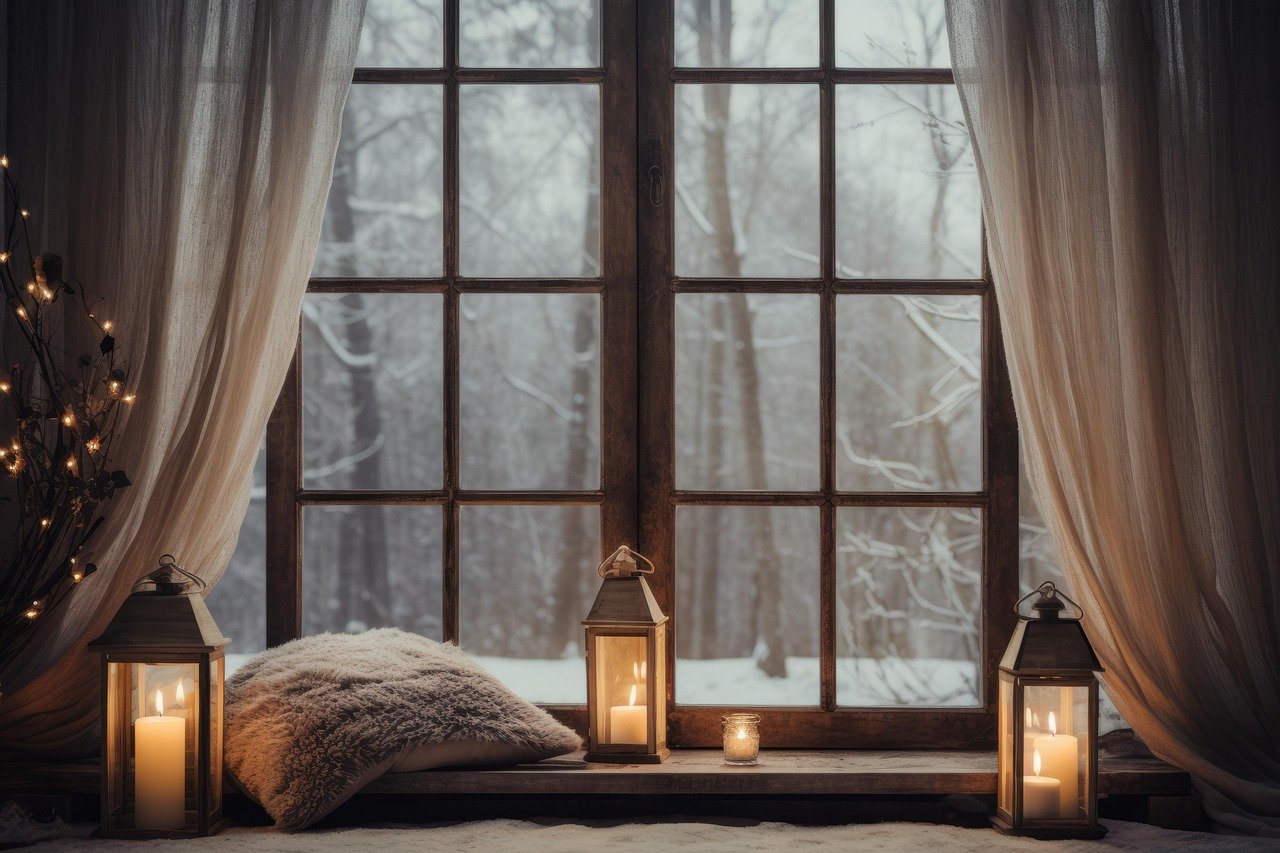
If a draft is unavoidable, an enclosed holder such as a glass hurricane or cylinder solves most of the problem by shielding the flame while still letting light through.
Match candle scale to the surface
A cluster of five tapers on a narrow console looks generous. The same cluster on a two-meter dining table looks lost. As a rough rule, candle groupings should occupy somewhere between a quarter and a third of the surface they sit on, and the tallest candle should not dominate the room’s sightlines. (Candle)
Grouping and Spacing: What Actually Looks Good
The most reliable arrangement principle is clustering in odd numbers with varied heights. Groups of three, five, or seven candles read as deliberate, while even numbers can look like a matched set waiting to be lit. Varying height within the cluster adds depth and keeps the eye moving.
This is a design convention rather than a rule with evidence behind it, and plenty of beautiful tables break it. Still, it is a dependable starting point when you are unsure.
A simple placement method
- Clear the table completely and lay down the runner or placemats first.
- Place the tallest element of the cluster slightly off-center, not dead middle.
- Add two shorter candles on either side, staggered in depth rather than in a straight line.
- Step back three paces and check the silhouette. Adjust anything that looks like a row.
- Only then add flowers, glassware, and the rest of the centerpiece around the candles.
Common grouping mistakes
| Mistake | Why it fails | Fix |
|---|---|---|
| Evenly spaced rows of identical candles | Reads as a display, not a composition | Cluster in odd numbers, vary heights |
| One tall candle dominating the table | Blocks sightlines and looks unbalanced | Cap height, distribute tall pieces |
| Candles hidden behind a tall centerpiece | Light is wasted, and the flame is hard to monitor | Keep flames in front of or beside tall elements |
| Mixing too many styles in one cluster | Looks accidental rather than curated | Repeat one or two holder styles |
| Candles placed on a fabric runner with no base | Wax drips soak in and heat sits against cloth | Use trays or holders with a wide base |
Height, Sightlines, and Conversation
The most overlooked rule of table candles is the sightline test. When seated, a guest should be able to see the person across the table without leaning. Flames and holders that rise into that line of sight become an obstruction, and guests will start shifting in their chairs to talk around them.
A practical approach is to keep the flame itself comfortably below seated eye level, roughly a foot to fourteen inches above the tabletop for most dining setups. That threshold varies with table width and chair height, so treat it as a rule of thumb and test it with an actual person sitting in an actual chair.
Tall tapers still have a place. They work well on sideboards, mantels, and buffet surfaces where nobody needs to see across them. On the dining table itself, low pillars, tea lights, and short tapers tend to serve the meal better.
Scent Strategy: Unscented at the Table
Scented candles and food compete for the same sense. A strong floral or vanilla note next to a carefully cooked meal flattens the food’s aroma and can make guests feel like they are eating in a candle shop.
The practical convention among experienced hosts is straightforward: unscented candles on the dining table during the meal, with scented candles placed elsewhere, such as an entryway, bathroom, or living area, where they set a mood without interfering with dinner. If you want fragrance in the dining room, light it an hour before guests arrive and extinguish it before the food comes out.
Stability, Heat, and Flammable Materials
Wax and flame are predictable until they meet a loose holder or a dry centerpiece. A few habits prevent nearly all of the trouble.
Weight the base. Taper candles in slim, lightweight holders are the most common tipping hazard, especially with children, pets, or a table that gets bumped. Choose holders with a wide or weighted base, or set tapers in a holder that grips the candle firmly.
Keep flames clear of dry material. Dried florals, paper leaves, fabric runners, and loose greenery are all common centerpiece materials and all flammable. Leave a clear zone of several inches around every flame, and never let greenery drape over a holder.
Protect heat-sensitive surfaces. Wax, polish, and veneer can mark under a hot holder. A tray or a felt base solves this and also catches drips.
Trim wicks before lighting. A wick trimmed to roughly a quarter inch burns cleaner and smokes less. Long, untrimmed wicks are a leading cause of soot on walls and ceilings.
Planning Burn Time Around the Evening
Candle burn-time labels are manufacturer estimates, and real performance shifts with drafts, wick trimming, and how long the candle stays lit. Use the label as a planning number, not a guarantee.
For a dinner party, light candles shortly before guests arrive rather than hours ahead. This preserves burn time for the hours that matter and keeps the room from overheating. For a longer evening, plan roughly one candle per two to three hours of intended burn time per position, and keep spares on hand rather than letting a candle gutter out mid-conversation.
Safety Basics Every Host Should Build In
Open flames in a room full of people, fabric, and alcohol deserve real respect. The core habits are simple and worth repeating:
- Never leave lit candles unattended, and extinguish them before leaving the room or going to sleep.
- Keep a snuffer or a small extinguisher within reach, and know where it is before guests arrive.
- Place candles away from the edge of any surface where a sleeve or a hand could knock them.
- Keep lit candles out of reach of children and pets, and consider enclosed holders if either will be present.
- Extinguish candles by snuffing rather than blowing, which avoids hot wax spatter.
Fire services and safety bodies publish candle-safety guidance and home fire statistics, and it is worth a five-minute read before hosting season. The pattern in the data is consistent: most candle fires start when something flammable is left too close to an unattended flame. (Candle Fire Safety)
When to Choose Flameless Alternatives
Battery-powered LED candles have improved dramatically and now look convincing at a distance. They make sense in several situations:
- Outdoor tables, where wind makes open flames unreliable
- Homes with toddlers, curious pets, or guests who move around a lot
- Venues with strict no-open-flame policies
- Long events where nobody will be watching the candles
The trade-off is atmosphere. Real flames flicker and move in a way that LEDs approximate but rarely match. A common hybrid approach is real candles on the dining table where they can be watched, and flameless ones on sideboards, shelves, and outdoor surfaces where supervision is thinner.
A Quick Pre-Party Checklist
Run through this list an hour before guests arrive:
- Walk the room for drafts and adjust or shield any flame in moving air.
- Trim every wick to about a quarter inch.
- Confirm no flame sits within several inches of fabric, paper, or dried florals.
- Sit in a guest chair and check the sightlines across the table.
- Move scented candles out of the dining room or extinguish them before the meal.
- Place a snuffer and an extinguisher where you can reach them quickly.
- Light candles shortly before the doorbell rings, not hours ahead.
Conclusion
Arranging candles for entertaining is less about collecting beautiful objects and more about making a series of small, deliberate decisions: clustering in odd numbers, keeping flames below the sightline, shielding them from drafts, keeping scent away from the food, and treating stability and clearance as non-negotiables. None of these steps is complicated, and together they turn candles from a decorative afterthought into the element that makes a room feel finished. Get the placement and the safety basics right, and the atmosphere takes care of itself.
Frequently Asked Questions
How many candles should I put on a dining table?
For a standard table seating four to six, a cluster of three to five candles is usually enough to create a warm pool of light without crowding the centerpiece. Larger tables can carry seven or more, grouped in two clusters rather than spread evenly. The goal is a focal point, not full coverage.
Should candles on a dinner table be scented or unscented?
Unscented is the safer choice during the meal. Fragrance competes directly with the aroma of the food and can make a carefully prepared dish taste flatter than it is. If you want scent in the room, light a scented candle in an entryway or living area instead, or extinguish dining-room candles before serving.
How tall should table candles be?
Keep the flame comfortably below the eye level of seated guests, roughly a foot to fourteen inches above the tabletop as a rule of thumb. Taller tapers work better on sideboards and mantels where nobody needs to see across them. Always test the height with a real person sitting in a real chair.
How do I stop candles from smoking and dripping?
Trim the wick to about a quarter inch before each lighting, and keep the candle out of drafts. Smoking and uneven burning almost always trace back to a long wick or moving air. An enclosed glass holder solves the draft problem while still letting light through.
Are flameless candles acceptable for a dinner party?
Yes, and they are often the smarter choice outdoors, in homes with young children or pets, or at venues that prohibit open flames. Modern LED candles look convincing at a distance. Many hosts use real candles on the dining table and flameless ones on sideboards and outdoor surfaces.
How early should I light candles before guests arrive?
Light them shortly before guests are due, generally within fifteen to thirty minutes of the doorbell. Lighting hours ahead burns through the candle’s useful life and can make a small room feel stuffy. If the evening will run long, keep spare candles ready rather than letting one gutter out mid-conversation.