
Luxury Vinyl Plank Flooring Near Me: Vet Local Sellers
 Abdul WadoodLast updated
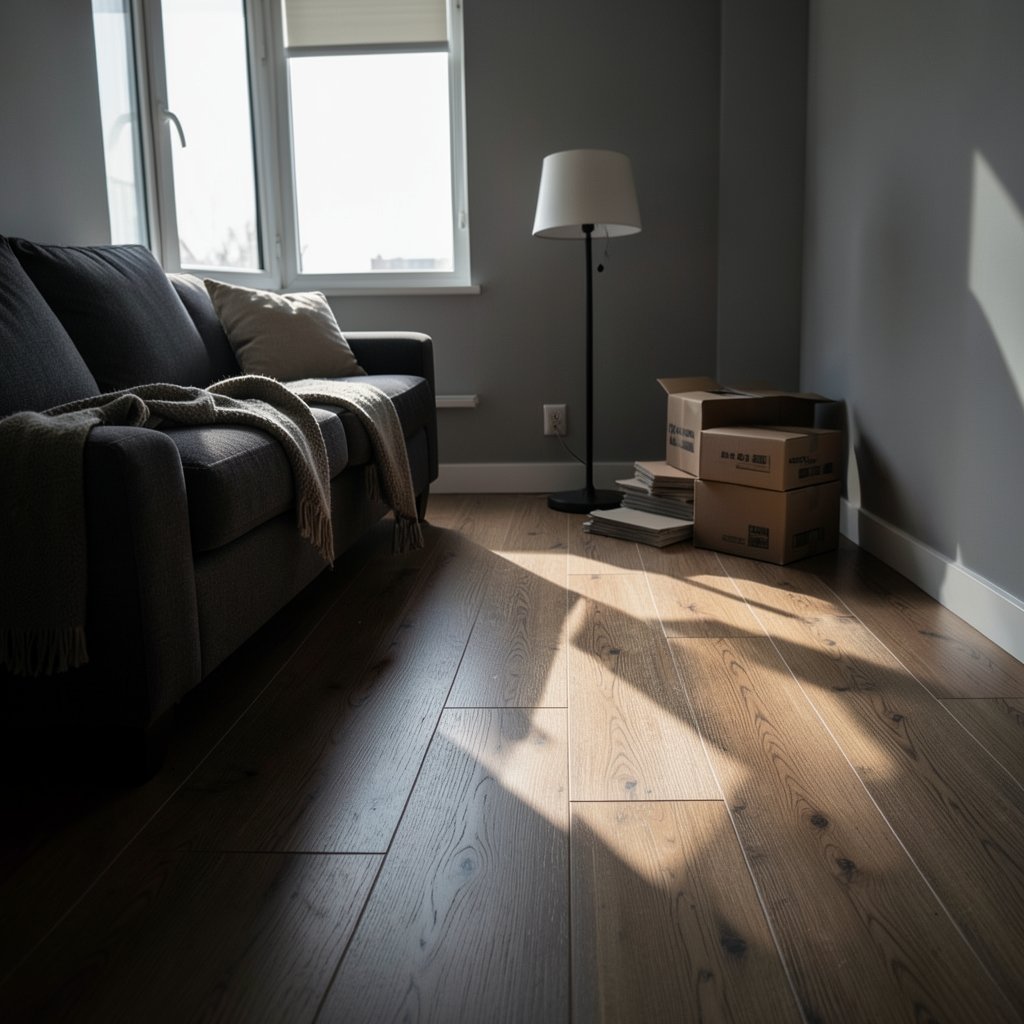
You type “luxury vinyl plank flooring near me” into your phone, and up pop a dozen shops, a few big-box stores, and a map dotted with pins. But how do you tell which of those local sellers will actually steer you right, rather than just move boxes? The answer has less to do with who ranks first and more to do with what you ask before you hand over a deposit. (Vinyl composition tile)
This guide walks through the local buying process from the inside out. It covers what LVP really is, how to judge a nearby retailer or installer, which specs matter, and the mistakes that cost people money. By the end, that map full of pins should feel a lot less random.
What Luxury Vinyl Plank Actually Is
Luxury vinyl plank is a resilient floor made from a rigid or semi-rigid core topped with a printed wood-grain image and a clear wear layer. The “luxury” label is pure marketing. No regulator grades a plank as luxury or not, so the word tells you nothing about quality.
The core is where most of the engineering lives. Two families dominate:
- SPC (stone-plastic composite): dense, stiff, and very stable. It handles temperature swings well and feels solid underfoot.
- WPC (wood-plastic composite): lighter and slightly softer, often with an attached underlayment for sound and comfort.
Neither is automatically better. SPC suits busy rooms and sun-exposed spaces; WPC suits rooms where quiet and a softer step matter more. A good local seller will ask about the room before recommending either, and that first question is a useful tell about how they work.
Why “Near Me” Results Vary So Much

Search engines and map apps build local results from where you are standing, so two people in different towns get different lists. Paid placement also pushes some listings to the top, which means the first pin is not necessarily the best shop. Check whether a listing is labeled as an ad before you treat it as a recommendation.
The practical fix is to search more than once and in more than one way. Try “LVP flooring showroom” plus your suburb, then try the same search on a map app. Cross-reference the names that appear in both. Shops that show up consistently are usually real, established businesses rather than lead-generation shells that resell your phone number to three installers.
How to Vet a Local LVP Seller Before You Visit
Most of the work happens before you walk in. A few quick checks separate serious dealers from order-takers.
Check what standards they can name
Ask which performance standard the product claims to meet. The main one for rigid-core modular flooring is ASTM F3261, and reading the ASTM F3261 rigid polymeric core flooring specification explains what the standard actually tests. A salesperson who can point to it, or to the older vinyl plank standard, is speaking your language. One who shrugs is guessing.
Ask for the actual spec sheet
Every reputable brand publishes a spec sheet listing wear layer thickness, core type, thickness, and warranty terms. Ask to see it for the exact product you are considering, not the display model next to it. Colors get discontinued; specs get quietly revised. The sheet is the contract.
Confirm they handle installation or vet it
Some showrooms install. Others sell material only and hand you a list of contractors. Neither is wrong, but you need to know which you are getting, because the warranty often hinges on proper installation by a qualified fitter.
Look at the sample under your own light
Take a plank sample home. Wood-grain prints that look warm in showroom lighting can turn gray or orange in a north-facing room. This single step prevents more regret than any other.
The Specs That Actually Matter
Marketing badges are noisy. A short list of numbers does most of the real work.
| Spec | What to look for | Why it matters |
|---|---|---|
| Wear layer | Roughly 6–12 mil for homes, 20 mil and up for commercial | Thin wear layers scuff and dull faster |
| Core type | SPC for stability, WPC for comfort and quiet | Affects feel, sound, and tolerance to temperature |
| Overall thickness | Commonly 4–8 mm | Thicker planks feel more solid and hide subfloor flaws |
| Edge style | Micro-bevel or painted bevel | Bevels hide seams; painted bevels resist dirt lines |
| Certification | Low-emission third-party certification | Signals lower VOC emissions indoors |
| Warranty | Read the document, not the badge | Exclusions usually cover installation and moisture |
Wear layer is quoted in mils, where one mil equals one-thousandth of an inch. Be careful here: mil claims are not measured or reported consistently across brands, so treat them as a rough guide rather than a precise comparison. Ask to see the number on the spec sheet rather than on the box art.
For indoor air quality, look for a third-party low-emission certification. The FloorScore program for hard-surface flooring explains how products are tested against California’s indoor emissions standard, and it is a genuinely useful filter when two products look identical otherwise.
Moisture, Subfloors, and the Step People Skip
LVP is often sold as waterproof, and that word deserves scrutiny. Waterproof usually refers to the core, not to the seams or the slab beneath. A flooded room can still wick moisture up through joints and trap it under a floating floor.
Concrete slabs are the usual trouble spot. Before installation over concrete, reputable installers test for moisture, often using in-situ relative humidity testing such as the ASTM F2170 concrete slab humidity test method. Skipping that test is one of the most common and most expensive shortcuts in the trade, because trapped vapor can lift planks and void warranties months later.
Subfloor flatness matters just as much. Manufacturer instructions set their own tolerances, and they vary widely between products. If a seller waves off flatness questions with “it’ll be fine,” get a second opinion. A floor that clicks together beautifully on a flat slab can flex and creak forever on a wavy one.
Floating, Glue-Down, and What Fits Your Room
Most residential LVP is floating, meaning planks click together and rest over the subfloor without adhesive. Floating floors can go over some existing hard surfaces, which saves demolition time. Glue-down and loose-lay versions exist too, and each suits different situations.
A quick comparison helps:
| Method | Best for | Trade-off |
|---|---|---|
| Floating click-lock | DIY-friendly, fast, over most hard subfloors | Can sound hollow; needs expansion gaps |
| Glue-down | High-traffic areas, commercial spaces | Harder to remove; needs a flat, clean slab |
| Loose-lay | Quick commercial refits | Less stable in busy homes |
If your project spans several rooms with different subfloors, it is worth planning the whole route before buying a single box. A thoughtful layout plan saves material and avoids awkward transitions at doorways. (Plan luxury road trip practical route effortless travel)
Common Mistakes Buyers Make Locally
Even careful shoppers trip on the same few stones. Watch for these.
- Buying on the box art alone. Photos are retouched. Samples are not.
- Ordering too little. Add 10 percent for cuts and future repairs, and buy from the same batch so dye lots match.
- Skipping the moisture test. Especially over concrete, this is non-negotiable.
- Trusting the warranty badge. Residential wear warranties often run 15 to 30 years or more, but they routinely exclude installation errors, moisture damage, and poor subfloor prep.
- Choosing an installer on price alone. The cheapest quote often omits prep work that someone has to pay for later.
- Ignoring acoustics upstairs. Hollow-sounding floors drive people mad. If quiet matters, plan for underlayment or look at what makes a cabin genuinely silent as a benchmark for how much sound control is possible.
Matching the Floor to the Whole Trip
Flooring rarely lives alone. If the plank is going into a rental, a family home, or a place you plan to sell, think about how it fits the rest of the space. A neutral, mid-tone plank photographs well and forgives scratches. A dramatic dark plank looks stunning and shows every crumb.
For larger projects, plan the way you would plan a long family trip. If a renovation coincides with a big family gathering, the same logic that goes into planning a multigenerational luxury trip that works for every age applies to floors: pick durable, low-maintenance surfaces that suit toddlers and grandparents alike.
Travel-minded owners also tend to notice flooring the way they notice a good hotel room. Anyone who has studied a Paris luxury travel guide knows the feeling of a space that simply works, and a well-chosen plank delivers that same quiet competence at home. If a renovation is part of a longer break, mapping the work around a luxury rail trip with sensible booking timing keeps the schedule sane. And for anyone fitting out a holiday home near the water, the lessons in a Lake Como luxury travel guide about villas and boats translate neatly to moisture-tolerant floors.
Getting Quotes That Mean Something
Ask every local seller for a written quote that separates materials from labor and prep. A single lump sum hides the details you need to compare. The quote should state the product name and SKU, the wear layer, the underlayment, the subfloor prep included, and the disposal of old flooring.
Get three quotes and read them side by side. If one is dramatically cheaper, find out what it leaves out. It is almost always prep, underlayment, or disposal.
Ask each seller how they handle a mid-project shortage. Good dealers keep batch records and can reorder matching material. Less careful ones shrug and offer whatever is in stock, which is how people end up with a patch of slightly different flooring in the hallway.
Conclusion
Searching for luxury vinyl plank flooring near you is really a search for a knowledgeable local partner, not a stack of boxes. The shops worth your time ask about the room, hand over spec sheets without being asked, name real standards, and insist on moisture testing before installation. The ones to walk away from make broad promises in one sentence and get vague when you ask for numbers.
Take a sample home. Read the warranty. Test the slab. Compare three quotes line by line. Do those four things and the floor under your feet will still look right in a decade, long after the map pins have blurred into memory.
FAQ
What does “luxury” mean on a vinyl plank label?
Nothing official. It is a marketing term with no regulated definition or grading system behind it. Judge a plank by its core type, wear layer, thickness, certifications, and warranty instead of the adjective on the box.
How thick should the wear layer be for a home?
Most residential products fall somewhere around 6 to 12 mil, with commercial products often at 20 mil and above. These are typical industry ranges rather than fixed rules, and mil claims are not measured consistently across brands, so check the spec sheet rather than the packaging.
Is luxury vinyl plank really waterproof?
Usually the core is waterproof, but that does not make the whole floor immune to water. Seams, edges, and the subfloor beneath can still let moisture through. Over concrete, a moisture test before installation is essential, and manufacturer instructions set the limits.
How do I find a good local LVP dealer?
Search more than once, check which results are ads, and cross-reference names across search engines and map apps. Then ask candidates which performance standard the product meets, request the spec sheet, and confirm whether they install or only sell.
Can LVP go over my existing floor?
Often yes, especially floating click-lock planks over some hard surfaces. It depends on the product, the height of the existing floor, and the condition of what is underneath. The manufacturer’s installation guide is the final word, not the salesperson’s memory.
Why do local prices vary so much for the same product?
Quotes bundle different amounts of prep, underlayment, disposal, and trim work. A low number usually means something was left out. Ask for itemized quotes so you can compare materials, labor, and prep separately before deciding.