
Bentley Manufacturer: Inside the Crewe Factory & VW Ownership
 Abdul WadoodLast updated

Who actually builds a Bentley? Most people picture a shiny showroom, not a factory floor in the English countryside. But the answer to “who makes Bentley” is more interesting than a brand logo. Bentley Motors Ltd. is a real, physical manufacturer with a single main plant, a long and bumpy ownership history, and a production line that still leans on human hands as much as robots. (Bentley)
This article breaks down who owns Bentley, where the cars are built, how the company got here, and what its manufacturing approach looks like today. If you have ever wondered whether a Bentley is “just a rebadged Volkswagen,” the details below will settle that question.
Who Owns Bentley Today?
Bentley Motors Ltd. is a subsidiary of the Volkswagen Group, one of the largest automotive conglomerates in the world. Bentley is not publicly listed, so you cannot buy shares in it directly. Its financial results roll up into VW Group’s reporting.
That ownership matters for how the cars are made. Bentley benefits from group-wide engineering resources, shared platforms, and purchasing power, while keeping its own design, craftsmanship, and brand identity in Crewe, England.
The Volkswagen connection dates to 1998, when the Rolls-Royce and Bentley brands were split between two owners. BMW ended up with Rolls-Royce, and Volkswagen took Bentley. That single deal reshaped modern Bentley more than any event since the Second World War.
A Short History of the Bentley Manufacturer
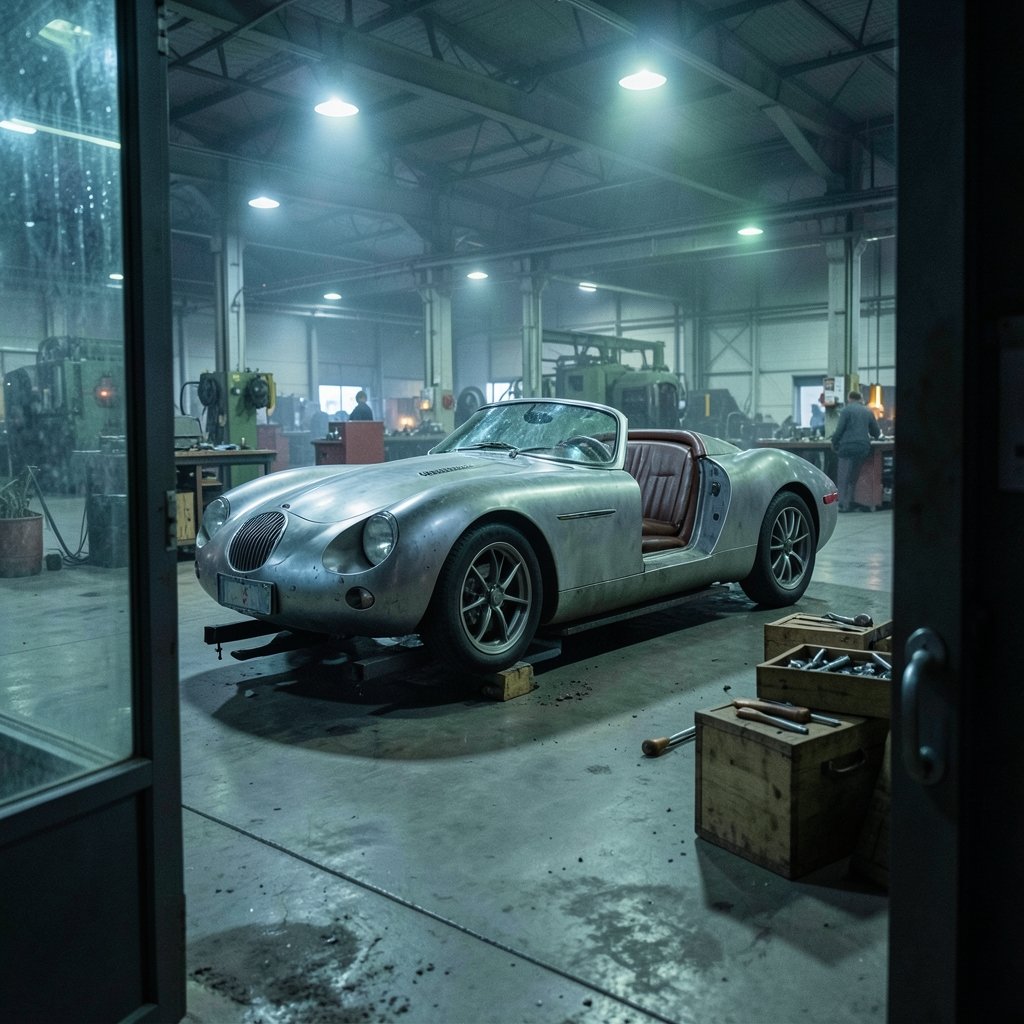
W.O. Bentley and the Racing Years
W.O. Bentley founded Bentley Motors in London in 1919. The company’s early reputation was built on engineering substance rather than luxury trim. Bentley cars won the 24 Hours of Le Mans five times: in 1924, 1927, 1928, 1929, and 1930. That racing record is still central to how the brand markets itself.
Rolls-Royce Ownership and the Crewe Era
The Great Depression hit hard. Bentley Motors went into receivership, and Rolls-Royce acquired Bentley in 1931. For decades afterward, Bentleys and Rolls-Royces were built side by side. Production moved to Crewe, Cheshire, during the Second World War, and the site has been Bentley’s home ever since.
The Volkswagen Era
After the 1998 split, Volkswagen invested heavily. The turning point was the Continental GT, launched in 2003. It was Bentley’s first model under VW ownership and became a volume driver that transformed the company’s finances. Before the Continental GT, Bentley sold a few thousand cars a year at most. After it, annual production climbed into the five-figure range.
The next big shift came in 2015 with the Bentayga, Bentley’s first SUV. Love it or not, it opened the brand to a much larger buyer pool.
Where Are Bentleys Built?
Almost every Bentley on the road today comes from Crewe, Cheshire, England. The plant is not a sprawling industrial estate on the scale of a mass-market car factory. It is a compact, deliberately managed site where several thousand people work across design, engineering, and assembly.
A few practical points about the Crewe operation:
- It handles the full production process, from body assembly to final inspection.
- It is the headquarters as well as the factory, so design and engineering sit close to the line.
- It produces the Continental GT, Continental GTC, Flying Spur, and Bentayga, though exact model assignments shift as the range changes.
If you are researching the company for business purposes, the official corporate record sits with UK Companies House, where Bentley Motors Ltd. is registered as a UK company.
What Makes Bentley Manufacturing Different?
Bentley sits in an unusual spot. It is a low-volume manufacturer owned by a high-volume group. That combination shapes how the cars are built.
Handcraft at Scale
Bentley’s interiors are the clearest example. Leather is selected and stitched by hand. Wood veneers are matched across a single car so the grain flows continuously from dashboard to door. These are not details a fully automated line handles well.
The practical result: Bentley blends automated body construction with manual finishing. Robots handle repeatable, precision-heavy tasks. People handle judgment calls like leather matching and veneer alignment.
Shared Platforms, Different Cars
Bentley uses group platforms as a starting point, then re-engineers heavily. The chassis architecture may be shared, but the engine tuning, suspension calibration, interior materials, and body panels are Bentley-specific. This is the honest answer to the “rebadged VW” accusation: the underlying structure is shared, the finished product is not.
Low Volume, High Complexity
Bentley produces roughly 10,000 to 15,000 cars a year, depending on the year. 2022 was a record year above 15,000 units. For comparison, mass-market plants can build that many cars in a few weeks. Low volume means more time per car, more customization, and a different cost structure.
| Factor | Bentley (Crewe) | Typical Mass-Market Plant |
|---|---|---|
| Annual volume | Roughly 10,000 to 15,000 | Hundreds of thousands |
| Assembly style | Hybrid: automation plus hand finishing | Heavily automated |
| Customization | Extensive, per-order | Limited trim packages |
| Core differentiator | Materials and craftsmanship | Speed and cost per unit |
Common Mistakes People Make When Researching Bentley
A few myths keep circulating, and they are worth correcting directly.
Mistake 1: Assuming Bentley is British-owned. The cars are engineered and built in England, but the company is owned by Volkswagen Group, a German company. “British-built, German-owned” is the accurate description.
Mistake 2: Confusing Bentley with Rolls-Royce. The two shared an owner for decades and even shared a factory, but they have been separate companies under separate owners since 1998. They compete in the same market but are not related today.
Mistake 3: Believing the cars are entirely hand-built. They are not. Body shells are stamped and assembled with automation. The handwork is concentrated in finishing, interiors, and final assembly.
Mistake 4: Trusting outdated production figures. Bentley’s output changes every year with model cycles and market demand. Always check the most recent annual results rather than repeating a number from an old article.
Mistake 5: Overlooking the supply chain. A Bentley contains components from hundreds of suppliers across Europe and beyond. The Crewe plant assembles; it does not manufacture every part.
What Actually Works When Evaluating Bentley as a Manufacturer
If you are doing genuine research, whether for investment, journalism, or a purchase decision, a few approaches pay off.
- Start with the official corporate record. Company filings give you ownership structure, directors, and financial context that marketing pages will not.
- Separate brand storytelling from manufacturing facts. Racing heritage is real and well documented, but it says little about current production capability.
- Check model launch dates as well as model names. The Continental GT in 2003 and the Bentayga in 2015 each marked a genuine strategic shift.
- Track the electrification plan carefully. Bentley announced its Beyond100 strategy in 2020, targeting a fully electric lineup by 2030 with a first fully electric model around 2026. Timelines in this industry get revised, so verify the latest official statement rather than relying on 2020 announcements.
- Cross-check volume figures. Use annual results, not press summaries, when a precise number matters.
Bentley’s Electrification Plans
Bentley’s future as a manufacturer depends heavily on how it handles the shift to electric power. The Beyond100 strategy, announced in 2020, set out an ambitious path: electrify the range and move to a fully electric lineup by 2030.
Two caveats are worth keeping in mind. First, timelines in the auto industry shift as regulations, demand, and technology change, so any figure more than a year old should be checked against current official statements. Second, moving a low-volume, hand-finishing-heavy operation to electric powertrains is not a simple swap. It changes the skills mix on the line, the supplier base, and the engineering priorities.
What does not change is the location. Crewe remains the center of gravity for Bentley production, and the company has consistently framed its future around that site.
How Bentley Compares to Other Low-Volume Manufacturers
Bentley is not alone in the low-volume, high-margin segment, but its position is distinctive.
| Manufacturer | Owner | Main Plant | Typical Volume |
|---|---|---|---|
| Bentley | Volkswagen Group | Crewe, England | 10,000 to 15,000 |
| Rolls-Royce | BMW | Goodwood, England | A few thousand |
| Ferrari | Independent (listed) | Maranello, Italy | Around 13,000 to 14,000 |
| McLaren | Independent | Woking, England | A few thousand |
The pattern is clear. Most ultra-luxury and performance brands sit under a larger parent or operate at very small volumes. Bentley’s combination of group backing and five-figure output is unusual, and it explains why the brand can offer a relatively broad model range while still charging premium prices.
Conclusion
The Bentley manufacturer is Bentley Motors Ltd., a British company based in Crewe, Cheshire, owned by the Volkswagen Group since 1998. It was founded by W.O. Bentley in 1919, spent decades under Rolls-Royce ownership from 1931, and reinvented itself as a modern luxury manufacturer with the Continental GT in 2003 and the Bentayga in 2015.
The manufacturing story is a hybrid one. Automated processes build the structure; skilled hands finish the interior and final assembly. Annual output sits in the 10,000 to 15,000 range, which keeps the operation deliberately small and customization-heavy. And the next chapter, built around the Beyond100 electrification plan, will determine whether that model survives the transition to electric power.
For anyone researching the brand, the practical takeaway is simple: verify ownership, volume, and strategy against current official sources, because all three have changed more than once in Bentley’s history.
Frequently Asked Questions
Who owns Bentley Motors?
Bentley Motors Ltd. is owned by the Volkswagen Group, which acquired the brand in 1998 when the Rolls-Royce and Bentley businesses were split between Volkswagen and BMW. Bentley is not publicly traded, so its results appear within VW Group’s financial reporting rather than as a standalone listed company.
Is Bentley a British company?
Yes, in the sense that it is a UK-registered company with its headquarters and factory in Crewe, Cheshire, and its cars are engineered and built in England. Its parent company, however, is German. The most accurate description is British-built and German-owned.
Where are Bentley cars made?
Nearly all current Bentley models are built at the company’s Crewe plant in Cheshire, England. The site handles body assembly, paint, interior finishing, and final inspection. Crewe has been Bentley’s production home since the 1940s, when manufacturing moved there during the Second World War.
Are Bentleys hand-built?
Partly. Bentley uses automated processes for body construction and other precision-heavy tasks, then relies on skilled manual work for interiors, leather stitching, veneer matching, and final assembly. Calling the cars entirely hand-built overstates it, but calling them mass-produced understates the craftsmanship considerably.
How many cars does Bentley make each year?
Bentley typically produces somewhere between 10,000 and 15,000 cars annually, though the figure moves with model cycles and demand. 2022 was a record year above 15,000 units. Because output is low by industry standards, per-car build time and customization levels are much higher than at a mass-market plant.
What is Bentley’s plan for electric cars?
Bentley announced its Beyond100 strategy in 2020, targeting a fully electric lineup by 2030 with a first fully electric model around 2026. These timelines have been subject to revision across the industry, so the current official statement from Bentley is the reliable source rather than older announcements.
For a deeper look, check the annual reports and press releases published by Bentley and Volkswagen Group, which remain the most reliable sources for production figures, financial results, and strategy updates as the Beyond100 plan unfolds.