
Best Travel Accessories for Long Haul Flights 2026
 Abdul WadoodLast updated
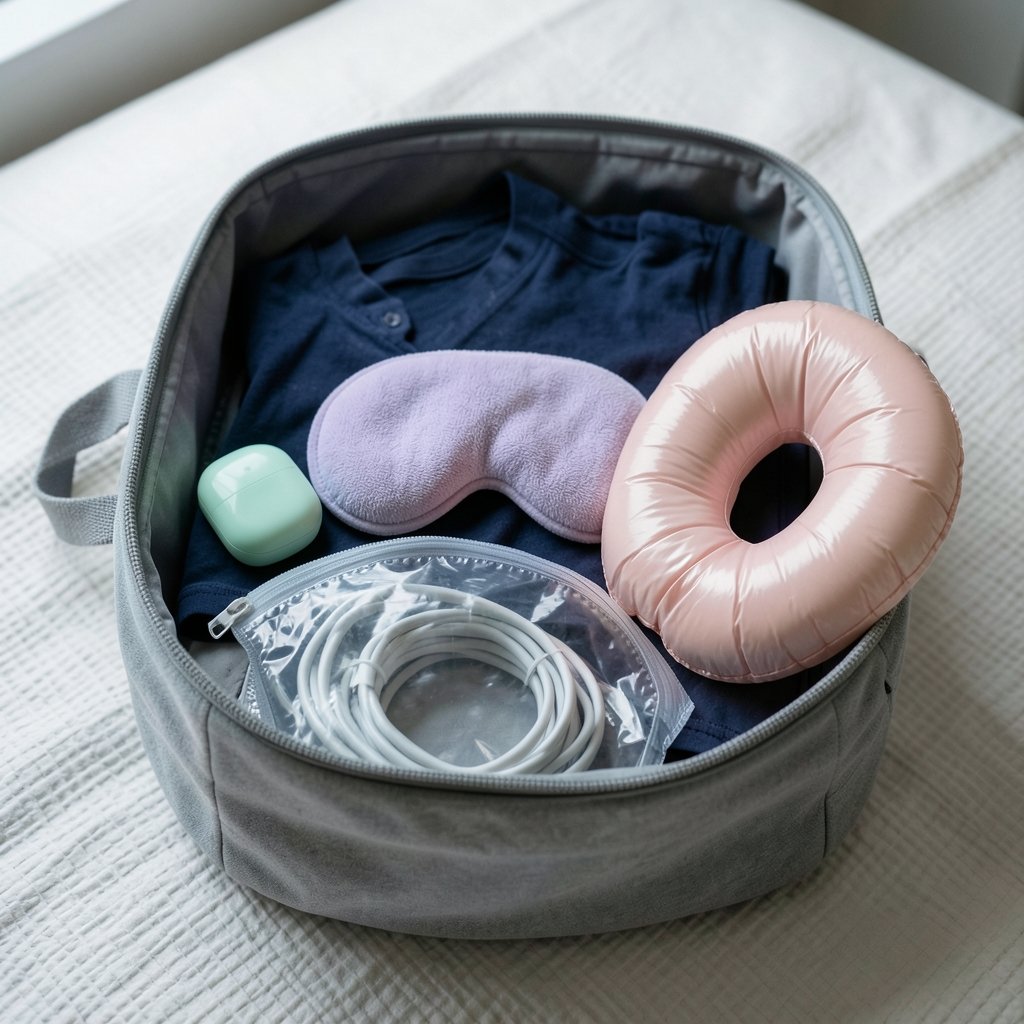
A long haul flight can run 14 to 16 hours in the air, and every item in your carry-on competes for a few liters of space. That scarcity is exactly why packing decisions matter. The best travel accessories for long haul flights are not the flashiest gadgets; they are the ones that solve a specific, recurring discomfort and comply with the rules at security. This guide focuses on what actually works in practice, what to skip, and how to avoid the mistakes that turn a well-planned kit into dead weight.
Start With the Rules, Not the Shopping List
Before buying anything, it helps to understand the constraints. Security rules shape what you can carry, and they change more often than most travelers realize.
Liquids. In the United States, the 3-1-1 rule for carry-on liquids has been standard since 2006, though some airports with newer CT scanners have relaxed it. In the UK and EU, the picture is messier: several major airports missed rollout deadlines for next-generation scanners and kept the 100 ml limit, and the EU temporarily reinstated the 100 ml cap at certain airports in 2024. The practical takeaway is simple: assume the strictest rule applies until you confirm otherwise for your specific airport and date.
Power banks. Lithium-ion batteries generally must travel in the cabin, not checked baggage, and many airlines cap capacity. A common threshold is 100 Wh, which covers most consumer power banks, but limits vary by carrier and country. Check your airline’s current policy before you fly.
The mistake to avoid: buying a beautiful 150 ml refillable bottle set and discovering at security that it does not qualify. Decant into containers under 100 ml and pack them in a clear, resealable bag you can pull out in seconds.
Sleep and Rest Accessories
Eye masks and earplugs
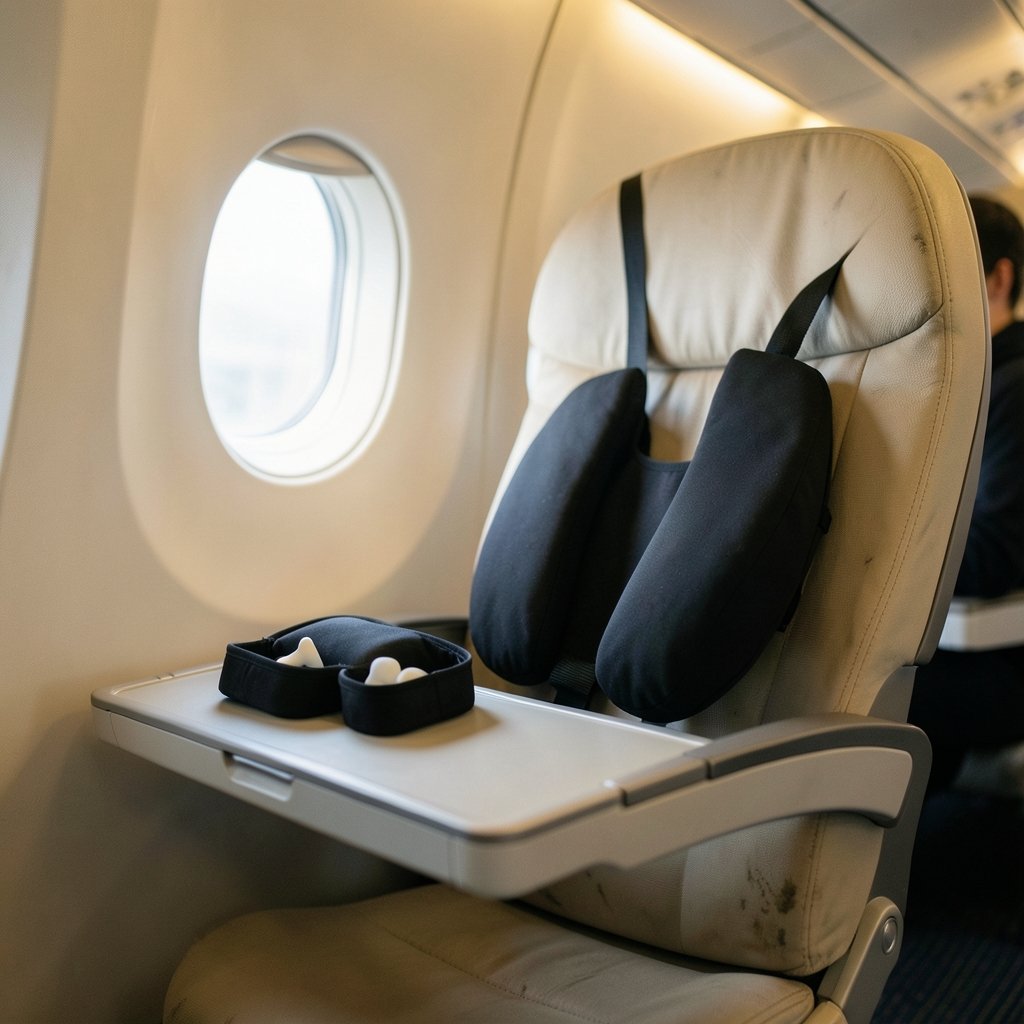
These are the highest value-per-gram items in any long haul kit. A contoured eye mask that blocks light without pressing on your eyelids makes a real difference when the cabin lights stay on for meal service. Foam earplugs cost almost nothing and outperform most expensive alternatives for blocking engine drone.
What actually works in practice: molded silicone earplugs with a small carry case. They are washable, they do not degrade like foam, and they do not leave you with sore ears after eight hours.
Travel pillows
The classic U-shaped pillow is, frankly, overrated. It pushes the head forward and offers little lateral support. A better choice is a neck support pillow with a chin strap or a wraparound design that keeps the head from flopping sideways. Inflatable versions save space; memory foam versions are more comfortable but bulky.
Common mistake: buying a pillow without trying it on your own neck. Fit varies enormously between body types.
Noise-cancelling headphones
For long haul, active noise cancellation is the single biggest comfort upgrade after sleep itself. Consumer headphones are permitted in all phases of flight, so there is no regulatory barrier. Over-ear models cancel more low-frequency noise; in-ear models pack smaller. If you wear glasses, over-ear cups can press on the temples, so test before a 14-hour flight.
Hydration, Skin, and Health
Cabin air is dry, and dehydration compounds jet lag. A few small items handle this well.
- Insulated water bottle (empty through security): fill it after the checkpoint. You will drink far more water than from tiny cups.
- Lip balm and a small moisturizer: decanted into travel-size containers.
- Compression socks: widely recommended on long flights to support circulation. General guidance on travel-related clot risk is published by public health bodies, and the advice is consistent: keep moving, stay hydrated, and consider compression for long seated periods.
- Saline nasal spray: small, cheap, and genuinely helpful in dry cabins. It falls under liquid rules, so pack it in your clear bag.
The mistake to avoid: relying on the airline’s water service. Service can be slow during rest periods, and a personal bottle removes the dependency entirely.
Power and Connectivity
Power banks
Carry a power bank if you use your phone for boarding passes, maps, and entertainment. Choose one under 100 Wh so it clears most airline limits, and keep it in your personal item rather than the overhead bin. Capacity math is straightforward: a 10,000 mAh bank recharges a typical phone roughly twice.
Universal adapters and cables
Adapters change plug shapes; they do not convert voltage. Check your device’s input rating before plugging in, and prefer devices that accept both 100–240 V. A short multi-tip cable replaces a tangle of separate cords and weighs almost nothing.
A compact entertainment kit
Downloaded content beats streaming, since in-flight Wi-Fi is unreliable and often metered. A phone mount that clips to the tray table, plus a splitter so two people can share one screen, is a small but genuinely useful addition for couples and families.
Comfort and Organization
| Accessory | Solves | Weight | Verdict |
|---|---|---|---|
| Packing cubes | Finding items fast in a small bag | Low | Must-pack |
| Compression socks | Circulation on long seated stretches | Very low | Strong buy |
| Eye mask and earplugs | Light and noise | Negligible | Must-pack |
| Neck support pillow | Head support while sleeping | Medium | Worth it if it fits |
| Noise-cancelling headphones | Engine drone and cabin noise | Medium | Strong buy |
| Travel blanket or large scarf | Cold cabins and drafts | Low to medium | Worth it |
| Sleep mask with Bluetooth audio | Two jobs in one item | Low | Optional |
A large scarf or lightweight travel blanket earns its place on almost every long haul route. Cabin temperatures drop overnight, and airline blankets are thin. A scarf doubles as a pillow cover and a layer for cold airport transfers.
For travelers who care about looking put-together on arrival, small choices matter too. The right accessories can carry a whole travel outfit, a point explored in this piece on the power of accessories in a timeless look. A neutral scarf, simple jewelry, and a structured tote read as intentional rather than rumpled, even after a red-eye. (Jet lag)
Personal Care That Survives the Flight
Arriving looking rested is partly about preparation. Hair, in particular, suffers from dry cabin air and hours against a headrest. Practical approaches include a loose braid or a low bun that will not crease, plus a small amount of leave-in oil on the ends. Anyone with lighter shades may find this guide to light brown hair shades, care and styling useful for choosing products that travel well, and those with paler tones can check this breakdown of blonde hair genetics, shades and care for what holds up in low humidity.
If you prefer to keep styling simple, this collection of long hair real-life hairstyles that actually hold up all day covers options that survive a night of sleeping upright.
The mistake to avoid: trying a new skincare product or a new hairstyle on travel day. Test everything at home first.
What to Skip
Not every accessory deserves space. A few common purchases tend to disappoint:
- Full-size travel pillows with rigid frames. They rarely fit airline seat geometry.
- Gadget multi-tools. Security restrictions make them unreliable in carry-on.
- Bulkier “travel” organizers with dozens of pockets. They add weight and hide items rather than organize them.
- Cheap universal adapters with no voltage labeling. Risky for electronics.
- Neck fans and misting devices. Novel for ten minutes, then a battery drain.
The pattern is consistent: the best accessories solve one problem well and pack small. Multi-purpose items that do two jobs poorly usually lose to two simple items that each do one job well.
Packing the Kit: A Practical Sequence
- Lay out the compliance items first. Clear liquid bag, power bank under the limit, and any medication in original packaging.
- Add sleep items. Eye mask, earplugs, neck support, and a light blanket or scarf.
- Add health items. Water bottle (empty), compression socks, lip balm, moisturizer, saline spray.
- Add power and entertainment. Power bank, short multi-tip cable, headphones, phone mount.
- Add organization. Two or three packing cubes, not ten.
- Weigh the bag. If your personal item exceeds the airline’s limit, remove the bulkiest comfort item, usually the pillow.
This sequence keeps the essentials at the top of the bag and the optional items at the bottom, which matters when you are retrieving things in a dim cabin.
How to Choose Between Similar Products
When two accessories seem equally good, three criteria separate them.
Regulatory fit. Does it comply with current liquid and battery rules? A slightly less convenient product that clears security beats a better one that gets confiscated.
Weight per benefit. A 40-gram eye mask that blocks light completely outperforms a 300-gram gadget that solves a marginal problem.
Durability across trips. Long haul travel is repetitive. Zippers, straps, and battery cells that fail after three trips cost more than a higher upfront price.
For readers planning a broader trip, the destination guides at Voozon Travel are a useful companion for thinking through what changes when the flight ends and the itinerary begins.
Conclusion
The best travel accessories for long haul flights share three traits: they solve a real discomfort, they pack small, and they clear security without drama. Sleep items and noise cancellation deliver the biggest comfort return. Hydration and circulation tools protect your body across many seated hours. Power and organization items keep everything else running smoothly. Everything beyond that short list is optional, and much of it is better left at home.
Buy fewer things, test them before you fly, and confirm the current rules for your specific airline and airport. That approach beats any shopping list, because it adapts as the rules and your itinerary change.
Frequently Asked Questions
Are power banks allowed on long haul flights?
Generally yes, but in the cabin rather than checked baggage, and many airlines cap capacity. A common threshold is 100 Wh, which covers most consumer power banks. Limits differ by carrier and country, so confirm your airline’s current policy before departure. (What can I bring? (TSA))
Can I bring full-size liquids in carry-on?
In most jurisdictions, no. The US 3-1-1 rule and the 100 ml limits in the UK and EU remain the default at many airports, even where newer scanners have been installed. Assume the strictest rule applies and decant into small containers.
Is a travel pillow worth the space?
Only if it fits your neck and the seat. Rigid U-shaped pillows often push the head forward. A wraparound or chin-strap design with softer fill tends to work better, but test it at home before a long flight.
Do noise-cancelling headphones help on long flights?
Yes, particularly for low-frequency engine noise. Consumer headphones are permitted in all phases of flight, so there is no regulatory obstacle. Over-ear models cancel more noise; in-ear models pack smaller.
What should I skip when packing?
Rigid travel pillows, multi-tools, over-engineered organizers, and unlabeled universal adapters. Each either fails security, adds weight without solving a problem, or creates risk for your electronics.
How do I avoid jet lag on a long haul flight?
Keep hydrated, move around the cabin periodically, and align sleep with your destination’s time zone where possible. Compression socks and a personal water bottle support this routine more reliably than any gadget.
A final note on timing. Shop for these items well before departure, not at the airport, where prices are higher and selection is thin. Test each purchase on a short trip first, then adjust the kit for your next long haul. With that routine in place, the flight becomes the least memorable part of the journey, which is exactly the point.