
What Is a Homologation Special? Race Cars Made Road-Legal
 Abdul WadoodLast updated
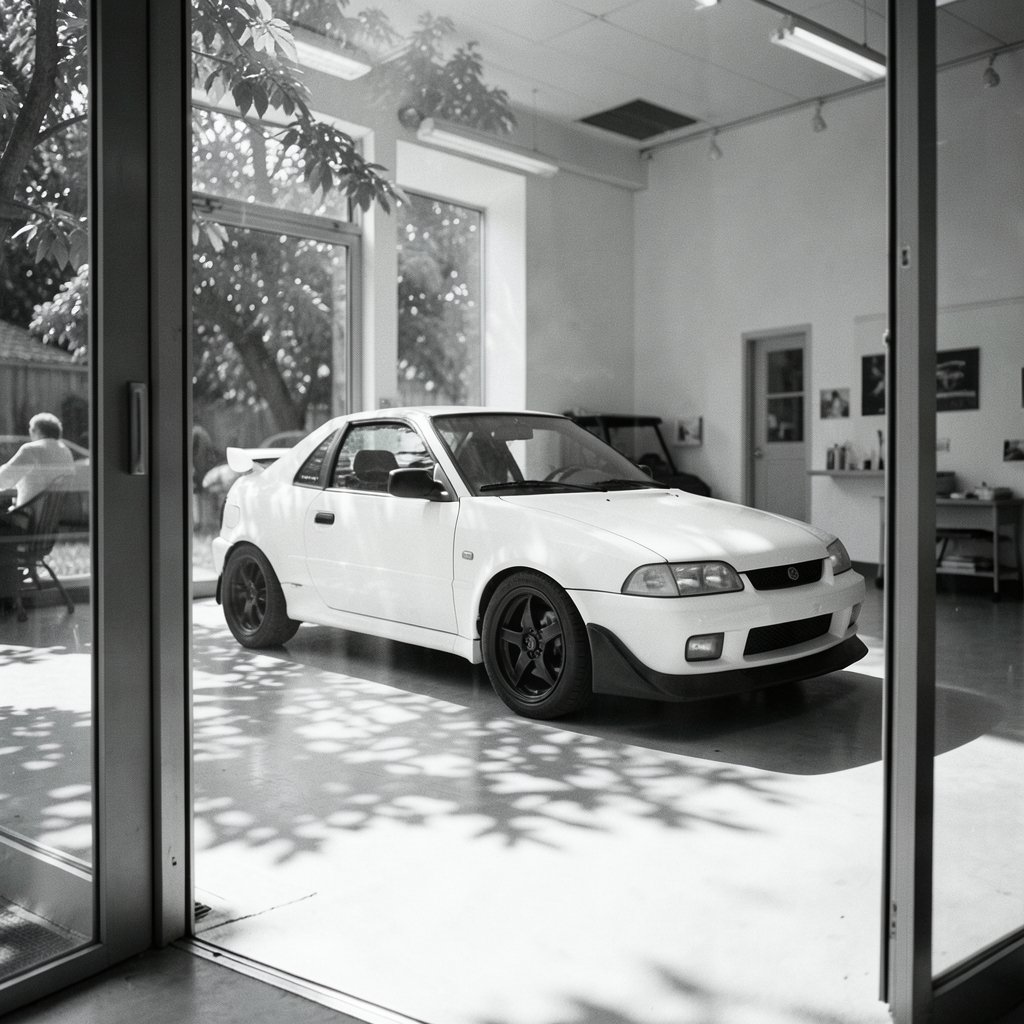
In the 1980s, rally fans could walk into a dealership and buy a car that was, mechanically speaking, almost a race car. That oddity existed because of a rulebook quirk: to race a model, a manufacturer first had to sell it to the public. The result was a strange and wonderful breed of vehicle known as the homologation special.
Quick Answer: What is a homologation special?
A homologation special is a road-legal production car built in the minimum quantity a motorsport sanctioning body requires for that model to be eligible to compete. In plain language, the road car exists to satisfy the rulebook, while the race car is the real purpose. You can spot them in manufacturer heritage archives, auction listings, and enthusiast registries, where production numbers and build dates are documented.
They differ from ordinary limited editions because the production run is a regulatory obligation, not a marketing decision. They also differ from purpose-built race cars, which never needed a road-going twin. Before judging any claimed homologation special, check the sanctioning body’s rulebook, the required production volume, the build dates, the engine and aero specification, and whether documentation ties the road car to a racing program.
The term itself comes from homologation, the official approval or certification of a product to a standard. That word is used in road-vehicle type approval generally, not only in motorsport, but in racing circles it took on a very specific meaning: a manufacturer certifies that a minimum number of examples exist, and only then may the model line up on the grid.
The Rulebook That Created a Car Category
The logic behind homologation is simple and slightly absurd. Racing series wanted to keep competition tied to cars the public could actually buy, so they wrote eligibility rules requiring manufacturers to produce a set number of road cars before a racing version could be entered. The intent was to stop companies from building pure prototypes with no connection to showroom models.
In practice, manufacturers did exactly what the rules invited. If a series demanded a few hundred road cars to make a racing program eligible, a company would build a few hundred road cars, often with expensive engineering that only made sense against a racing rulebook. The road car became a paperwork exercise with a VIN plate.
This is why homologation specials occupy such a strange place in car culture. They are production vehicles, but their specification was dictated by engineers chasing lap times rather than product planners chasing sales. Buyers got aerodynamic add-ons, stiffened chassis, uprated engines, and sometimes a stripped-out interior, all because a sanctioning body counted units.
Why the Numbers Are Never Universal
One trap for anyone researching this topic is assuming a single magic number. Homologation minimum volumes varied by era, class, and evolution tier. A base model might need one volume, while an evolution variant of the same car might be allowed at a lower volume. Treat any specific figure you see quoted online as something to verify against the sanctioning body’s own regulations for that season, not as a universal constant.
Group B: The High-Water Mark
Group B rallying, introduced by the FIA for the 1982 season and abolished after 1986, is the era most people mean when they talk about homologation specials. The class is famous for extreme machinery and for the road cars built to meet its eligibility rules. Commonly cited thresholds include around 200 cars for base homologation, with evolution variants requiring fewer, though those numbers should be checked against the original regulations rather than repeated as fact. (Homologation)
The cars themselves read like a greatest-hits list of 1980s engineering ambition: the Lancia Stratos from the preceding decade, the Audi Quattro Sport, the Ford RS200, and the Porsche 959. Each existed in road form because the rules demanded it. The Porsche 959 in particular packed technology so advanced and so costly that the road-car program was a serious financial undertaking in its own right.
Group B’s cancellation after 1986 is often framed as a safety reckoning, and the regulatory aftermath reshaped what manufacturers were asked to build. Whatever the precise cause, the class left behind a generation of road cars whose specifications make little sense outside a racing context. That is the defining fingerprint of a homologation special.
Group A and the Touring Car Boom
Group A touring cars, which took over as the top rally class from 1987, changed the arithmetic. The production requirement was far higher, commonly cited as 5,000 units per year, with evolution models permitted at lower volumes. That higher bar pushed homologation specials toward mass-production platforms rather than exotic low-volume builds.
The results are among the most celebrated performance cars ever sold. The BMW M3 (E30) and the Mercedes 190E 2.3-16 were built with Group A touring car racing in mind. The Ford Sierra RS500 Cosworth became a legend of the era. In Japan, the Nissan Skyline GT-R (R32), launched in 1989, was developed with Group A racing in its sights, and the Subaru Impreza WRX STI and Mitsubishi Lancer Evolution carried the production-based philosophy into the World Rally Championship era.
What makes these cars interesting to study is the tension inside them. A 5,000-unit requirement means the car has to be broadly sellable, yet the racing version needs specific geometry, cooling, and engine characteristics. Manufacturers resolved that tension in different ways, and the differences are exactly what collectors and historians argue about decades later.
Homologation Special vs. Limited Edition vs. Race Car
The distinctions matter, because “homologation special” gets used loosely in journalism for any low-volume performance car. The strict regulatory meaning is narrower.
| Category | Why the car exists | Who decides the volume | Road-legal? |
|---|---|---|---|
| Homologation special | To satisfy a racing eligibility rule | Motorsport sanctioning body | Yes |
| Limited edition | Marketing, brand building, or demand management | Manufacturer | Yes |
| Purpose-built race car | To compete | Racing team or manufacturer | Usually not |
| Spec-chassis racer | To compete in a controlled class | Series organizer | No |
A limited edition might be numbered and collectible, but nothing forced the manufacturer to build it. A homologation special exists because a rulebook said so. That is the cleanest test you can apply when someone claims a car belongs in the category.
The NASCAR Aero Wars
Homologation logic was not confined to Europe. NASCAR’s 1960s and 1970s eligibility rules produced aero-focused homologation cars, most famously the 1969 Dodge Charger Daytona and the 1970 Plymouth Superbird. These were road cars reshaped around aerodynamic goals that only mattered on superspeedways.
The pattern repeated in the 1980s and 1990s under the “win on Sunday, sell on Monday” philosophy, when manufacturers built road cars to satisfy series eligibility and to attach a racing halo to showroom models. Specific production figures and rule details vary by season, so anyone writing or researching this period should work from official NASCAR archives rather than secondhand summaries.
How the Concept Faded
Modern top-level rallying shows how far the pendulum swung. The FIA moved to Rally1 regulations for the 2022 season, introducing hybrid power and, crucially, removing the traditional production-car homologation requirement. The road car no longer had to exist before the rally car could race. (FIA)
That shift was not unique to rallying. Many modern series run purpose-built prototypes or spec chassis, and GT3-based competition uses different eligibility rules than the old production-quota system. The regulatory need for a road-going twin has largely evaporated at the top of the sport.
The concept survives in regional and national series, and in the language enthusiasts use. It also survives in the marketplace, where genuine homologation cars command serious premiums precisely because their production run was a legal obligation rather than a branding exercise.
What Actually Matters When You Research or Buy One
Practical experience in this field comes down to documentation. The common mistake is trusting a seller’s or a forum’s claim that a car is a homologation special without checking the paper trail. Here is what actually works.
- Start with the sanctioning body’s rulebook for the relevant season. Homologation thresholds changed by era, class, and evolution tier. The primary regulations are the only reliable source.
- Confirm the production volume and build dates. A car built outside the homologation window, even if mechanically identical, is not the same thing.
- Match the specification to the racing version. Engine code, aero package, chassis revisions, and drivetrain layout should line up with what the rules allowed and what the race car used.
- Check manufacturer heritage archives. Press archives and heritage departments publish production numbers and dates that auction listings often get wrong.
- Beware of the loose use of the term. Plenty of low-volume performance cars get labeled homologation specials in listings when they were simply limited editions.
The most expensive mistakes in this hobby are usually documentation mistakes, not mechanical ones. A car with the right parts and the wrong paperwork is a different asset entirely.
Common Misconceptions Worth Clearing Up
Italic emphasis helps here because these points get repeated so often. First, not every racing-influenced car is a homologation special; the regulatory obligation is the defining feature. Second, the road car was not always a cynical afterthought. Some manufacturers used the requirement as cover to build something genuinely ambitious. Third, the end date of production-based homologation depends entirely on which class you mean, since national and regional series kept the requirement long after top-level rallying dropped it.
Why the Category Still Matters
Homologation specials are a case study in how regulations shape products. Change a rulebook, and thousands of cars change with it. The category also explains why certain models are worth far more than their specifications suggest: scarcity here was legislated, not marketed.
For anyone following the modern motorsport landscape, the shift to Rally1 regulations marks a clean break. The road car and the race car have separated, and the paperwork that once connected them is no longer required at the top of the sport. That makes the surviving homologation cars historical documents as much as vehicles.
Conclusion
A homologation special is a road car built because a rulebook demanded it, and that single fact explains almost everything about the breed, from its odd engineering to its collector value. The category peaked in Group B and Group A, spread into NASCAR’s aero era, and has largely receded as top-level series moved to purpose-built machinery and spec chassis. What remains is a set of cars whose specifications only make sense against regulations that no longer apply. For researchers and buyers alike, the discipline is the same: verify the rulebook, verify the volume, verify the dates, and treat the label as a claim to be checked rather than a fact to be assumed.
Frequently Asked Questions
How can you tell if a car is a genuine homologation special?
Check the sanctioning body’s regulations for the relevant season, confirm the required production volume and build window, and match the car’s specification to the racing version. Manufacturer heritage archives are the best source for production numbers and dates. If the paperwork does not tie the car to a racing program, treat the label with suspicion.
Did homologation specials have to be comfortable or practical?
No. The rules required a minimum number of road-legal cars, not pleasant ones. Many homologation specials came with stiff suspension, stripped interiors, and aggressive aero that made daily use awkward. Comfort was never the design brief; eligibility was.
Why did Group B cars become so extreme?
Group B allowed relatively small production runs to establish racing eligibility, which let manufacturers build highly specialized machinery with less compromise than high-volume classes demanded. The class ran from 1982 and was abolished after 1986. Exact production thresholds changed over the period, so verify figures against the original regulations rather than repeating commonly cited numbers.
Is the Nissan Skyline GT-R R32 a homologation special?
The R32 Skyline GT-R, launched in 1989, was developed with Group A racing in mind, which places it in the production-based homologation tradition. As with any specific model claim, confirm the details against the regulations and the manufacturer’s own documentation rather than relying on enthusiast shorthand.
Do modern rally cars still need a road-going version?
At the top level, no. The FIA’s Rally1 regulations, introduced for the 2022 season, removed the traditional production-car homologation requirement. Some regional and national series still use production-based eligibility rules, so the answer depends on which class you are asking about.
Why are homologation specials so valuable today?
Their production numbers were set by regulation, not by market demand, which often made them scarce by design. Add racing provenance and engineering that only made sense in competition, and you get cars that collectors treat as historical artifacts. Value follows documentation: a well-documented example is worth far more than an identical car with a thin paper trail.