
What Is Active Suspension? Real-Time Body Control Explained
 Abdul WadoodLast updated
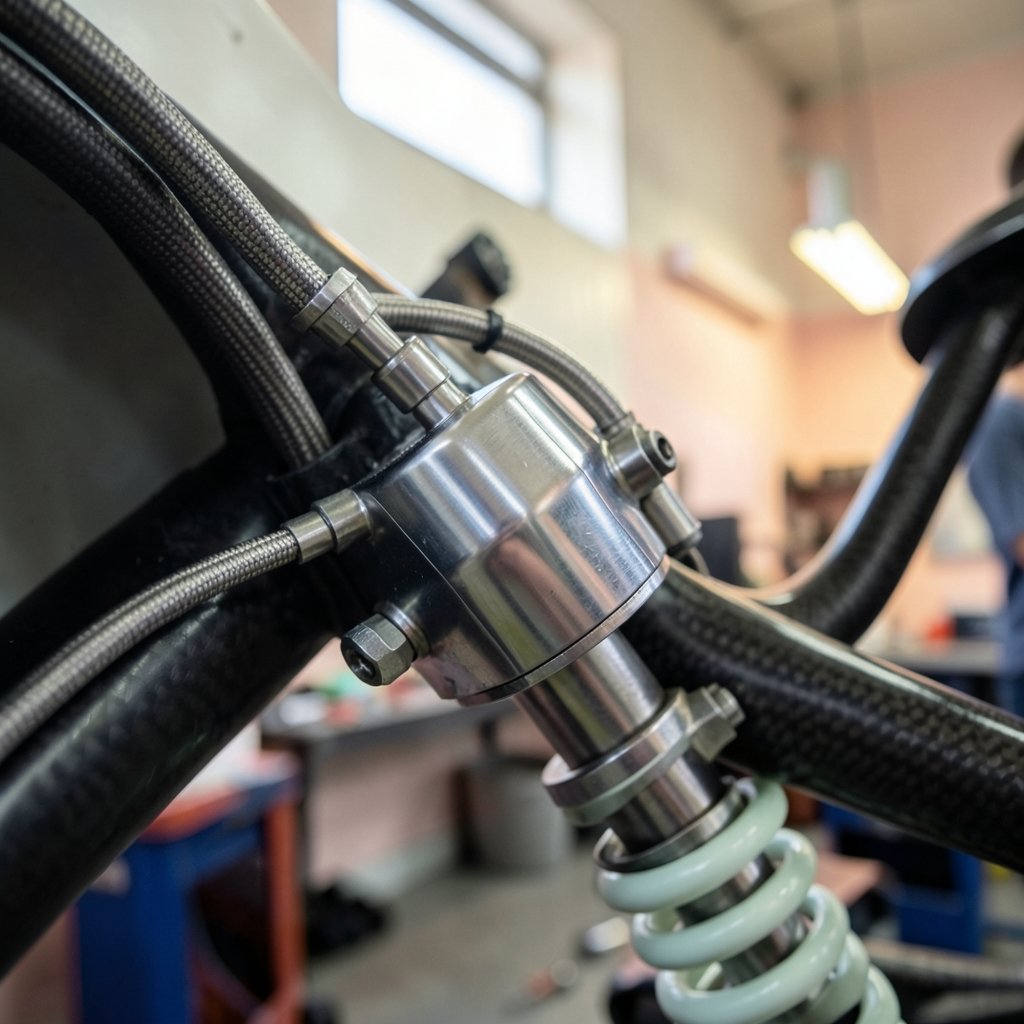
In 1992, a Williams-Renault with a trick suspension system won the Formula One constructors’ title so convincingly that rival teams pushed for a rule change. By 1994, active suspension was banned from F1 entirely. That single regulatory decision tells you almost everything about how powerful this technology is, and why it took decades to reach ordinary road cars.
Quick Answer: What is active suspension?
Active suspension is a vehicle suspension system that uses powered actuators, hydraulic or electromechanical, to push and pull between the car’s body and its wheels in real time. Instead of relying only on fixed springs and dampers, the system reads road and driving conditions many times per second and actively applies force to keep the body level and the tires planted.
It differs from semi-active suspension, which can only vary damping force but never adds energy to the system. Active systems inject force, so they can raise a wheel, counter a dive under braking, or cancel body roll in a corner. Air suspension, adaptive dampers, and magnetic-ride systems are related but distinct approaches.
Before judging any system, compare actuator type and response speed, power draw, added weight, service cost, reliability record, and whether the setup is tuned for comfort or handling.
How Active Suspension Actually Works
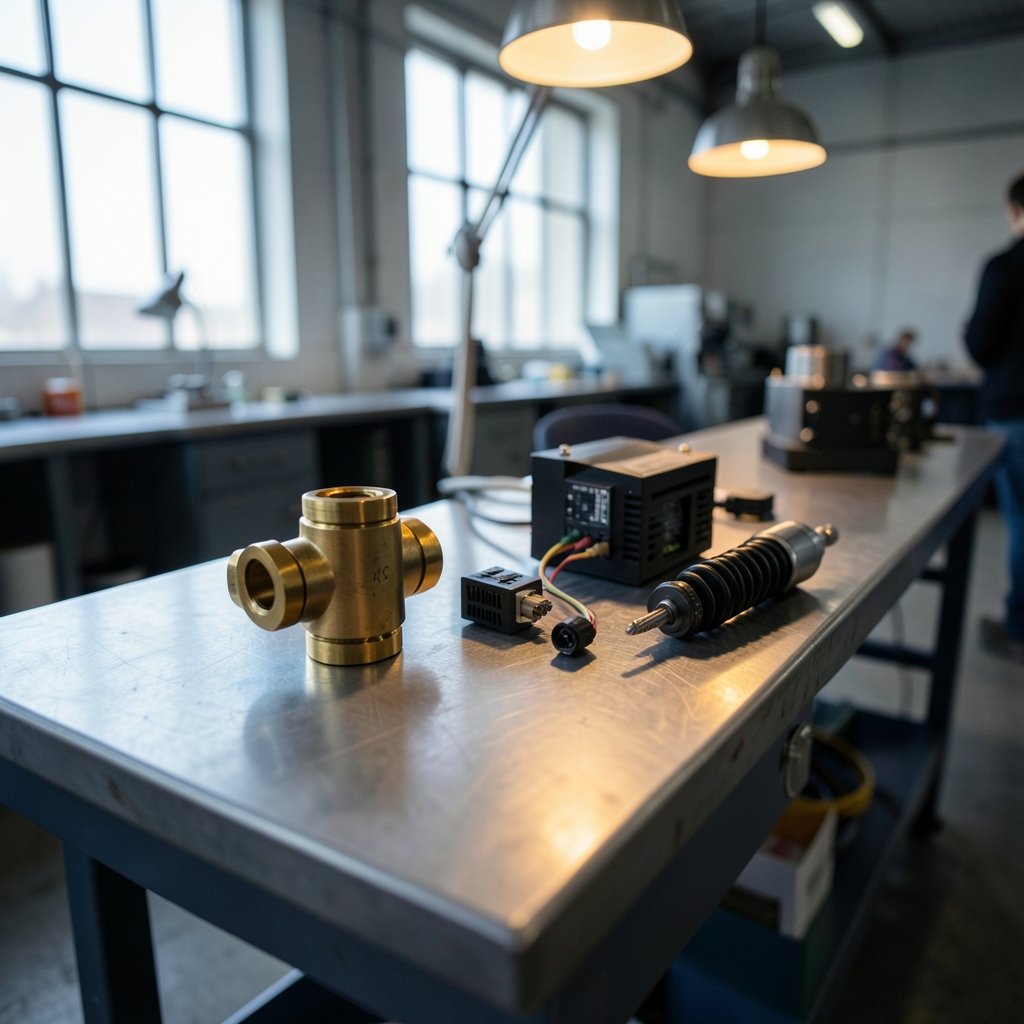
Picture the difference between a conventional shock absorber and a hydraulic ram that can think. A passive damper only reacts. It converts motion into heat and hopes for the best. An active system measures first, then acts.
The hardware loop usually looks like this:
- Sensors monitor body acceleration, wheel movement, steering angle, speed, and brake pressure dozens to hundreds of times per second.
- A controller compares what the body is doing against what it should be doing.
- Actuators at each corner extend or retract to cancel unwanted motion.
- The loop repeats continuously, typically in milliseconds.
The practical result is a car that stays flat in corners, resists nose-dive under braking, and smooths out rough surfaces without the floaty feeling that soft springs create. Engineers call this decoupling ride comfort from body control. In a passive car, those two goals fight each other. In an active car, software mediates the argument.
The Hydraulic Route
Hydraulic active suspension uses pumps, accumulators, and rams. It can generate large forces quickly, which is why it dominated early racing applications. The trade-offs are weight, complexity, and energy consumption, since the pump runs constantly.
The Electromechanical Route
Electromechanical systems use electric motors and ball screws or similar mechanisms at each corner. They respond fast, integrate neatly with modern 48-volt electrical architectures, and can recover some energy. They are also mechanically simpler than hydraulics in some layouts, though the control software becomes the hard part.
A Short History: From the Track to the Driveway
Active suspension’s reputation was built in Formula One in the early 1990s, when cars with reactive systems could hold a stable aerodynamic platform regardless of cornering load. The technology was banned from the series from the 1994 season, largely because it was expensive, complex, and seen as a driver-aid arms race.
Road cars followed a slower path. Mercedes-Benz Active Body Control (ABC) reached production in the late 1990s, commonly cited as 1999 on the C215 CL coupe, using hydraulic rams to counter roll and pitch. Around 2004 to 2009, Bose demonstrated an electromagnetic suspension in research vehicles that became famous for its dramatic curb-jumping videos, but it never reached series production. McLaren Applied later developed a production-oriented active system for road cars, announced in the mid-to-late 2010s.
The pattern is consistent: active suspension appears first where cost is no object, then trickles down as electronics get cheaper and electrical architectures get stronger.
Active vs. Semi-Active vs. Adaptive: Clearing Up the Confusion
Marketing departments have muddied these terms badly. Here is the honest breakdown.
| System type | Adds force? | Typical hardware | What it can do | What it cannot do |
|---|---|---|---|---|
| Passive | No | Springs, fixed dampers | React to road input | Change behavior |
| Adaptive damping | No | Electronically variable valves | Soften or stiffen damping | Push a wheel down |
| Semi-active (e.g. magnetorheological) | No | Fluid whose viscosity changes with a magnetic field | Vary damping force in milliseconds | Inject energy into the chassis |
| Active | Yes | Hydraulic rams or electric actuators | Raise or lower each corner, cancel roll and pitch | Break physics or exceed actuator limits |
The key distinction is energy. Semi-active systems, including magnetorheological dampers that entered production in the early 2000s, are clever dissipators. They can only remove energy from the suspension’s motion. Active systems are generators of force. That is why they can do things passive hardware physically cannot, like lifting a stuck wheel or pre-loading a corner before a turn.
If a brochure says “active suspension” but the car has no powered actuator between body and wheel, it is almost certainly adaptive or semi-active damping wearing a nicer name. Ask what the hardware actually is.
What Active Suspension Feels Like in Practice
The first thing most people notice is not comfort. It is composure. The body stops moving in ways you had unconsciously learned to tolerate. Speed bumps register as a single event instead of a rebound. Hard braking produces a flat nose instead of a dive. Fast cornering produces almost no lean.
The second thing people notice is the price of admission. These systems add weight, draw power, and require specialist diagnostics. A failed hydraulic line or actuator is not a $200 shock absorber replacement.
Practical tips from the workshop side of things:
- Check the system before buying used. Ask for a diagnostic scan history in addition to service stamps. Actuator faults often surface as warning lights long before they surface as handling problems.
- Do not lower or modify the car casually. Changing ride height or spring rates on an actively controlled car can confuse the controller and void coverage.
- Watch for fluid leaks on hydraulic systems. Pumps and rams wear, and the repair bill scales with complexity.
- Expect software updates to matter. Some ride-quality improvements arrive as calibration updates, not hardware.
The most common mistake buyers make is assuming “active” means “maintenance-free.” It does not. It means “maintenance-specialized.”
Where You Actually Find Active Suspension Today
Full active suspension remains rare in mass-market vehicles because of cost. It appears in:
- Flagship luxury sedans and SUVs, where ride isolation is a brand promise.
- High-performance sports cars and hypercars, where body control directly affects lap times.
- Commercial and specialty vehicles, where load leveling and stability matter more than comfort.
- Research and motorsport applications, where the technology continues to be refined.
Semi-active and adaptive damping, by contrast, are everywhere. They have become the default compromise because they deliver most of the perceived benefit at a fraction of the cost and complexity.
The Engineering Trade-Offs Nobody Advertises
Active suspension is not a free lunch, and honest engineering discussions admit it.
Weight. Pumps, accumulators, rams, wiring, and controllers add mass. That mass partly cancels the dynamic benefit.
Energy. Hydraulic systems draw continuous power from the engine or battery. Electromechanical systems draw power on demand but can spike hard.
Complexity and failure modes. More parts mean more ways to fail, and failures can be subtle rather than obvious.
Cost. Purchase price, service cost, and resale risk all rise together.
Regulatory interaction. Active chassis systems interact with stability control and braking regulations, which means manufacturers must validate behavior across a wide range of failure scenarios. The details live in technical standards and rulebooks rather than marketing copy.
The payoff is real, but it is a trade, not a miracle. The best implementations are the ones where the calibration is mature enough that you forget the system exists. (National Highway Traffic Safety Administration)
How to Evaluate an Active Suspension System Before You Buy
Buyers tend to focus on the badge. Engineers focus on the loop. Here is a practical checklist.
- Identify the hardware. Hydraulic rams? Electric actuators? Or variable dampers with a fancy name?
- Ask about response speed. Faster is generally better, but only if the calibration is stable.
- Check the warranty terms specifically covering suspension components.
- Look up known failure patterns for that model year and system generation.
- Drive it on bad roads as well as smooth ones. Active systems reveal themselves on broken surfaces.
- Test a hard stop and a fast corner at legal speeds. Feel for dive and roll.
- Confirm service access. Does your local shop have the diagnostic tools, or is this a dealer-only proposition?
The last point matters more than most buyers expect. A brilliant system with no local support is an expensive liability.
Conclusion
Active suspension is one of the clearest examples of software and hardware merging into a single driving experience. It began as a racing advantage so decisive that regulators removed it, matured through flagship luxury cars, and now sits at the center of the ongoing argument about how much control a car should have over its own body. The definition is simple: powered actuators apply force in real time. The consequences are not. If you are shopping for a car with an active or semi-active chassis, spend your energy on the hardware, the calibration history, and the service reality rather than the marketing label. The system you can maintain is worth more than the system you can brag about. For more practical buying and technology breakdowns, see Voozon Media.
Frequently Asked Questions
Is active suspension the same as air suspension?
No. Air suspension replaces steel springs with air springs, which changes ride height and spring rate but still reacts passively to road input. Active suspension uses powered actuators to apply force in real time. Some vehicles combine both, using air springs for load leveling and active dampers or actuators for body control, but the two technologies solve different problems.
Why was active suspension banned in Formula One?
It was banned from the 1994 season as part of technical regulation changes. The systems were extremely expensive, complex, and seen as pushing the series toward a technology arms race that favored the richest teams. The ban did not end the underlying engineering interest; it simply moved development into road cars and research programs.
Does active suspension make a car more comfortable or more sporty?
It can do both, which is the whole point. Because the controller can decouple ride comfort from body control, the same car can absorb bumps softly while staying flat in corners. The catch is calibration quality. A poorly tuned active system can feel artificial or disconnected, so the driving experience depends heavily on how well the software is developed.
How much does it cost to repair active suspension?
Costs vary widely by system type and vehicle, and hydraulic systems with pumps and rams are generally more expensive to service than electric actuator setups. The realistic advice is to budget for specialist diagnostics and to check warranty coverage specifically for suspension components before buying. A pre-purchase scan is far cheaper than a post-purchase repair.
Can I modify a car with active suspension?
Modifications are risky. Changing ride height, spring rates, or wheel geometry can confuse the controller and degrade behavior in ways that are hard to diagnose. Many manufacturers treat suspension modifications as grounds for warranty denial on related components. If modification matters to you, choose a car with conventional or semi-active suspension instead.
What is the difference between active and semi-active suspension?
Semi-active systems vary damping force but never add energy to the suspension, so they can only dissipate motion. Active systems use actuators to inject force, which lets them raise or lower individual corners and cancel body roll and pitch outright. That energy distinction is the clearest technical line between the two categories.