
Lucas Museum of Narrative Art Guide 2026: What to Know
 Abdul WadoodLast updated

George Lucas sold Lucasfilm to Disney for just over $4 billion in 2012. Most people would have retired to a vineyard. Instead, he poured a chunk of that fortune into something stranger and more personal: a museum devoted to storytelling through pictures. That project, the Lucas Museum of Narrative Art, is rising in Los Angeles, and it is unlike any museum most people have visited.
Here is the honest, practical picture of what this place is, how it got here, and what to expect when the doors finally open.
What Is the Lucas Museum of Narrative Art?
The Lucas Museum is a nonprofit museum founded by filmmaker George Lucas and his wife, Mellody Hobson. Its subject is narrative art — art that tells a story. That covers a wider range than the name suggests: illustration, comic art, photography, film stills, animation cels, poster art, children’s book art, and popular painting.
The founding idea is simple. Museums have long sorted art into high and low. A Renaissance fresco gets a marble hall; a comic panel gets a folder. Lucas has argued for decades that the storytelling images people actually grow up with deserve the same serious treatment. The museum is his case in point, made in concrete and steel.
The collection reflects that philosophy. It includes classic illustration, comic and graphic art, photography, and a deep well of film-related material drawn from Lucas’s own archives. Expect Star Wars artifacts alongside Norman Rockwell paintings and original comic pages — a combination that would look odd in most institutions and makes perfect sense here.
A Museum With a Bumpy Road to Los Angeles
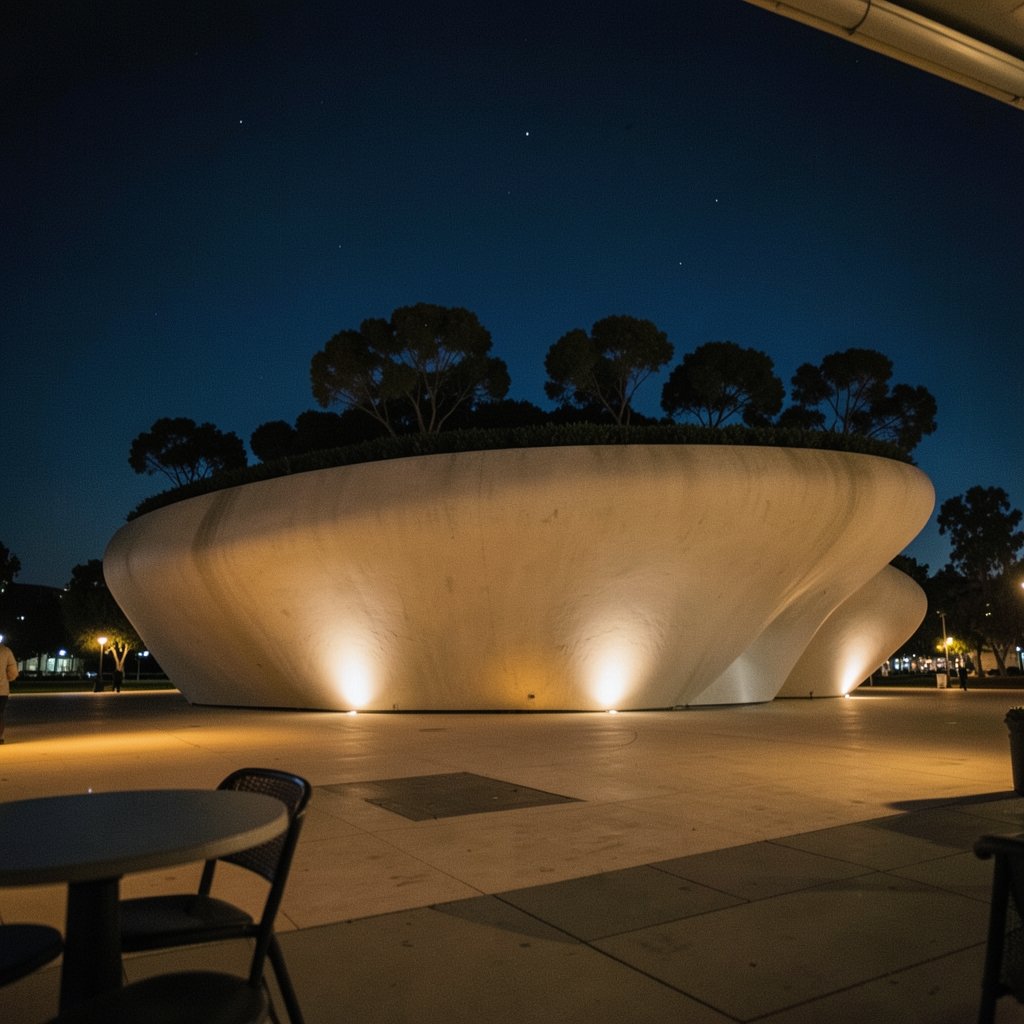
The building you see in Exposition Park is the third attempt.
Lucas first proposed the museum in Chicago, near the city’s lakefront museum campus. The plan drew a lawsuit from a parks advocacy group, and after a prolonged fight the museum withdrew. A San Francisco site was floated next, but that plan also collapsed. Los Angeles finally won, with a site in Exposition Park next to the Natural History Museum and near the University of Southern California. (Lucas Museum of Narrative Art)
The design comes from MAD Architects, led by Ma Yansong. The building’s form is meant to suggest a cloud or a ship in flight — a smooth, organic shape that sits in deliberate contrast to the boxy museum buildings around it. The roof is a garden, and the structure is designed to feel open rather than fortress-like.
That history matters for visitors. It explains why the museum has been “opening soon” in public conversation for years. Construction timelines have shifted repeatedly, and any guide that states a firm opening date without checking the museum’s own channels is guessing. For the current status, the museum’s official site and the Exposition Park venue pages are the only sources worth trusting.
What the Building Is Like
Even from the outside, the Lucas Museum is hard to mistake for anything else. A few features stand out:
- The roof garden. A planted surface covers much of the building, giving the museum a public green space rather than a blank cap.
- The organic form. Curving surfaces wrap the galleries, a deliberate break from the rectangular grid of neighboring buildings.
- The site. Exposition Park already holds major museums, a stadium, and green space. The Lucas Museum slots into an existing cultural district rather than creating a new one.
- The scale. It is a large building with room for permanent collection galleries, temporary exhibitions, theaters, and education spaces.
For anyone who follows architecture and design trends, the building alone justifies a visit. The intersection of architecture and cultural storytelling is a subject worth thinking about — the same territory explored in this look at the art of modern fragrance, where design choices shape how a story is received before a single word is read.
How to Plan a Visit
Practical planning for a museum that has not yet opened to the public requires a certain amount of humility. Still, some advice holds regardless of the opening date.
Check the official source first
Opening dates, ticketing, and hours will be announced by the museum itself. Third-party listings, travel aggregators, and social posts lag behind and often contradict each other. Before booking travel, confirm details on the museum’s own site.
Build a half-day around the park
Exposition Park is a cluster, not a single stop. The Natural History Museum, the California Science Center, and the surrounding grounds can fill a day on their own. Treating the Lucas Museum as one stop in a larger visit is smarter than making it the whole trip.
Expect timed entry
Large new museums almost always launch with timed-entry ticketing to manage crowds. Plan to reserve in advance, and expect the first several months to be busy.
Go early or go deep
New museums draw crowds that thin out over time. If you want breathing room in the galleries, the first year is the worst time to visit — and also the only time to see the opening exhibitions. Decide which matters more to you.
Common Mistakes Visitors Make
A few errors come up again and again with new cultural attractions:
- Assuming the museum is open because a map listing says so. Listings go stale. Verify directly.
- Booking nonrefundable travel around an unconfirmed date. Opening dates move. Keep plans flexible.
- Expecting only Star Wars. The collection is much broader. Visitors who come for the films will find illustration, photography, and comic art; visitors who come for the art will find the films.
- Underestimating the neighborhood. Exposition Park is not a walkable restaurant district. Plan meals accordingly.
- Skipping the temporary exhibitions. Permanent collections get the attention, but rotating shows are often where a museum takes its real risks.
Why Narrative Art Deserves a Museum
The case for the Lucas Museum is really a case about how culture gets sorted. Illustration and comic art have historically been treated as craft rather than art — commercial work made for reproduction, not contemplation. That view has been crumbling for decades. Museums now collect photography that was once dismissed as mechanical, and graphic novels are taught in universities.
The Lucas Museum pushes that shift further. It treats popular storytelling images as primary cultural documents — the things people actually look at, remember, and pass on. Whether or not you find that argument convincing, it is a serious one, and it is being made with serious resources.
That same instinct — taking popular forms seriously and asking what they say about the people who make and consume them — runs through a lot of contemporary cultural criticism, from a fresh perspective on contemporary art to the way art, design, and modern trends keep colliding in public life.
Who Will Enjoy It Most
The museum will not suit everyone equally. A rough guide:
| Visitor type | Likely reaction |
|---|---|
| Film and Star Wars fans | Strong draw; artifacts and production material are the headline |
| Illustration and comic art fans | Strong draw; the collection treats the medium as central, not incidental |
| Architecture enthusiasts | Worth a visit for the building alone |
| Families with older children | Good fit; visual, story-driven material travels well |
| Visitors seeking traditional fine art | Mixed; the collection is deliberately not a survey of art history |
| Casual tourists | Depends on crowds and ticketing; check before committing |
The Practical Reality of a New Museum
New museums rarely open fully formed. Expect some galleries to be staged in phases, some systems to be worked out in public, and some exhibitions to be adjusted after launch. That is normal, and it is not a reason to stay away — it is a reason to set expectations.
The bigger question is what the museum becomes after the opening news cycle fades. A museum built around one founder’s collection and one founder’s argument has to prove it can keep generating ideas once the founding energy is spent. The temporary exhibition program will be the place to watch.
Conclusion
The Lucas Museum of Narrative Art is a rare thing: a major museum built around an argument rather than a period or a region. It says that the pictures people grow up with — comics, film frames, illustrations, posters — are worth the same care and space as anything hanging in a marble hall. Whether you agree or not, it is a position worth engaging with.
For now, the practical advice is simple. Verify the opening status through official channels before making plans. Build your visit around Exposition Park as a whole. Arrive knowing the collection is broader than the films that funded it. And keep an open mind about what counts as art — that is, after all, the whole point of the place.
Frequently Asked Questions
Is the Lucas Museum of Narrative Art open to the public?
The museum has been under development for years, with construction timelines that have shifted more than once. Because opening plans can change, the only reliable way to confirm current status, hours, and ticketing is through the museum’s official channels. Treat any third-party listing as unverified until it matches the museum’s own announcements.
Who founded the Lucas Museum of Narrative Art?
It was founded by filmmaker George Lucas and his wife, Mellody Hobson. Lucas funded it largely through the proceeds of the 2012 sale of Lucasfilm to Disney. The museum is set up as a nonprofit institution rather than a private collection.
Where is the museum located?
It is being built in Exposition Park in Los Angeles, near the Natural History Museum and the University of Southern California campus. The site places it inside an existing museum district rather than on isolated ground.
What kind of art will it show?
The focus is narrative art — work that tells a story. That includes illustration, comic and graphic art, photography, film-related material, animation, and popular painting. The collection is deliberately broad and mixes fine art with commercial and popular forms.
Who designed the building?
The design is by MAD Architects, led by Ma Yansong. The building features an organic, curving form and a planted roof garden, and it is intended to contrast with the more conventional buildings around it.
Why did the project take so long?
The museum was first proposed for Chicago, where a legal challenge stalled it, then considered for San Francisco before settling in Los Angeles. Each move reset planning and design work. Large cultural buildings also face lengthy approval, fundraising, and construction processes, all of which add time.
The FAQ above covers the questions visitors ask most often, but a few smaller practical points are worth adding. Parking in Exposition Park fills quickly on weekends and event days, so arriving by Metro or rideshare is usually less stressful than circling for a space. The museum’s location near the USC campus means the surrounding streets are busy during the academic year, and major stadium events can reshape traffic patterns entirely. Check the park’s event calendar alongside the museum’s own schedule before you go.
Finally, treat the museum as a living institution rather than a finished monument. Its galleries, programs, and public spaces will evolve as curators learn what audiences respond to. The best way to enjoy a new museum is to arrive curious, leave notes on what worked, and plan to return once the opening crowds have thinned. The Lucas Museum of Narrative Art is worth that second visit — and that patience.