
Chicano Tattoos: History, Symbols & What to Know (2026)
 Abdul WadoodLast updated

Walk into almost any American tattoo shop and you’ll see the same flash sheets pinned to the wall: a fine-line cross, praying hands, a rose wrapped in script, the words “Por Vida” in elegant black lettering. These images are so common that many people assume they’ve always existed. They haven’t. The style now loosely called Chicano tattooing grew out of a specific time, place, and set of social pressures, and understanding that context changes how you read every one of those designs.
Where the Style Comes From
The roots reach back to the pachuco era of the 1930s and 1940s, when Mexican-American youth in Los Angeles and later El Paso developed a distinctive visual identity built around zoot suits, caló slang, and body art. Tattoos were one piece of a larger statement about who they were and where they belonged.
The Chicano Movement of the 1960s and 1970s then reshaped the imagery. As cultural nationalism took hold and artists reclaimed Indigenous and Mexican heritage, tattoo designs shifted toward symbols of pride, family, faith, and place. The word “Chicano” itself gained political weight during this period, and the art followed. (Chicano)
It’s worth being honest about a limit here: there is no reliable record of a “first” Chicano tattoo. Any source that gives you a precise origin date is guessing. Historians still debate the details, and that uncertainty is part of the story.
What “Chicano Tattoo” Actually Means
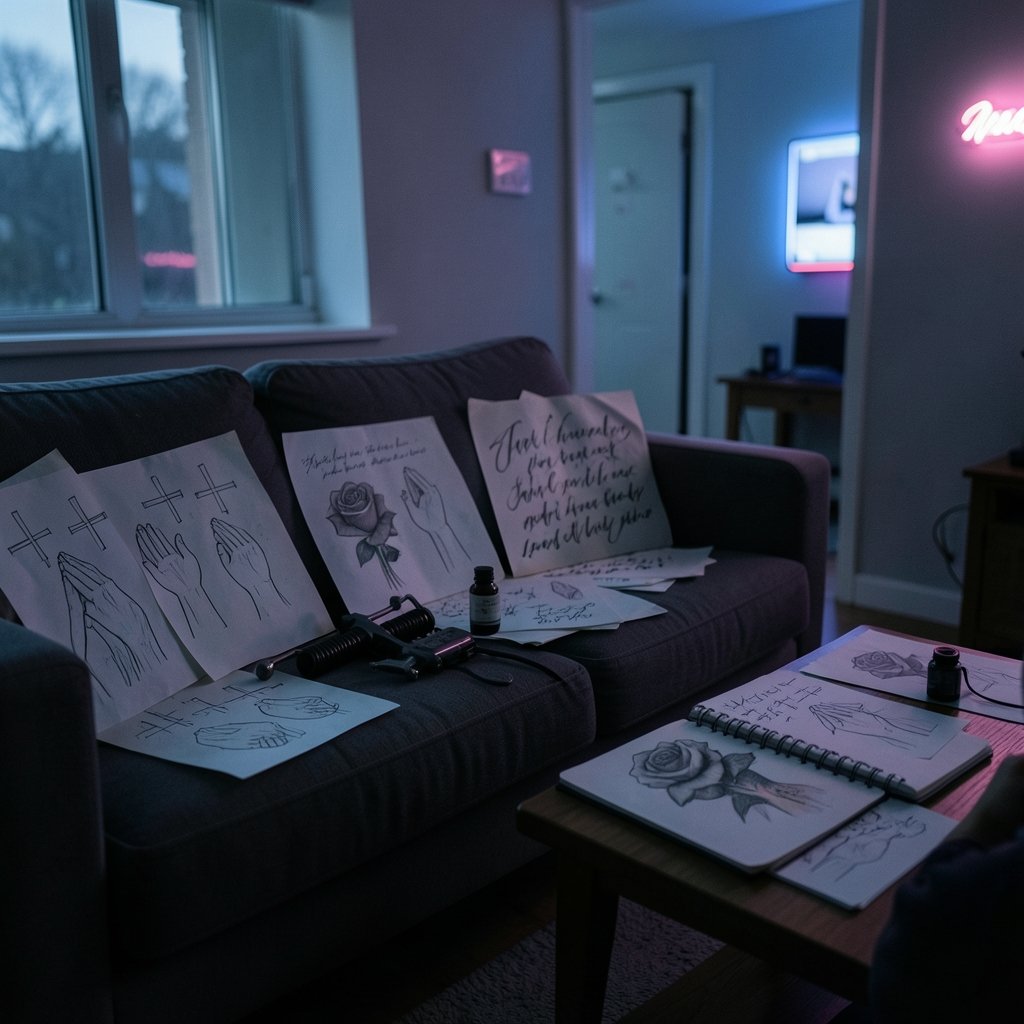
Here’s a tension worth naming early. “Chicano tattoo” is largely an outsider’s category. Many practitioners describe their work in plainer terms: black-and-grey, script, fine-line, realism. The label gets applied from the outside, often by collectors and media, to a wide range of work made by and for Chicano communities.
That doesn’t make the term useless. It does mean you should treat it as a loose umbrella rather than a rigid genre with a rulebook. The style’s real unity comes from shared visual vocabulary and cultural reference points, not from a single technique.
The Core Visual Language
Most designs draw from a small set of recurring motifs. Learn these and you can read a Chicano piece the way you’d read a sentence.
| Motif | Typical Meaning | Common Placement |
|---|---|---|
| Cross or praying hands | Faith, protection, gratitude | Forearm, chest, hand |
| “Por Vida” script | “For life” — permanence, loyalty | Neck, collarbone, hand |
| “Mi Vida Loca” | “My crazy life” — lived experience, survival | Hands, chest |
| Names in script | Family, children, lost loved ones | Forearm, ribs, shoulder |
| Roses and floral work | Love, beauty, remembrance | Anywhere |
| Stylized Indigenous imagery | Heritage, ancestry, pride | Back, arm, leg |
The black-and-grey approach dominates for a practical reason: fine shading and script read cleanly, age well, and suit the intimate scale of hand and forearm work. Single-needle fine-line pieces are especially common in the tradition.
Faith, Family, and Memory
Ask anyone with a Chicano-style piece what it means and you’ll usually hear about a person, not an aesthetic. The imagery is deeply personal: a grandmother’s name, a date of loss, a prayer, a promise.
This is where the style overlaps with memorial tattooing more broadly. The script and portrait work that defines the look is often built around remembrance. That emotional weight is a big part of why the style endures and why it travels well beyond its original communities.
The Prison and Barrio Connection
Scholarship links Chicano tattooing to incarceration and neighborhood identity, and that history is real. But cause and effect are contested. Tattooing flourished in prison settings partly because it was one of the few forms of self-expression available, and partly because the surrounding culture already valued it.
The practical takeaway for anyone researching the style: treat simple “prison origin” narratives with skepticism. The tradition is broader than any single origin story, and reducing it to one context flattens a lot of history.
How the Style Crossed Over
For decades, Chicano tattooing lived mostly within its own communities. That changed as the style’s visual power became impossible to ignore. Fine-line script, black-and-grey realism, and hand-and-neck placements moved into mainstream shops and onto the arms of people with no connection to the tradition at all.
That crossover raises fair questions about cultural respect. The designs are beautiful and widely available. The culture behind them is specific. Getting a piece because you like how it looks is one thing; understanding what you’re wearing is another. A good artist will happily explain the meaning behind a motif before inking it.
What Actually Works in Practice
If you’re considering a Chicano-style tattoo, experience from the shop floor points to a handful of things that separate a piece that ages well from one that doesn’t.
Go fine, not faint. Single-needle work looks stunning fresh. It also fades faster on high-friction areas like hands and fingers. Ask your artist how the design will look in five years, not five days.
Respect the placement. Script on the neck, hands, and face carries real social weight. Some employers still read visible tattoos differently than hidden ones. Decide deliberately, not on impulse.
Spell-check everything. Names, dates, and Spanish phrases are permanent. Have a fluent speaker review any script before the needle touches skin. Misspelled memorial tattoos are heartbreaking and surprisingly common.
Choose an artist who knows the vocabulary. A talented generalist can execute a rose. An artist steeped in the tradition knows why certain elements pair together and which combinations read as authentic.
Build in healing time. Black-and-grey work, especially fine-line, needs careful aftercare. Follow your artist’s instructions exactly; skipping the aftercare is the single most common way people ruin a good tattoo.
Common Mistakes People Make
- Treating the style as a costume. Picking symbols without asking what they mean.
- Chasing trends over meaning. A design that looks good on someone else’s arm may not suit your body or your story.
- Underestimating fading. Hand and finger tattoos blur faster than almost anywhere else.
- Skipping the consultation. The best pieces start with a conversation, not a walk-in.
- Ignoring the culture. The tradition deserves a little reading before you borrow from it.
Cost, Time, and Realistic Expectations
Fine-line and script pieces are often quicker than large-scale realism, but “quick” is relative. Small script can take under an hour. A detailed black-and-grey forearm piece may need multiple sessions. Pricing varies widely by city and artist reputation, so ask for a quote during a consultation rather than guessing from online flash prices.
Healing follows the usual pattern: initial redness, peeling around the first week, and settling over several weeks. Fine work can look slightly softer once healed, which is normal. What isn’t normal is blowout or patchy ink, and those usually trace back to an inexperienced artist or poor aftercare.
Where to Learn More
If you want to go deeper than flash sheets, look to institutional archives rather than social media. Museum collections and academic libraries hold primary documents and oral histories that trace Latino history and material culture in far more detail than any single article can. Local Chicano studies departments and community oral-history projects are often the most generous sources of all, and many welcome questions from curious outsiders. (Library of Congress)
Conclusion
Chicano tattooing is not a trend or a single style you can copy from a wall. It’s a visual language built over decades by communities using ink to say something about faith, family, survival, and pride. The crosses, the script, the roses, and the “Por Vida” lettering all carry weight that predates the current boom in fine-line work.
That’s the real value of understanding the tradition. Whether you’re planning your first piece or simply curious about the art on someone’s forearm, knowing where the vocabulary comes from makes you a better reader of it. Get the meaning right, choose an artist who respects the history, and the tattoo will hold up as well in twenty years as it does today.
Frequently Asked Questions
What is a Chicano tattoo?
It’s a broad label for tattoo work rooted in Mexican-American culture, especially the tradition that grew out of the pachuco era and the Chicano Movement. The style favors black-and-grey shading, fine-line script, religious imagery, and family names. Many artists describe their work by technique rather than using the label themselves.
Is “Chicano tattoo” an official style?
Not exactly. It’s mostly an outsider and collector term applied to a wide range of work. Practitioners more often call it black-and-grey, script, or fine-line. The label is useful for searching and describing, but it isn’t a formal genre with fixed rules.
What do common Chicano tattoo symbols mean?
Crosses and praying hands signal faith. “Por Vida” means “for life” and suggests permanence or loyalty. “Mi Vida Loca” translates to “my crazy life” and often marks lived experience or survival. Names in script usually honor family members or people who have passed.
Do Chicano tattoos have to be black and grey?
No. Color work exists within the tradition, but black-and-grey dominates because fine shading and script read cleanly and age well. Single-needle fine-line work is especially common, particularly on hands, necks, and forearms.
How much does a Chicano-style tattoo cost?
Pricing depends on the artist, city, size, and detail. Small script can be affordable and quick; detailed black-and-grey realism on a forearm often requires multiple sessions and a higher total. Always get a quote during a consultation instead of relying on online flash prices.
Is it okay to get a Chicano tattoo if I’m not Chicano?
People outside the culture do get these designs, and the imagery is widely available. The respectful approach is to understand what the symbols mean before wearing them, ask your artist about their origins, and avoid sacred or highly specific imagery you can’t explain. Curiosity plus homework goes a long way.
Consultation questions worth asking. Ask how the artist approaches lettering: freehand, stencil, or a hybrid. Ask to see healed photos rather than fresh ones, since fresh black-and-grey can hide long-term spreading. Ask whether they’ll adjust a design for your skin tone and placement, because shading that reads well on a forearm may muddy on a ribcage. These questions signal respect for the craft, and most artists appreciate them.
Aftercare for fine work. Keep the piece moisturized but not smothered, avoid soaking and direct sun during the first weeks, and resist picking at peeling skin. Sunscreen becomes a lifelong habit once a tattoo heals, particularly for fine-line script that sits on hands and necks. A faded name is still a name, but it reads differently than it did on day one.
A final word on reading the work. The next time you see a black-and-grey forearm or a scripted hand, look past the surface. You’re probably looking at a family, a loss, a promise, or a prayer. That’s the vocabulary, and it rewards the effort of learning it.
A note on language and naming. Terminology shifts across generations and regions. Some wearers embrace “Chicano” as a statement of identity; others prefer “Mexican-American,” “Latino,” or simply “black-and-grey.” When in doubt, describe the technique rather than assigning a label to someone’s skin. The same courtesy applies to photographs: crediting the artist and the wearer is basic respect, not an optional nicety.
Preserving the archive. Community oral-history projects, family photo collections, and shop records are fragile and often undocumented. If you have access to any of it—a relative’s flash book, a neighborhood photographer’s negatives—consider digitizing and donating copies to a local archive. Scholarship on this tradition is thin precisely because so much of its record lived in kitchens and back rooms rather than museums. The next generation of researchers will thank you for keeping it.