
Forearm Tattoos for Black Men: Designs & Aftercare 2026
 Abdul WadoodLast updated
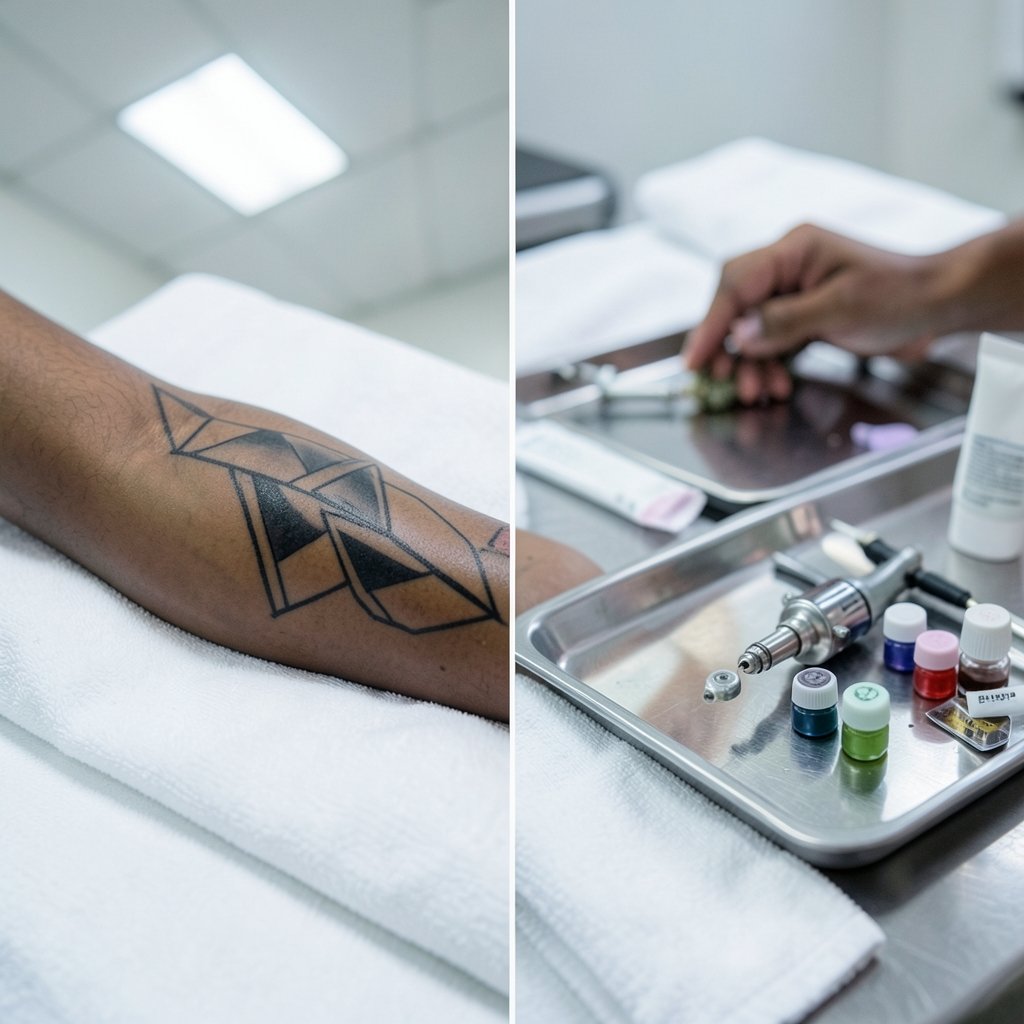
Roughly one in three American adults now has at least one tattoo, according to long-running polling by Pew Research Center, and the forearm has quietly become one of the most requested placements in shops across the country. It makes sense. The forearm is visible when you want it to be, easy to cover when you don’t, and flat enough to hold detail for decades. But for Black men, the forearm raises specific questions that generic tattoo advice rarely answers: how ink behaves on deeper skin tones, which designs hold contrast, and how to heal a piece without ending up with patchy or raised results. (Tattoo)
This guide walks through what actually matters, from skin science to design choices to the mistakes that show up again and again in real shops.
Why the Forearm Works So Well as a Placement
The forearm sits in a sweet spot between visibility and practicality. It’s a low-to-moderate pain area compared with the ribs, spine, or sternum, because the skin is thicker and the muscle beneath cushions the needle. Most people describe it as a scratching or vibrating sensation rather than sharp pain.
It’s also one of the most forgiving placements for healing. You can keep it clean, avoid friction, and moisturize it without much effort. Compare that to a back piece or a hip tattoo, where clothing rubs constantly and you can’t easily see the healing progress.
There’s a cultural layer too. Forearm tattoos read as intentional and confident. They’re the kind of piece you can show in a short-sleeve shirt at a family gathering or hide under a button-down for a formal event. That flexibility is why so many first-timers and seasoned collectors alike end up there.
How Skin Tone Changes the Tattoo Equation

This is where honest, practical information matters more than marketing. Deeper skin tones have more melanin, and melanin affects how ink reads visually and how the skin responds to trauma. A few practical realities:
Contrast is everything. Ink doesn’t sit on top of skin; it sits beneath it, and the skin’s color filters what you see. Black ink on deep brown skin can look softer and less crisp than the same ink on pale skin. That’s not a flaw, it’s optics, and good artists design around it.
Some colors misbehave. Certain reds, yellows, and light greens can heal dull or look muddy on darker skin. Many artists steer clients toward saturated blues, deep greens, purples, and rich oranges, or build pieces in black and grey with strategic white highlights.
Keloid risk deserves a real conversation. People with a personal or family history of keloids should raise it with their artist and, ideally, a dermatologist before booking. The Cleveland Clinic maintains clear patient-facing guidance on keloid scars and who tends to develop them.
Linework needs boldness. Fine, hairline tattoos can blur over time on any skin, but the effect is more noticeable on deeper tones. Heavier outlines and generous negative space keep a piece legible for years.
If you want a deeper dive into texture and care, the breakdown of Black hair texture, culture, and care is a useful companion read, since skin and hair care decisions often overlap in practice.
Design Styles That Hold Up on the Forearm
Not every style translates equally well. Here’s how the most requested approaches compare.
| Style | Best For | Contrast on Deep Skin | Longevity |
|---|---|---|---|
| Bold blackwork | Strong statements, geometric pieces | Excellent | Very high |
| Black and grey realism | Portraits, shading-heavy work | Good with strong values | High |
| Neo-traditional | Color, storytelling, larger pieces | Good with saturated palette | High |
| Fine line | Delicate, minimal designs | Weaker | Moderate |
| Watercolor | Soft, abstract looks | Weak | Low to moderate |
| Script and lettering | Names, phrases, dates | Excellent when bold | Very high |
Blackwork remains the safest bet for a forearm on deeper skin. Thick outlines, solid fills, and high-contrast patterns age beautifully and photograph well. Neo-traditional pieces work when the artist commits to saturated, high-opacity pigments rather than pastel washes.
Realism is possible but demands an artist who has specifically worked with darker skin. Portraits rely on value contrast, and a skilled hand can achieve striking depth with careful shading.
Fine line and watercolor styles aren’t off the table, but they’re the ones most likely to disappoint after a year or two. If a design depends on fragile detail, ask the artist how it will look at five years, not five weeks.
Sizing and Flow
The forearm has a natural taper. Designs that follow that taper, whether a vertical script, a wrap-around band, or a piece that flows from elbow to wrist, tend to look more deliberate than designs stamped in the middle. Consider which direction you want the piece to “point,” especially if you plan to extend it into a half sleeve later.
Cover-Ups and Extensions
Planning ahead saves money. If there’s any chance you’ll want a larger piece down the road, tell your artist now. Leaving room at the edges and avoiding dense black at the wrist or elbow crease makes future work much easier.
Choosing the Right Artist
The single biggest factor in a good outcome isn’t the design, it’s the person holding the machine. Look for:
- A portfolio with darker skin tones. A genuine body of work, not a token photo. Ask directly.
- Healed photos, not only fresh ones. Fresh tattoos always look sharp. Healed work reveals how an artist’s technique actually holds.
- A shop that answers questions without pressure. Good artists will talk you out of a bad idea.
- Consistent hygiene. Single-use needles, fresh gloves, sealed ink caps. No exceptions.
- Comfort discussing color and contrast honestly. If an artist promises a pastel yellow will pop on deep brown skin, keep looking.
A short consultation is worth the trip. Bring reference images, be clear about size, and ask what they’d change about your idea. The best artists improve on what you bring.
Pain, Session Length, and What to Expect
Forearm sessions are usually manageable. Most people sit comfortably for two to four hours. The wrist and the inner elbow crease are the tender spots; the outer forearm is comparatively easy.
Practical tips that genuinely help:
- Eat a real meal beforehand. Low blood sugar is the most common cause of feeling faint.
- Hydrate for days, not hours. Well-hydrated skin takes ink more smoothly.
- Skip alcohol for 24 hours before. It thins the blood and increases bleeding.
- Wear a short-sleeve shirt so the artist has clear access.
- Bring headphones but stay still. Movement is the enemy of clean linework.
Aftercare follows the standard playbook: keep it clean with fragrance-free soap, apply a thin layer of ointment, avoid soaking in baths or pools for two weeks, and don’t scratch. Sun protection afterward is non-negotiable. UV exposure fades ink faster than anything else, and on deeper skin it can also cause uneven pigmentation around the tattoo.
If you’re also thinking about dyeing or treating the hair on your arms or head, the guidance on black hair dye and safe application covers patch testing and product selection in useful detail.
Common Mistakes That Cost People Money
These come up constantly in shops, and each one is avoidable.
Going too small. A detailed design crammed into three inches will blur into a smudge. Give the idea room.
Chasing trends. Whatever is viral this year will feel dated in five. Pick something with personal meaning and let the style carry it.
Skipping the consultation. Walking in and hoping for the best leads to mismatched expectations and rushed work.
Ignoring the artist’s color advice. If they say a certain pigment won’t hold, believe them. They’ve seen it heal.
Under-budgeting. Quality work costs money. A cheap forearm tattoo often becomes an expensive cover-up.
Neglecting aftercare on day four. Most people are diligent for 48 hours and then get lazy. The middle of the healing window is when problems start.
Cultural Context and Personal Meaning
Tattooing has deep roots across African and diaspora cultures, from body marking traditions to modern memorial and heritage pieces. Many Black men choose forearm work that honors family, ancestry, faith, or personal milestones. Script in a family language, Adinkra symbols, portrait memorials, and geometric patterns all appear frequently.
The key is intention. A symbol borrowed without understanding can feel hollow or, worse, disrespectful. Take time to research the meaning behind any cultural motif, and don’t be afraid to ask an artist or community elder about appropriate use.
Conclusion
Forearm tattoos for Black men work best when three things line up: an artist who genuinely understands how ink behaves on deeper skin, a design built on bold contrast rather than fragile detail, and aftercare that doesn’t fall apart in week two. The forearm is a fantastic canvas, visible enough to matter and flexible enough to live with. Do the homework, ask hard questions at the consultation, and budget for quality. A well-planned piece will look sharp for decades; a rushed one becomes a story you tell while saving up for laser removal.
Frequently Asked Questions
Do forearm tattoos hurt more for Black men?
No. Pain depends on nerve density, skin thickness, and personal tolerance, not skin color. The forearm is generally one of the more comfortable placements for most people, with the wrist and inner elbow being the tender spots.
Which tattoo colors show up best on dark skin?
Saturated, high-opacity pigments work best: deep blues, rich greens, purples, bold reds, and solid black. Pastels, light yellows, and pale greens often heal looking muted or muddy. Black and grey work with strong value contrast is consistently reliable.
How much does a forearm tattoo usually cost?
Pricing varies widely by city, artist reputation, and complexity. Small pieces often start around a shop minimum, while detailed half-forearm work runs considerably higher. Expect to pay for quality, and be skeptical of unusually low quotes for complex designs.
Can I get a fine line tattoo on darker skin?
Yes, but with realistic expectations. Fine line work can look beautiful initially, yet thin lines tend to soften over time on all skin types. Ask your artist to slightly thicken the linework so the design stays legible for years.
How long does a forearm tattoo take to heal?
The surface typically heals in two to three weeks, while the deeper layers take about a month to fully settle. Keep it clean, moisturized, and out of direct sun, and avoid swimming or soaking during the first two weeks.
Should I tell my artist about keloid history?
Absolutely. If you or a close family member has a history of keloid scarring, mention it before booking. Your artist can adjust technique, and a dermatologist can advise on whether tattooing is a sensible choice for your skin.
Is it okay to start with a smaller piece and build later? Yes, and many people do. A first tattoo placed on the outer forearm leaves room to extend toward the elbow or wrist once you know how your skin heals and holds ink. Just tell your artist your long-term plan so the composition can grow without awkward gaps.
What about touch-ups? Most reputable artists offer them, often free within a set window. Deeper skin tones sometimes need a second pass to build saturation, especially in color work. That’s normal, not a sign of a bad tattoo.
Final word. Take your time, choose your artist as carefully as your design, and treat aftercare as part of the tattoo itself. Done right, a forearm piece becomes something you’re proud to wear every day.