
Ostrich Boots: What to Know Before Buying in 2026
 Abdul WadoodLast updated

What makes a pair of ostrich boots worth several times the price of a good cowhide pair? Walk into any Western wear store and you will see them displayed under glass, usually in warm honey or deep chocolate tones, with a texture that looks almost like a field of tiny pebbles. They are beautiful, no question. But they are also expensive, frequently misrepresented, and surrounded by claims that do not always hold up under scrutiny. This guide walks through what ostrich leather actually is, how it is graded, what the real trade-offs are, and how to avoid paying premium money for something that is not what the label says.
What Ostrich Leather Actually Is
Ostrich leather comes from farmed ostriches, the large flightless birds native to Africa. The hide’s defining feature is its quill follicle pattern — the raised bumps where feathers were once anchored. These follicles give the leather its signature look: a bumpy, dimpled surface that no embossing machine has ever quite replicated.
The follicles are not evenly distributed. They are most prominent on the crown of the hide, the area around the bird’s back and upper body. They are absent from the belly and lower legs, which produce smoother, less distinctive leather. This geography matters to boot buyers because it explains the grading system described below.
It is also worth knowing where the leather comes from. Wild ostrich populations are protected under international trade rules, with commercial leather largely sourced from farmed birds in South Africa and Namibia, where the industry is long established. Reputable sellers can usually provide country-of-origin documentation. If a seller cannot tell you where the hide came from, that is a warning sign.
Full Quill, Half Quill, Smooth: Decoding the Grades
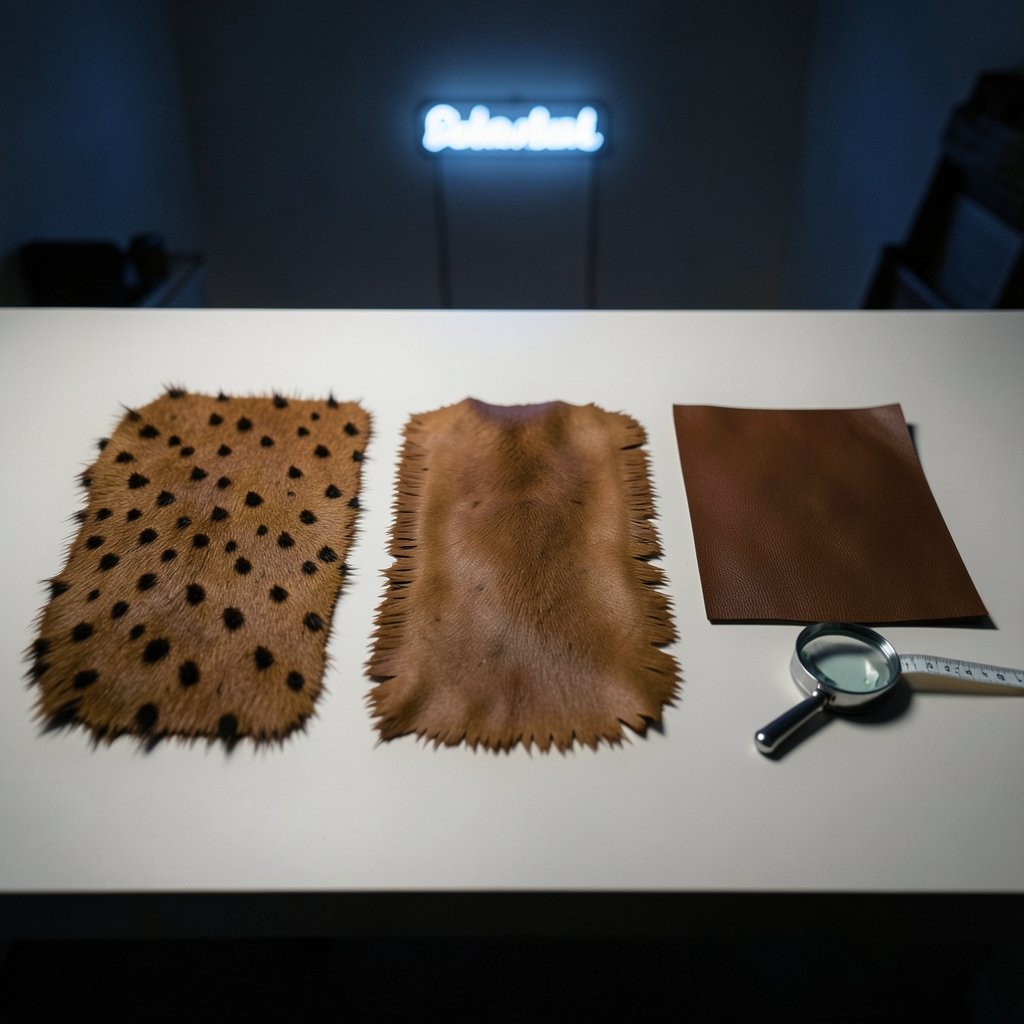
The single most important thing to understand before buying is that “ostrich” on a boot label does not tell you much on its own. The grade describes how much of the prized follicle area ended up on the boot.
| Grade | What It Means | Typical Position on Boot | Relative Price |
|---|---|---|---|
| Full quill | Dense, prominent follicles across the whole panel | Vamp (top of foot) | Highest |
| Half quill | Follicles on part of the panel, smooth areas elsewhere | Vamp with smooth sides | Mid-range |
| Smooth | Little or no follicle texture | Vamp, shaft, or accents | Lowest |
Full quill boots show off the texture most dramatically, and they cost the most. Half quill pairs balance visual interest with a lower price. Smooth ostrich looks much like a fine-grained cowhide and appeals to buyers who want the material’s softness without the bumpy look.
A common mistake: buyers assume any boot labeled “ostrich” is full quill. Many are not. Ask the seller directly which grade you are looking at, and look closely at photos or the physical boot to confirm the follicle pattern covers the panel you expect.
The Imitation Problem
Here is where a lot of people get burned. Embossed cowhide — ordinary cow leather pressed with a follicle-like pattern — is sold as “ostrich print,” “ostrich grain,” or sometimes just “ostrich” by less scrupulous sellers. It can look convincing in photos and costs a fraction of the real thing.
How do you tell the difference in practice? A few practical checks help:
- Look at the pattern’s regularity. Real follicles vary in size and spacing. Embossed patterns tend to repeat with mechanical consistency.
- Check the edges of the panel. Genuine ostrich texture fades naturally into smoother areas. Printed leather often shows an abrupt pattern boundary.
- Ask for documentation. Genuine exotic leather usually comes with country-of-origin paperwork. A seller who cannot or will not provide it deserves suspicion.
- Compare the price against the market. If a “full quill ostrich” boot costs roughly what a cowhide boot costs, it is almost certainly not genuine.
None of this means embossed leather is bad. It is durable, affordable, and looks decent. It just should not be priced or described as the real thing.
Construction: Where Ostrich Sits on the Boot
Ostrich is almost always used for the vamp — the upper foot section — rather than the shaft, sole, or heel. The sole and heel are typically leather, rubber, or synthetic, because ostrich is not suited to the abuse those areas take.
Exotic-leather boots are commonly Goodyear-welted or cemented. Goodyear welting allows the sole to be replaced, which extends the boot’s life considerably and is generally worth the higher upfront cost on a premium pair. Cemented construction is lighter and cheaper but harder to repair.
If you are comparing options across categories, the same logic that applies to picking work boots that match the right pair to your job applies here: match the construction to how you will actually use the boot, not to how it looks on the shelf.
Durability Claims: What Holds Up and What Doesn’t
Sellers often claim ostrich is more durable than cowhide, or softer, or both. The honest answer is that no peer-reviewed research confirms these claims, and buyers should treat them as marketing until someone produces evidence.
What can be said with more confidence is experiential: ostrich leather is notably soft and supple, and it takes a rich polish. It also has a reputation for being more susceptible to scuffing and water damage than heavily treated cowhide, which is one reason it tends to appear on dress and casual boots rather than heavy outdoor footwear. If you need something that shrugs off mud, snow, and job-site abuse, look at men’s winter boots built for snow or purpose-built work boots that protect and last instead. Ostrich is a dress material with character, not a workhorse.
The same caution applies to comfort claims. Ostrich uppers are soft, but the insole and outsole do most of the work for all-day comfort. If you have foot pain, the fix is usually the insole, not the upper leather — see this guide to insoles that actually fix all-day work boot pain for the mechanics of why.
Care and Maintenance in Practice
Ostrich needs more attention than cowhide, and skipping that attention is the most common way people ruin a good pair.
Keep it dry. Water spots show badly on ostrich. If the boots get wet, let them air dry away from direct heat — never on a radiator or in front of a fire, which will crack the leather.
Brush, don’t scrub. A soft horsehair brush lifts dust from between the follicles. A stiff brush or aggressive scrubbing will flatten the texture and dull the finish.
Condition sparingly. Ostrich is already supple. Over-conditioning clogs the follicle pattern and attracts dirt. A light application of a quality leather conditioner a few times a year is plenty.
Store with shape. Cedar shoe trees keep the vamp from collapsing and help manage moisture between wears.
Rotate. No leather boot should be worn two days running. Rotation lets moisture dissipate and roughly doubles the boot’s useful life.
Fit, Sizing, and the Break-In Reality
Exotic leather boots generally run true to size, but ostrich softens and stretches more than cowhide over the first few weeks. That means a pair that feels snug at purchase will likely feel comfortable soon after — but a pair that feels genuinely tight across the instep may never stop pinching.
Try boots on late in the day when feet are at their largest, wear the socks you plan to use, and check heel slip. A little slip is normal in a new leather boot; more than a quarter inch suggests the wrong size. Break-in should take a couple of weeks of short wears, not months of misery. If a boot is painful after two weeks, it is the wrong boot.
For anyone who also rides, the fit principles are similar to those covered in this guide to riding boots equestrians choose that fit and last — heel security and ankle flex matter more than the size printed on the box.
Price, Value, and When It’s Worth It
Ostrich boots sit firmly in the premium tier, well above comparable cowhide pairs. Prices shift constantly, so any specific figure quoted online ages quickly — judge value by construction, grade, and documentation rather than by a single number.
The question worth asking is whether the premium buys something you actually want. It buys texture and rarity. It buys a material with genuine visual character. It does not buy superior durability or weather resistance, and it does not buy a better fit. If those are your priorities, a well-made cowhide boot is the smarter purchase.
That said, there is a real case for paying for quality leather goods you will keep for years. The same reasoning behind why luxury boots can justify the price applies here: construction, materials, and repairability are what separate a decade-long boot from a two-season one.
The Animal-Welfare Question
Ostrich farming for leather and meat has drawn criticism from animal-welfare organizations, particularly around slaughter methods and the handling of chicks. Welfare codes exist in the main producing countries, but enforcement is debated, and buyers who care about this should seek out sellers who can speak specifically to sourcing and traceability. This is not a settled issue, and any article that presents it as one is oversimplifying.
Styling Ostrich Boots Without Looking Costume-y
The texture is loud enough on its own, so restraint works best. Pair full quill boots with dark denim, chinos, or a plain skirt and let the boots carry the outfit. Avoid competing textures — heavy brogueing, busy prints, and contrast stitching all fight with the follicle pattern.
Color matters too. Honey, tan, and chocolate are the most versatile. Black ostrich reads dressier and works with formal outfits. For more on pairing statement boots with everyday clothing, this guide to wearing knee-high boots with dresses covers the styling principles that translate across boot types.
If you are shopping across seasons and terrain as well as style, it helps to think about your whole rotation. A pair chosen for real terrain and weather serves a very different purpose than an ostrich dress boot, and a sensible wardrobe keeps those roles separate rather than expecting one pair to do everything.
Conclusion
Ostrich boots are a genuine pleasure to own when you buy them with clear eyes. The follicle texture is unlike anything else in footwear, the leather is soft and takes a beautiful finish, and a well-made pair can last many years with proper care. But the category is full of grade confusion, imitation leather sold under misleading labels, and durability claims that do not survive contact with evidence. Know the difference between full quill, half quill, and smooth. Insist on documentation. Accept that ostrich is a dress material, not a work boot. Do those things, and the premium price buys exactly what it should: a distinctive, well-crafted boot you will reach for often.
Frequently Asked Questions
Are ostrich boots real leather?
Yes, genuine ostrich boots are made from real ostrich hide, usually farmed in South Africa or Namibia. However, “ostrich print” or “ostrich grain” products are embossed cowhide and are not genuine ostrich. Always confirm which one you are buying before paying a premium.
How can you tell real ostrich leather from fake?
Real ostrich has irregular follicle bumps that vary in size and spacing, and the texture fades naturally at panel edges. Embossed imitations show a mechanically repeating pattern with abrupt boundaries. Country-of-origin documentation is the strongest confirmation.
Are ostrich boots more durable than cowhide?
There is no peer-reviewed evidence confirming that ostrich is more durable than cowhide, despite common marketing claims. Ostrich is softer and more supple, but it is generally more prone to scuffing and water damage, which makes it a poor choice for heavy work or harsh weather.
What does “full quill” mean on ostrich boots?
Full quill refers to leather cut from the crown of the hide, where the feather follicles are largest and most densely packed. Full quill boots show the most dramatic texture and command the highest prices. Half quill uses less of the follicle area, and smooth ostrich has little visible texture.
How should ostrich boots be cared for?
Keep them dry, brush with a soft horsehair brush rather than scrubbing, condition lightly a few times a year, store them with cedar shoe trees, and rotate them so they dry fully between wears. Never dry wet ostrich leather near direct heat.
How much should ostrich boots cost?
Ostrich boots sit well above cowhide equivalents in price, and exact figures change constantly. Judge value by grade, construction method, and documentation rather than by a single quoted price. A suspiciously cheap “full quill” pair is almost certainly imitation.