
Glitter Tattoos: How They Work & Last in 2026
 Abdul WadoodLast updated

A glitter tattoo that takes four minutes to apply can survive a full weekend of swimming, sweating, and dancing, yet peel away in a single evening if it lands on the wrong patch of skin. That gap between “looks amazing” and “gone by dinner” is the whole story of this craft. Temporary glitter body art has become a fixture at festivals, kids’ birthday parties, and wedding receptions, and it fills a real niche: the visual punch of a tattoo without the needle, the commitment, or the healing time. But the product category is loosely regulated, wildly uneven in quality, and easy to get wrong in ways that range from annoying to genuinely unsafe. This guide covers what glitter tattoos actually are, how the application process works, what determines longevity, and where the safety lines sit. (Temporary tattoo)
What a Glitter Tattoo Actually Is
A glitter tattoo is a temporary design created by painting cosmetic adhesive onto the skin through a stencil, then pressing fine glitter into the wet glue. The stencil is lifted, the excess glitter is brushed away, and what remains is a crisp, sparkly shape bonded to the top layer of skin. There is no ink and no needle. The design sits on the surface, which is why it fades rather than “grows out.”
The technique borrows from face painting and from henna, but the mechanics differ. Henna stains the skin with dye that lasts one to three weeks. Glitter tattoos rely on adhesion, so they typically hold for several days and rarely beyond a week, depending on placement and care.
Kits sold for home use usually contain three things: a cosmetic-grade adhesive (often a gum-based or acrylic-based body glue), a set of reusable stencils, and jars of polyester glitter cut fine enough to sit flat against the skin. Professional setups add brushes, a setting powder, and a sealant.
How the Application Process Works, Step by Step
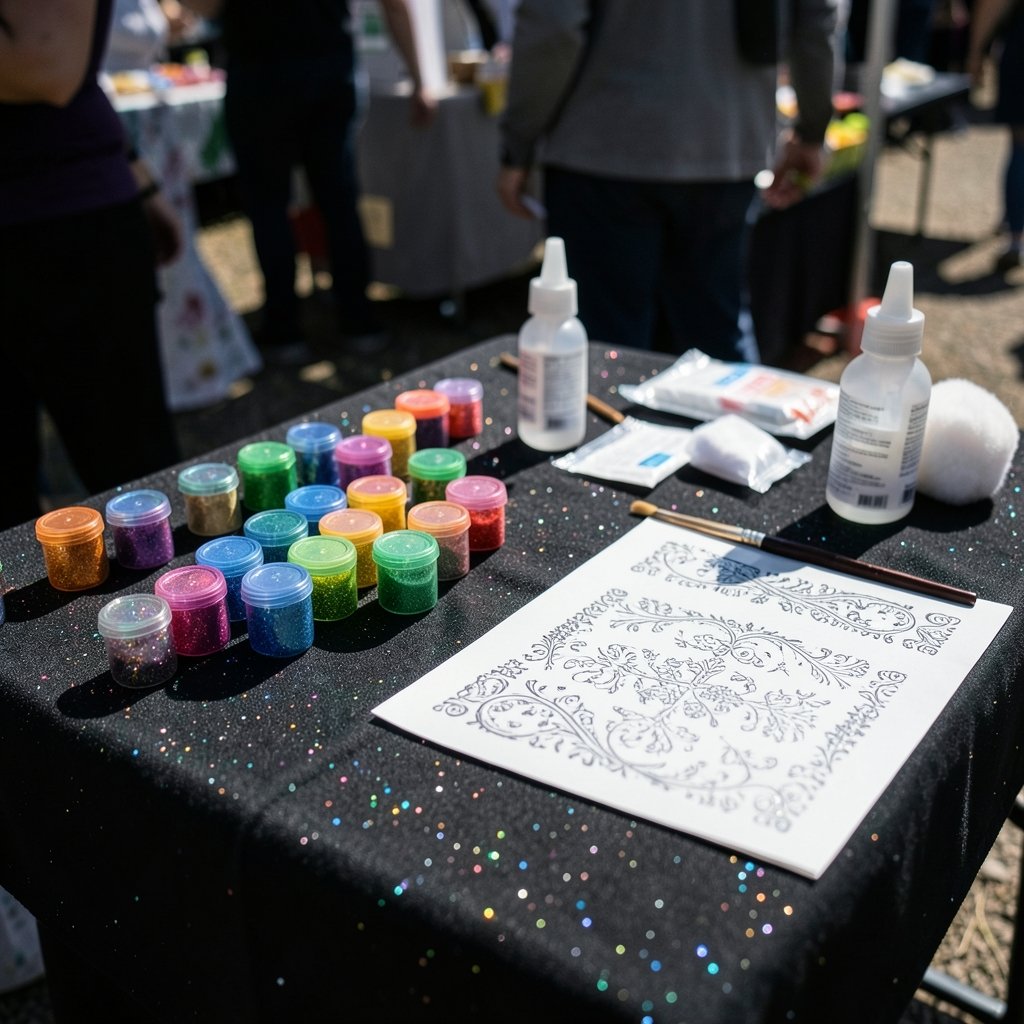
Professionals follow a fairly consistent sequence, and the discipline matters more than the brand of glitter.
- Clean and dry the skin. Oils, sunscreen, and lotion all fight the adhesive. A wipe with an alcohol pad followed by a full dry is the single biggest upgrade to longevity.
- Position and press the stencil. Choose a flat, low-friction area. Peel the backing and press firmly, especially at the edges, so glue cannot bleed underneath.
- Apply the adhesive thinly. A thin, even coat through the stencil window beats a thick blob. Thick glue stays tacky longer and traps glitter unevenly.
- Wait for the right tack. The glue should be clear and slightly sticky, not wet. This is where impatient application fails.
- Press glitter in with a brush or puff. Work in small sections and press rather than sprinkle, so particles embed into the adhesive.
- Lift the stencil carefully and brush away the excess. A soft fan brush clears stray particles without dragging the design.
- Seal if the product calls for it. Some glues need no sealant; others benefit from a light setting spray or powder.
The whole process takes three to eight minutes per design, which is why glitter tattoos work so well as event entertainment: a single artist can move a line of children quickly.
Why Some Glitter Tattoos Last a Week and Others Vanish Overnight
Longevity is mostly a function of three variables: placement, skin type, and aftercare. The glue is only as strong as the surface beneath it.
| Placement | Typical Wear Time | Why |
|---|---|---|
| Upper arm, shoulder, back | 4–7 days | Flat surface, low friction, covered by clothing |
| Forearm, calf | 3–5 days | Moderate friction from sleeves and movement |
| Wrist, ankle, hand | 1–3 days | Constant flexing and washing |
| Face, neck | 1–2 days | Oils, sweat, and frequent wiping |
| Fingers, palms | Hours | Heavy wear and near-constant handwashing |
Skin type matters too. Oily skin breaks down adhesive faster; dry skin holds it longer but can flake. Children tend to lose designs quickly because they touch, wash, and roll around more.
Aftercare is where most people undo a good application. The rules are simple: pat the area dry instead of rubbing, avoid oil-based lotions and sunscreen directly on the design, skip exfoliating scrubs and loofahs, and keep it out of long hot baths. Chlorinated pools are survivable; prolonged soaking is not.
Common Mistakes That Ruin a Glitter Tattoo
The same handful of errors shows up again and again, both at home and at events.
- Applying over sunscreen or lotion. The single most common cause of early failure. The adhesive needs bare, dry skin.
- Using craft glitter instead of cosmetic glitter. Craft glitter is cut differently, often has sharp edges, and is not intended for skin. This is a safety issue as well as a quality issue.
- Applying too much glue. Thick adhesive skins over on top while staying wet underneath, so the glitter sloughs off in sheets.
- Skipping the stencil press. Loose stencil edges let glue bleed and produce blurry, smeared outlines.
- Rushing the tack time. Wet glue plus glitter equals a patchy, uneven finish.
- Picking at the edges. Once a corner lifts, the whole design follows. Trimming a lifting edge with small scissors buys extra days.
A practical tip that genuinely works: apply glitter tattoos at least an hour before swimming, showering, or heavy activity, and choose the upper arm or shoulder for anyone who wants maximum wear time.
Safety: What Parents and Artists Should Know
Glitter tattoos are generally considered low-risk when done with proper materials, but “low-risk” is not “no-risk,” and the details matter.
Adhesives are the main concern. Some body glues contain acrylates, rosins, or other ingredients that can trigger contact dermatitis in sensitive people. A patch test on the inner forearm, left for 24 hours, is a sensible precaution for anyone with a history of skin reactions or allergies.
Glitter near the eyes is a real hazard. Fine particles can scratch the cornea. Artists should never apply designs to the eyelid or directly under the eye, and loose glitter should be kept well away from the face. For children, the safest zones are arms, shoulders, and legs.
Ingredient regulation varies by jurisdiction. Cosmetic products fall under different rules depending on the country, and enforcement of temporary body art at events is inconsistent. Consumers buying kits should look for products explicitly labeled for cosmetic use, with a full ingredient list and a batch number. Anything sold in unlabeled packaging, or repackaged from bulk craft supplies, is a gamble.
Removal should be gentle. Warm water and a soft cloth, or a little oil worked into the adhesive, loosens the design. Rubbing hard, using acetone, or scrubbing with a washcloth irritates skin and is the usual cause of the redness people blame on the product.
One design per person per session. Layering glitter tattoos over broken skin, sunburn, or an existing rash invites irritation. Artists should decline to work on compromised skin, and that includes a fresh scrape from the bouncy castle.
Glitter Tattoos vs. the Alternatives
The comparison is worth spelling out, because glitter tattoos are often marketed as a direct substitute for things they are not really like.
| Feature | Glitter Tattoo | Henna | Temporary Ink Tattoo | Real Tattoo |
|---|---|---|---|---|
| Application time | 3–8 minutes | 15–45 minutes | 1–5 minutes | Hours |
| Typical duration | 3–7 days | 1–3 weeks | 3–14 days | Permanent |
| Needle involved | No | No | No | Yes |
| Removal | Water, oil, gentle washing | Fades on its own | Rubbing alcohol or soap | Laser |
| Best for | Events, kids, festivals | Longer-lasting body art | Realistic designs | Lifelong commitment |
The honest trade-off: glitter tattoos are the fastest and most kid-friendly option, but they are also the shortest-lived and the most dependent on application skill. Henna lasts longer but carries its own risks, particularly with “black henna” products that contain paraphenylenediamine and have caused serious reactions. Temporary ink tattoos look more like real tattoos but lack the sparkle that makes glitter designs photograph so well.
For event planners, the practical answer is often to offer two options: glitter tattoos for younger children and short-attention-span guests, henna or ink for teens and adults who want something that survives the week.
Running Glitter Tattoos at an Event
For anyone considering hiring an artist or setting up a booth, a few operational details separate a smooth station from a chaotic one.
Throughput matters. A skilled artist can complete 12 to 20 designs per hour. For a party of 30 children, budget at least two hours or book two artists. Queues are the number one complaint at glitter tattoo stations.
Stencil variety drives satisfaction. A box of 40 designs covering animals, dinosaurs, stars, sports, and simple shapes covers most requests. Offering a photo menu speeds up choice and reduces indecision.
Hygiene is non-negotiable. Fresh water per person, single-use applicators where possible, sanitized stencils, and a visible hand-sanitizing routine reassure parents and reduce cross-contamination.
Ventilation and containment. Loose glitter travels. A tray with raised edges, a lint roller for cleanup, and a designated application zone keep the venue from sparkling for months.
Clear aftercare instructions. A small card explaining how to remove the design gently prevents a lot of post-event complaints and skin irritation.
For more on event marketing and content strategy around family entertainment businesses, Voozon Media covers practical growth tactics. (About hygiene)
Conclusion
Glitter tattoos earn their popularity honestly. They deliver a striking, photogenic result in minutes, require no needles, and suit children and adults alike. The catch is that the category rewards good practice and punishes shortcuts. Clean, dry skin; a thin, even layer of cosmetic adhesive; proper tack time; and gentle aftercare are what separate a design that survives a week from one that disappears before bedtime. Materials matter just as much: cosmetic-grade glitter and labeled adhesives, never craft supplies, and a patch test for anyone with sensitive skin. Used sensibly, glitter tattoos are one of the most accessible forms of temporary body art available, and one of the few that genuinely works for a five-year-old’s birthday party and a Saturday night festival in the same weekend.
Frequently Asked Questions
How long do glitter tattoos last?
Most last between three and seven days. Placement is the biggest factor: upper arms, shoulders, and backs hold the longest because they see little friction, while hands, wrists, and faces often lose the design within a day or two. Skin type and aftercare also play a role, and oily skin tends to break down adhesive faster.
Are glitter tattoos safe for children?
Yes, when cosmetic-grade glitter and skin-safe adhesive are used and the design is placed on arms, shoulders, or legs rather than the face. Fine glitter near the eyes is a genuine hazard, and children with sensitive skin should have a 24-hour patch test first. Artists should avoid broken or sunburned skin entirely.
How do you remove a glitter tattoo?
Warm water and a soft cloth, or a small amount of oil massaged into the adhesive, will loosen the design within a few minutes. Avoid acetone, harsh scrubbing, and rough washcloths, since those irritate the skin and are the usual cause of redness after removal.
Can you swim with a glitter tattoo?
Yes, but not immediately. Wait at least an hour after application before getting wet, and expect chlorinated pools and long soaks to shorten the design’s life. Brief exposure is fine; prolonged soaking softens the adhesive and lifts the edges.
What is the difference between cosmetic glitter and craft glitter?
Cosmetic glitter is manufactured and labeled for use on skin, with finer cuts and stricter quality control. Craft glitter is not intended for skin contact, is often coarser, and may have sharper particle edges. Using craft glitter on the face or near the eyes is a risk that is not worth taking.
How much should a glitter tattoo cost at an event?
Pricing varies widely by region and setting, but most event artists charge per design or per hour, with party packages covering a set number of guests. The cost reflects the artist’s time, stencil library, and materials rather than the glitter itself, which is inexpensive. Booking early matters more than shopping on price, since popular artists fill weekend slots quickly.