
2c Hair Guide: Identify, Style & Care for Waves in 2026
 Abdul WadoodLast updated
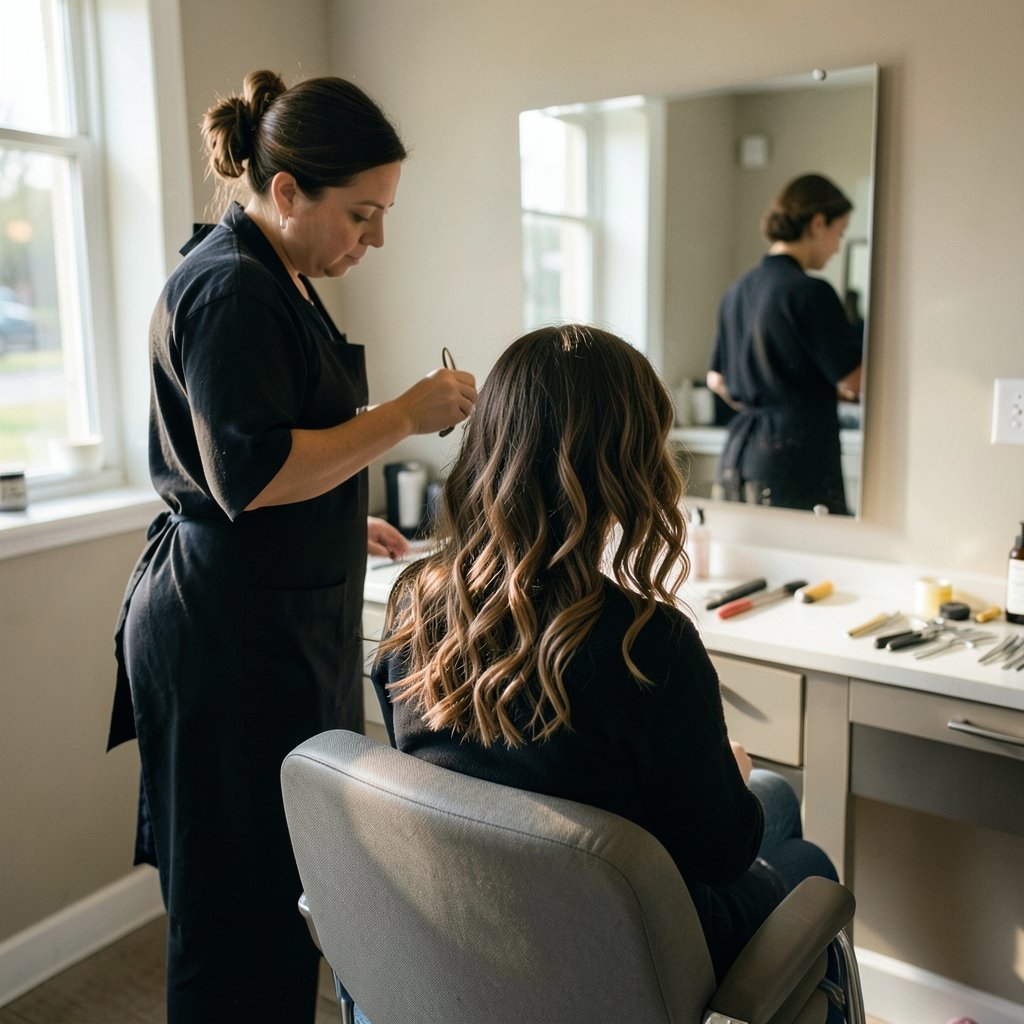
What do you call hair that falls in loose, shiny S-waves but frizzes the moment humidity hits? If that sounds familiar, you may be dealing with 2c hair—the waviest subtype in the widely used Type 2 category. It sits in a tricky middle ground: wavy enough to need curl-friendly care, but straight enough that heavy creams weigh it down. Getting the balance right is the whole game. (Hair and scalp care)
This guide breaks down what 2c hair actually is, how to tell it apart from its neighbors, and the practical routine that keeps the pattern defined without sacrificing volume. It also flags where the popular typing system falls short, because knowing the limits of a label matters as much as knowing the label itself.
What Is 2c Hair?
2c hair is a subtype within the Andre Walker Hair Typing System, a classification that sorts hair into Type 1 (straight), Type 2 (wavy), Type 3 (curly), and Type 4 (coily), with letter subcategories a through c. Type 2 covers waves, and 2c is generally described as the most defined end of that range.
The key trait is the S-wave: a loose, elongated curve rather than a tight spiral. On 2c hair, those waves typically begin closer to the root than they do on 2a or 2b hair, which is why 2c strands often look wavier at the crown and fuller overall. Strands tend to be medium in texture, and many people with this pattern notice a mix of wave and near-straight sections on the same head.
That inconsistency is not a flaw. It is one of the defining features of the type—and one of the reasons the label gets messy in practice.
Where the Hair Typing System Comes From—and Where It Falls Short
The typing system is usually credited to hairstylist Andre Walker, who popularized it in his 1997 book Andre Talks Hair!. It has since become a near-universal shorthand in consumer hair care. The general framework is described on the Wikipedia page for the Andre Walker Hair Typing System. (Hair)
Here is the honest caveat: curl typing is not a scientific or clinical classification. It was built for salon communication, not dermatology. A few practical consequences follow:
- The boundary between 2b and 2c is subjective and varies from source to source. Two stylists can look at the same head and disagree.
- One person’s hair can span multiple types—wavy at the back, straighter at the front, looser underneath.
- Hair changes with hormones, health, heat history, and length. A 2c today may read as 2b after a big chop or a season of straightening.
The takeaway: use 2c as a starting point for product and technique choices, not as a rigid identity. If a product designed for 2c hair leaves your waves flat, your hair may simply sit closer to 2b. If it leaves them frizzy, you may lean toward Type 3 territory. Adjust from there.
How to Tell If You Have 2c Hair
Rather than measuring against a photo, run a few simple checks. The most reliable test is what your hair does with no product and no heat.
The no-product test
Wash with a gentle cleanser, skip styling products entirely, and let your hair air-dry without touching it. Then look at the result:
- Does it form a clear S-shape rather than a straight line or a spiral?
- Do the waves start within a few inches of the root?
- Does the pattern hold at the back and crown but fall straighter at the sides?
If you answered yes to most of these, 2c is a reasonable fit.
The strand and density check
Pull a single shed strand taut. A medium texture—neither invisibly fine nor coarse and wiry—is common for 2c. Then assess density: 2c hair often looks thick because the waves create volume, even when individual strands are medium. This matters for product choice, because fine-but-voluminous hair overloads quickly.
A quick comparison table
| Feature | 2a | 2b | 2c | 3a |
|---|---|---|---|---|
| Wave shape | Barely there, slight bend | Defined loose waves | Defined S-waves, more root lift | Clear loose curls |
| Where pattern starts | Mid-length to ends | Mid-length | Closer to root | Near root |
| Frizz tendency | Low to moderate | Moderate | Moderate to high | High |
| Volume | Low | Medium | Medium to high | High |
| Typical risk | Falling flat | Losing definition | Weighing down or frizzing | Dryness and shrinkage |
The 2c column is where most confusion lives. It is the subtype most likely to be mistaken for either 2b (when weighed down) or 3a (when styled with enough hold).
Common Mistakes That Flatten or Frizz 2c Hair
Most 2c frustration traces back to a handful of habits. These are the ones that show up again and again.
Mistake 1: Treating it like straight hair
Brushing dry 2c hair is the fastest way to turn defined waves into a cloud. Dry brushing disrupts the wave pattern and lifts the cuticle, which invites frizz. Detangle in the shower with conditioner and a wide-tooth comb, then leave the pattern alone while it dries.
Mistake 2: Treating it like coily hair
The opposite error is piling on heavy butters, oils, and thick creams formulated for Type 4 hair. On 2c strands, those products coat the wave, pull it straight, and leave a greasy cast. Lightweight is the rule. Water-based leave-ins and mousses outperform rich creams almost every time.
Mistake 3: Skipping hold entirely
Because 2c hair looks almost straight when wet, many people skip styling products and end up with frizz by midday. A light gel or mousse applied to soaking-wet hair gives the wave something to hold onto. The cast it forms feels stiff while drying—that is normal. Scrunch it out once fully dry and the softness returns.
Mistake 4: Towel-drying aggressively
Rubbing with a terry towel roughs up the cuticle. Plop instead: wrap wet hair in a cotton T-shirt or microfiber towel for ten to fifteen minutes and let it absorb water without friction.
Mistake 5: Fighting the inconsistency
People with 2c hair often straighten the wavier sections to match the straighter ones, or vice versa. A better approach is cutting to the pattern—a stylist who cuts dry or wavy can work with the natural variation instead of against it.
A Practical 2c Hair Routine That Actually Works
The goal for 2c hair is straightforward: moisture without weight, hold without crunch. A workable routine looks like this.
Step 1: Cleanse gently
Sulfate-free or low-sulfate shampoos suit most 2c hair, but clarify every few weeks if you use silicones or styling products regularly. Buildup is a quiet killer of wave definition—it coats the strand and drags the pattern down.
Step 2: Condition with intent
Apply conditioner from mid-length to ends, and use a wide-tooth comb to distribute it while detangling. Rinse with cool water to help the cuticle lie flat. If your hair feels dry but goes limp easily, try a leave-in conditioner instead of a rinse-out on wash day.
Step 3: Style on soaking-wet hair
This is the step most people get wrong. Apply product while hair is still dripping—mousse for volume, light gel for definition, or a small amount of each. Scrunch upward toward the scalp to encourage the wave. Then stop touching it.
Step 4: Dry with minimal disturbance
Air-dry when you can. If you use a diffuser, keep it on low heat and low speed, hovering rather than pressing, and stop when hair is about 80 percent dry. Let the rest finish naturally.
Step 5: Break the cast
Once completely dry, scrunch gently to soften the gel cast. If you applied too much product, a drop of lightweight oil on your palms helps release the crunch without re-frizzing.
Step 6: Refresh, don’t rewash
Between wash days, mist with water and a little leave-in, then scrunch. Most 2c hair does not need daily washing, and over-washing strips the moisture that keeps waves smooth. For a broader look at how curl patterns interact with styling and content strategy in the beauty space, the team at voozon.media covers adjacent topics worth exploring.
Styling and Cutting 2c Hair
Cut matters as much as product. A few guidelines that hold up in practice:
- Ask for a dry or wavy cut. Cutting 2c hair wet and straight hides how much it will spring up once dry. Dry cutting lets the stylist see the actual pattern.
- Avoid heavy blunt layers. Long layers that follow the wave keep volume without creating a triangle shape.
- Be cautious with thinning shears. They can create frizz halo and gaps in the wave.
- Refresh your cut every 10 to 12 weeks if you wear it wavy most days.
For styling, diffusing upside down at the roots adds lift, and pineappleing—loosely gathering hair at the top of the head with a soft scrunchie—protects waves overnight. Silk or satin pillowcases reduce friction and frizz, a tip that shows up consistently in consumer hair-care guidance.
What 2c Hair Needs From Products
A simple filter helps cut through marketing claims. Look for:
| Product type | What to look for | What to avoid |
|---|---|---|
| Shampoo | Sulfate-free, gentle surfactants | Harsh clarifying formulas used daily |
| Conditioner | Lightweight, slip without heaviness | Heavy butters on fine strands |
| Leave-in | Water-based, thin lotion | Thick creams and pomades |
| Styler | Mousse or light-hold gel | Heavy gels, waxes, silicone-heavy serums |
| Refresh | Water mist plus a drop of leave-in | Reapplying full styler daily |
The pattern here is consistent: light layers beat one heavy product. If your waves fall flat by noon, the fix is usually less product, applied to wetter hair—not more.
Conclusion
2c hair is the most defined of the wavy subtypes: loose S-waves that start near the root, medium texture, plenty of volume, and a real tendency toward frizz. It is also the subtype most often mislabeled, because its boundaries with 2b and 3a are fuzzy and because the typing system itself is a salon shorthand rather than a scientific standard.
The practical answer is refreshingly simple. Detangle wet, style soaking wet with lightweight products, dry with minimal touching, and break the cast when it is fully dry. Skip the heavy creams, skip the dry brushing, and stop fighting the sections that wave differently from the rest. Work with the pattern instead of correcting it, and 2c hair rewards you with definition that holds.
Frequently Asked Questions
What is 2c hair?
2c hair is a subtype in the Andre Walker Hair Typing System, the most defined of the Type 2 wavy categories. It typically forms loose S-waves that begin closer to the root than 2a or 2b hair, with medium texture and noticeable volume. It tends to frizz more than straighter waves but holds definition well with lightweight styling products.
Is 2c hair wavy or curly?
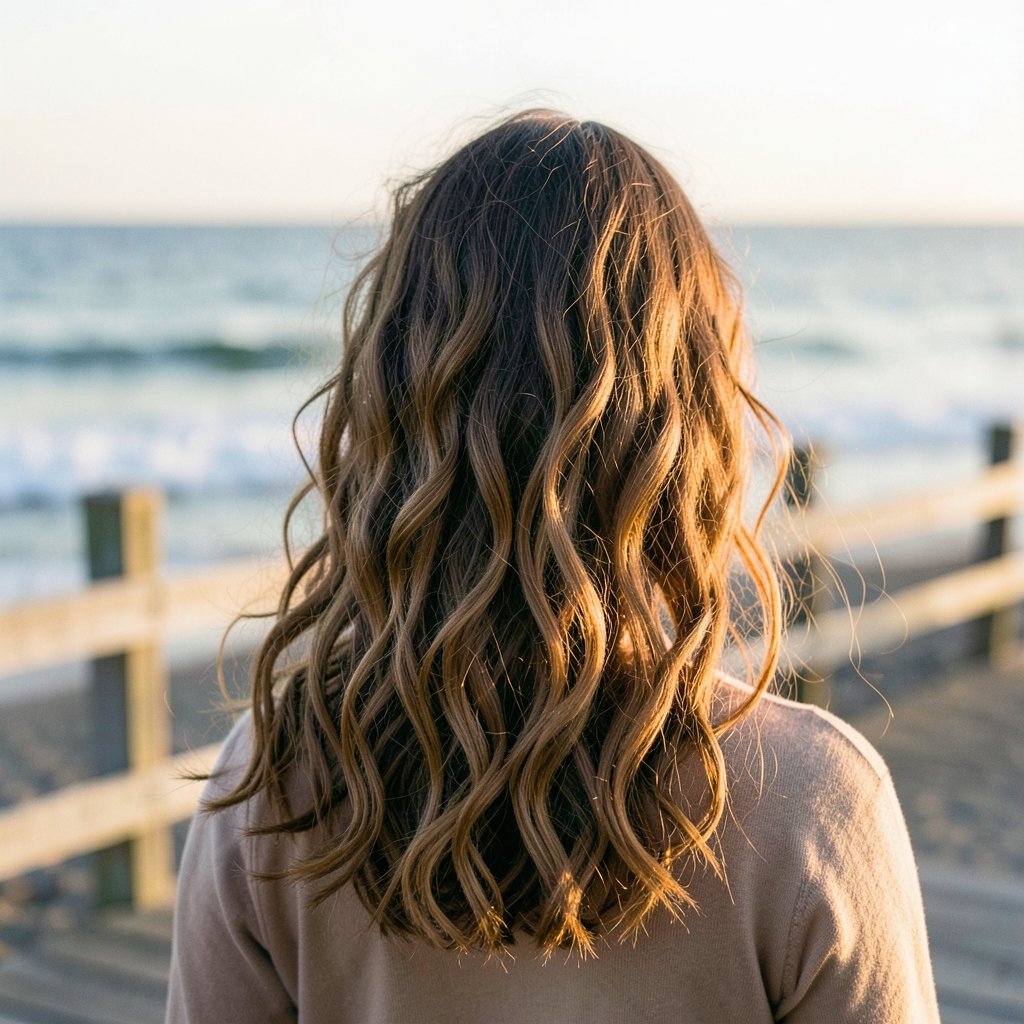
It is wavy. Type 2 covers waves, and 2c is the waviest end of that range. It can look almost curly when styled with strong hold, which is why it is sometimes confused with 3a, but the natural pattern is an elongated S-curve rather than a spiral.
How can I tell if I have 2c hair?
Wash with a gentle cleanser, apply no styling products, and let your hair air-dry without touching it. If it forms clear S-waves that start within a few inches of the root and hold at the crown while falling straighter at the sides, 2c is a reasonable fit. Because the boundaries between subtypes are subjective, treat the label as a starting point rather than a fixed identity.
Why does my 2c hair go frizzy?
Frizz usually comes from disruption: dry brushing, rough towel-drying, touching hair while it dries, or using products too heavy for the wave. 2c hair has a moderate to high frizz tendency, so the fix is gentle handling, styling on soaking-wet hair, and a light-hold product that sets the pattern before it can expand.
What products work best for 2c hair?
Lightweight, water-based formulas work best: a gentle sulfate-free shampoo, a conditioner with slip, a thin leave-in, and either a mousse or light-hold gel. Heavy butters, thick creams, and silicone-rich serums tend to weigh waves down and pull them straight. Apply stylers to wet hair and scrunch out the cast once dry.
Does 2c hair need a special haircut?
It benefits from one. A dry or wavy cut lets the stylist see how much the hair springs up once it dries, which prevents a cut that looks right wet and short dry. Long layers that follow the wave preserve volume, while heavy blunt layers and aggressive thinning can create a triangle shape or frizz halo.