
Best Hair Straightener Guide 2026: Flat Irons & Heat Damage
 Abdul WadoodLast updated
What happens inside a strand of hair when a hot plate clamps down on it? The answer explains almost everything about choosing, using, and not ruining your hair with a straightener. Hair is mostly made of keratin, a protein arranged in long chains held together by hydrogen bonds. Those bonds are weak individually but strong in numbers. Heat and moisture temporarily break them, the hair takes a new shape, and as it cools the bonds lock in place. That is the entire magic trick behind every flat iron on the market, and it is also why temperature, technique, and hair condition matter far more than glossy packaging claims. (Hair straightening)
What a Hair Straightener Actually Is
The term covers two different things, and mixing them up causes real confusion.
A thermal hair straightener is an electrical styling tool. The two main types are flat irons, which press hair between two heated plates, and heated straightening brushes, which combine bristles with heated surfaces. Both rely on the temporary bond-breaking described above.
A chemical hair straightener is a completely different product category: relaxers, lye and no-lye formulas, and salon smoothing treatments. These permanently alter the hair’s internal structure using strong chemistry rather than heat. They carry their own safety considerations and are regulated differently from electrical devices. This article focuses on the tools, but the distinction matters whenever someone reads a safety warning and assumes it applies to their flat iron.
Flat Iron vs. Heated Brush: A Practical Comparison
Most buyers wonder which type to start with. The honest answer depends on hair texture and how much time the person is willing to spend.
| Feature | Flat iron (plates) | Heated straightening brush |
|---|---|---|
| Best for | Thick, curly, coarse, or hard-to-tame hair | Fine to medium hair, quick touch-ups |
| Maximum straightening power | High; can also curl and wave | Moderate; smooths more than it flattens |
| Risk of heat damage | Higher if misused | Lower but not zero |
| Time per styling session | Longer | Shorter |
| Learning curve | Steeper; technique matters | Gentle; hard to do badly |
| Typical plate or bristle materials | Ceramic, tourmaline, titanium | Ceramic-coated bristles |
A useful rule of thumb from practice: if hair takes more than a few passes with a brush to look smooth, a flat iron will do the job with fewer passes and therefore less cumulative heat exposure. Fewer passes at a moderate temperature usually beats many passes at a high one.
Plate Materials and What They Change
Marketing copy treats plate material as destiny. In reality it changes heat behavior, not miracles.
Ceramic plates heat evenly and glide smoothly, which suits most hair types and reduces snagging. Tourmaline is a ceramic additive often marketed for shine; the practical effect is a smooth surface. Titanium plates heat fast and hold temperature under load, which helps stylists working through thick sections quickly, but they also transfer heat aggressively and punish slow hands. Non-coated metal plates are rare now and best avoided for regular home use.
One common mistake: paying extra for a premium plate material while ignoring temperature control. A cheap iron with accurate, adjustable heat beats an expensive one with a single scorching setting. Variable temperature is the feature that matters most.
Temperature: The Setting People Get Wrong
The most frequent error in home styling is treating the highest setting as the default. It is not a performance mode; it is a damage mode.
Thin, fine, or chemically treated hair generally responds to lower heat, while thick or coarse hair needs more. A practical approach is to start low, test on a hidden section, and increase only if the hair is not smoothing after a single slow pass. If two or three passes at a moderate setting do not work, the problem is usually section size or speed, not temperature. (Hair loss)
Dermatology literature consistently links repeated high-heat styling to cuticle damage and reduced tensile strength, and generally advises lower temperatures plus a heat-protectant product. Specific “safe” temperature numbers vary between manufacturers and researchers, so treat any single figure with suspicion. The direction of the advice is reliable even where the exact number is not.
Step-by-Step: A Styling Routine That Limits Damage
Good results come from preparation, not force. A workable sequence:
- Start with clean, fully dry hair. Wet hair plus hot plates is a damage multiplier, and dampness stops the style from holding.
- Apply a heat protectant evenly, focusing on mid-lengths and ends.
- Detangle completely with a comb or brush before any heat touches the hair.
- Section the hair. Small, even sections let heat work in one pass instead of five.
- Set a moderate temperature and adjust only after testing.
- Use one slow, steady pass per section. Clamping and holding in place is the classic mistake; keep the iron moving.
- Let each section cool before touching it. Bonds set as hair cools, so fiddling too early undoes the work.
- Finish with a light serum on ends only, not the roots.
Mistakes That Cause the Most Damage
Beyond temperature, a handful of habits show up again and again.
- Styling every day. Cumulative heat exposure is the real risk factor, not any single session.
- Skipping heat protectant because hair “looks fine.” Damage is cumulative and often invisible until ends start splitting.
- Ironing over product buildup or unwashed hair, which bakes residue onto the cuticle.
- Using a flat iron to dry hair. Never.
- Ignoring the cord and plug. Heated tools draw real current; damaged cords and daisy-chained extension leads are a genuine burn and fire risk, which is why electrical safety guidance for household appliances exists.
- Forgetting to clean the plates. Residue transfers back onto clean hair.
Safety: Burns, Electrics, and Regulatory Context
In the United States, hair straightening devices sit at an interesting regulatory intersection. Hair products themselves fall under the cosmetics framework overseen by the U.S. Food and Drug Administration, while electrically heated styling tools are consumer products subject to safety rules enforced by the Consumer Product Safety Commission, including recall authority when devices prove hazardous. Recalls and injury reports involving heated styling tools do occur, typically for burns or electrical faults, so checking a recall database before buying an unfamiliar brand is a sensible habit rather than paranoia.
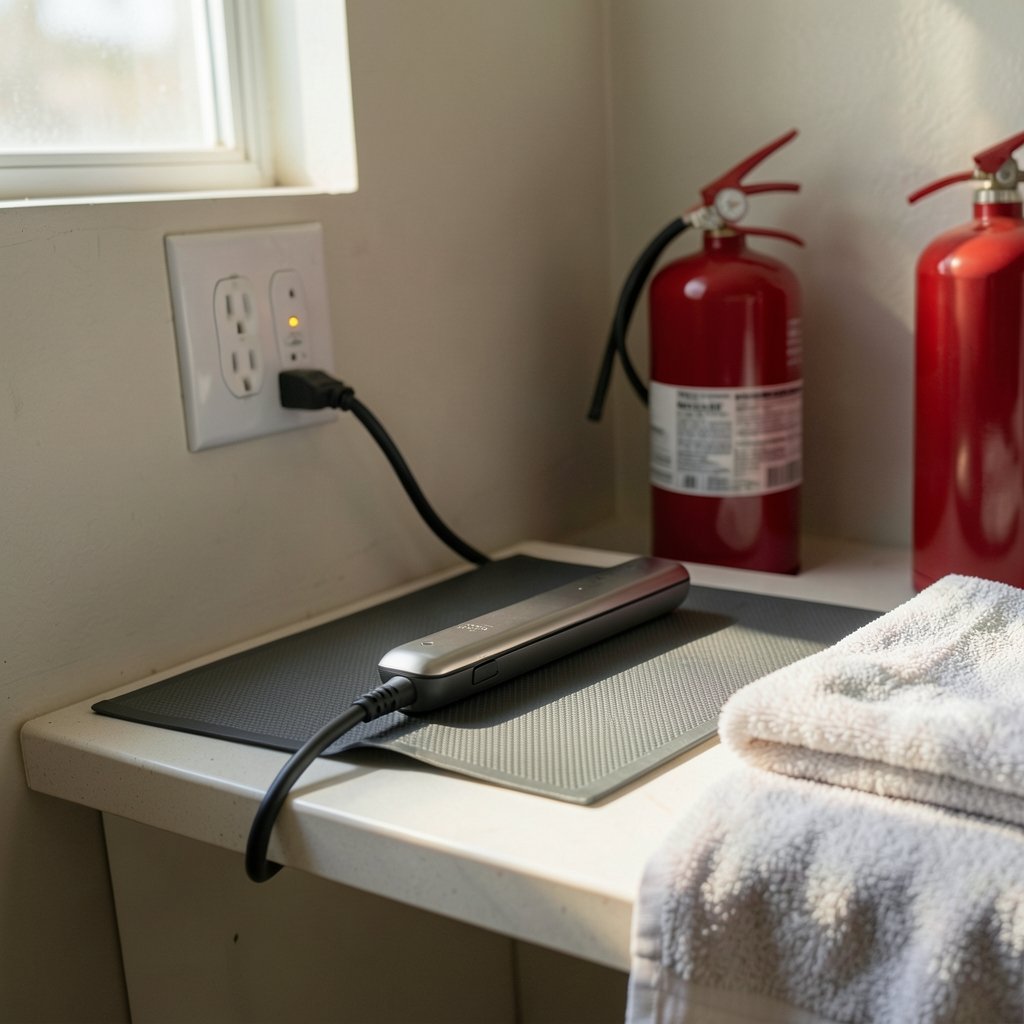
Basic precautions cover most risk: unplug after use, keep the tool away from water and sinks, let plates cool before storage, keep cords away from hot plates, and never leave a hot iron within reach of children.
Chemical Straighteners Are a Different Category
Because the same phrase describes both, a short note is warranted. Chemical relaxers and salon smoothing treatments use strong alkaline or other reactive chemistry to restructure hair permanently. They are regulated as cosmetic products, carry their own risk profile, and should not be evaluated with the same criteria as a flat iron. Anyone comparing “straighteners” online should first confirm which category a product belongs to, because reviews, safety advice, and price ranges do not transfer between them.
Buying Checklist
Before paying, run through this list:
- Adjustable temperature with a clear display, not preset buttons only.
- Fast, even heat-up and stable temperature during use.
- Plate width matched to hair length: narrow for short hair and bangs, wider for long, thick hair.
- A swivel cord long enough to avoid tugging.
- Automatic shut-off, a genuinely useful feature for forgetful users.
- A believable warranty and clear safety documentation.
For buyers researching tools and styling content in more depth, Voozon Media publishes practical guides worth checking alongside manufacturer claims.
Hair Type Considerations
Straighteners behave differently across textures, and adjusting expectations prevents disappointment.
Fine hair straightens fast and overdoses on heat quickly; low settings and quick passes work best. Medium hair is forgiving and suits most tools. Thick or coarse hair needs higher heat, smaller sections, and patience; rushing causes repeated passes. Curly and coily hair deserves special care, since the same bonds that make curls springy are the ones heat breaks, and repeated straightening can permanently loosen the pattern. Chemically treated or color-treated hair is more fragile and generally needs lower heat and more conditioning.
Maintenance and Longevity
A straightener is a small appliance, and small appliances fail in predictable ways. Wipe plates with a damp cloth once cool, never with abrasive cleaners. Store the tool loosely coiled rather than wrapped tightly around itself, which stresses the cord at the joint, the most common failure point. Keep the hinge area free of product residue. If the temperature display becomes erratic or the cord feels warm near the plug, stop using it.
Conclusion
A hair straightener is a simple machine with a simple job: break hydrogen bonds with heat, reshape the hair, and let it cool into its new form. Everything that separates a good result from a fried one sits around that core. Adjustable, moderate heat beats maximum heat. Small sections and one slow pass beat repeated clamping. Preparation and heat protection beat rescue treatments. And knowing whether the product in question is a heated tool or a chemical treatment prevents a whole category of confusion. Choose a tool with real temperature control, use it less often than feels natural, and the hair will keep its shine far longer than any single styling session could deliver.
Frequently Asked Questions
What temperature should a hair straightener be set to?
There is no universal number, and manufacturers and dermatology sources disagree on specifics. The reliable principle is to start low, test on a hidden section, and increase only if a single slow pass fails to smooth the hair. Fine or chemically treated hair generally needs less heat than thick, coarse hair. Repeated high heat is associated with cuticle damage, so erring cooler is safer.
Is a flat iron or a heated brush better for beginners?
A heated straightening brush is more forgiving and faster for fine to medium hair, since it is hard to misuse. A flat iron gives more control and stronger straightening for thick, curly, or coarse hair, but technique matters more. Many people keep a brush for quick touch-ups and a flat iron for full styling.
Can a hair straightener damage hair permanently?
Heat damage to the hair shaft is cumulative and cannot be repaired, because hair is not living tissue. The bonds broken during styling reform as hair cools, which is why the style holds, but repeated high-heat sessions progressively weaken the cuticle. Lower temperatures, heat protectant, and less frequent styling reduce the rate of damage. New growth is unaffected.
How often is it safe to use a hair straightener?
Frequency guidance varies, and no single schedule fits everyone. The consistent theme in hair care advice is that cumulative heat exposure drives damage, so fewer sessions with good technique are better than daily use. Many people style once or twice a week and give hair rest days, especially if it is fine, color-treated, or already showing split ends.
Are chemical straighteners the same as heated straightening tools?
No. Chemical relaxers and salon smoothing treatments permanently alter hair structure using reactive chemistry, while flat irons and heated brushes temporarily reshape hair with heat. They are regulated differently, carry different risks, and their reviews and safety advice do not transfer. Always confirm which category a product belongs to before buying.
What should be checked before buying a hair straightener?
Look for adjustable temperature with a clear display, stable heat during use, plate width matched to hair length, a swivel cord, automatic shut-off, and clear safety documentation. Checking recall databases for unfamiliar brands is a sensible extra step. Temperature control matters more than premium plate marketing.