
Hair Tinsel: What It Is, How to Apply & What to Know
 Abdul WadoodLast updated
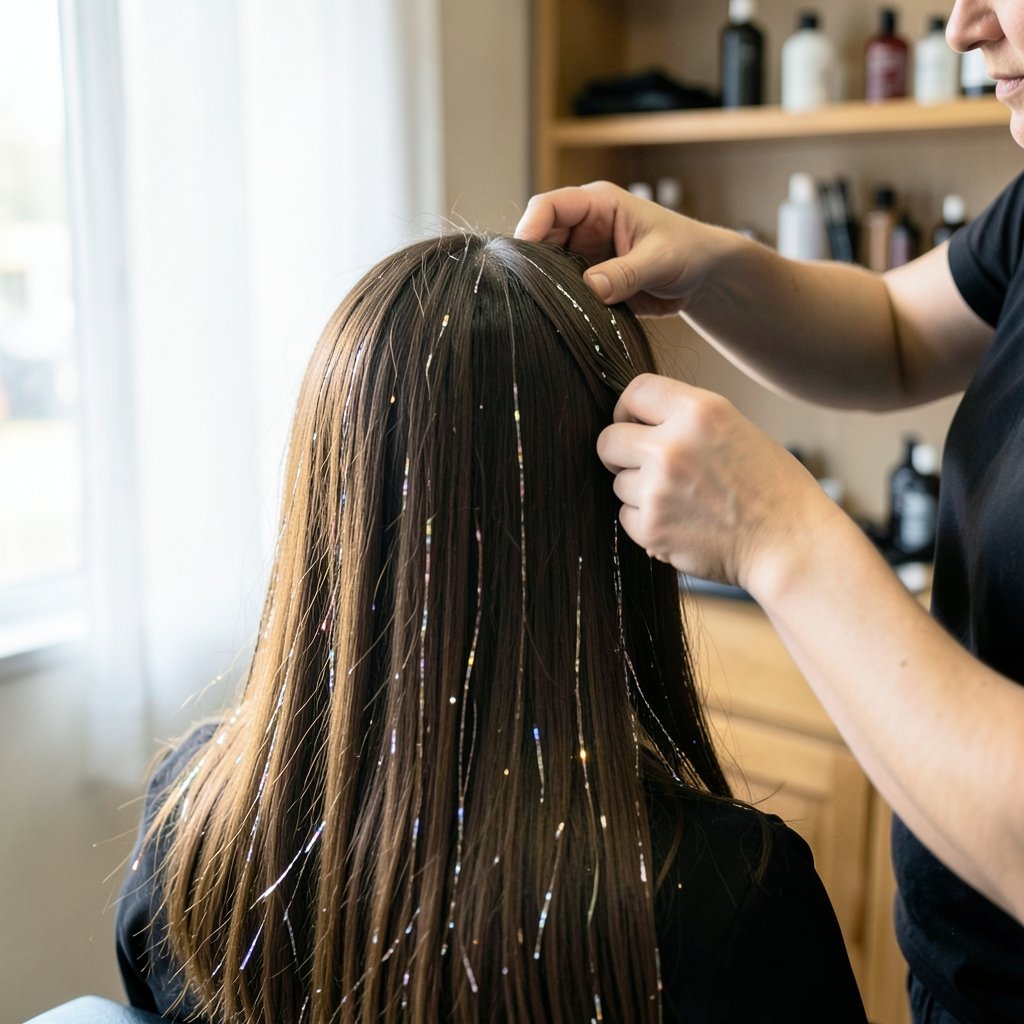
Can a few strands of shimmer really change how a whole head of hair looks? Hair tinsel suggests yes. Walk through any festival, school hallway, or wedding reception and you’ll spot it: fine, light-catching threads tied into the hair, flashing when the wearer turns. It looks expensive. It is usually anything but. And that gap between how it looks and what it costs is exactly why it keeps coming back into style.
This guide covers what hair tinsel actually is, how it’s applied and removed, what it costs, how long it lasts, and the practical risks nobody mentions until something goes wrong.
What Is Hair Tinsel, Exactly?
Hair tinsel is a thin decorative strand, typically made from polyester film and sometimes from silk or a metallic-coated synthetic, that gets tied or knotted into natural hair. It’s also sold as fairy hair or hair glitter. The strand catches light the way a sequin does, but it moves with the hair instead of sitting stiffly on top of it.
Two things separate tinsel from other hair accessories. First, it’s tied in strand by strand, usually with a small slip knot near the root. Second, it’s meant to be temporary. Most pieces are removed by untying or cutting them out within a few weeks.
Composition varies a lot between brands. Some tinsel is soft and heat-sensitive. Some is stiffer and more metallic. That variation matters, because it drives how the product behaves under a flat iron, in chlorinated water, and during removal.
Why Hair Tinsel Keeps Coming Back
Tinsel isn’t new. It circulated as a festival and salon trend through the 2000s and 2010s, then saw a strong resurgence around 2021 to 2023, helped along by short-video platforms where a single before-and-after clip can travel fast. The pattern is familiar: a cheap, visually striking effect that photographs well and takes minutes to install is almost guaranteed to spread.
There’s a practical reason it sticks around too. Tinsel delivers a dramatic look without bleach, dye, or heat. For anyone who wants a visible change without committing to a chemical process, that’s an appealing trade. The broader beauty industry has leaned hard into exactly this kind of low-commitment styling, a shift documented across the beauty and cosmetics industry as temporary and reversible treatments have gained ground.
How Hair Tinsel Is Applied
Application is simple enough that many people do it at home, though salon results tend to look tidier. Here’s the standard method:
- Section the hair. Work with small, clean sections, roughly half an inch wide.
- Choose a strand. Pick a tinsel piece about twice the length you want visible.
- Find the anchor point. Slide the tinsel under a small subsection close to the scalp, leaving an inch or two of slack.
- Tie the slip knot. Loop the tinsel around the hair, pass the end through the loop, and pull gently until it sits snug but not tight.
- Test the tension. The knot should hold without pulling the scalp. If the wearer feels a tug, it’s too tight.
- Trim and repeat. Cut the tinsel to blend with the hair’s length and continue around the head.
The most common mistake is overtightening. A knot that feels secure on day one can become a sore spot by day three, especially near the temples and hairline where the scalp is more sensitive. A good rule: if you can’t slide a fingernail under the knot, it’s too tight.
The second common mistake is tying tinsel to hair that’s already fragile. Fine, thinning, or chemically processed hair holds knots poorly and tangles more readily. Tinsel works best on healthy, medium-to-thick hair. (Tinsel)
How Long Does Hair Tinsel Last?
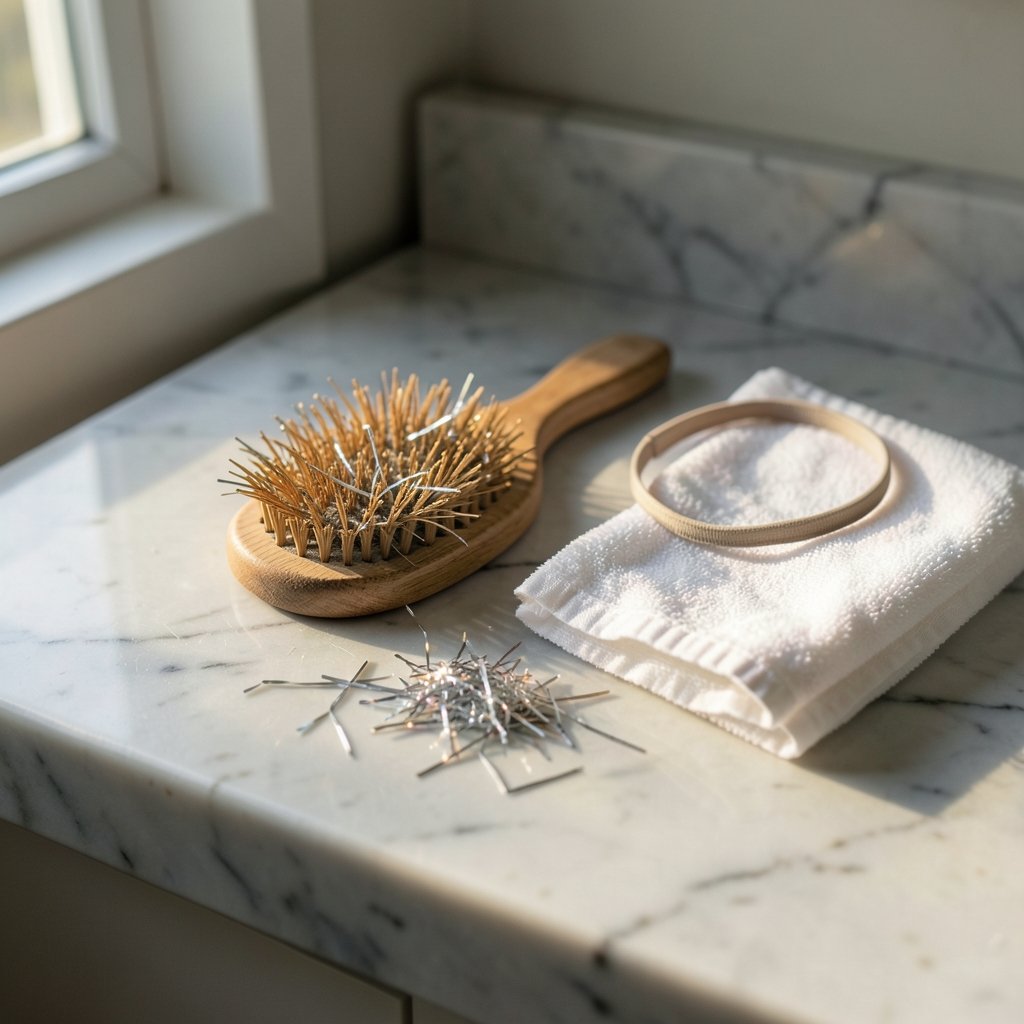
Most tinsel lasts two to six weeks, depending on how it’s tied and how the hair is handled. Heat styling, frequent washing, and rough brushing all shorten that window. Because the knot sits close to the root, normal hair growth also loosens it over time.
| Factor | Extends Life | Shortens Life |
|---|---|---|
| Washing frequency | Every 2–3 days | Daily |
| Heat tools | Avoided or used on low | Flat iron directly on tinsel |
| Brushing | Wide-tooth comb, gentle | Bristle brush, rough detangling |
| Sleeping | Loose braid or silk pillowcase | Tossing with loose hair |
| Water exposure | Quick rinse | Chlorine, salt water, hot tubs |
Chlorinated and salt water are the quiet killers. They can dull the finish and weaken the knot. If tinsel is going into a pool or the ocean, a rinse afterward helps.
What Hair Tinsel Costs
Pricing varies widely by market and method. Loose tinsel is inexpensive, often sold in multi-strand packs. Salon application is the bigger expense, since it’s labor-intensive: a full head can take 30 to 90 minutes depending on how many strands are placed.
As a rough guide:
| Option | Typical Cost Range | Notes |
|---|---|---|
| DIY tinsel pack | Low, per pack | Cheapest; results vary |
| Salon, few strands | Low to moderate | Often an add-on service |
| Salon, full head | Moderate to high | Time-intensive |
| Festival or event booth | Per strand or flat fee | Fast, often temporary |
The value question is worth asking honestly. Tinsel is a look, not a treatment. It doesn’t repair hair, add volume in any structural sense, or last like an extension. Priced as a fun add-on, it makes sense. Priced like a premium service, it rarely delivers enough to justify the spend.
The Real Risks, and How to Manage Them
Hair tinsel is generally considered a low-risk accessory, but “low risk” isn’t “no risk.” The concerns reported anecdotally cluster in a few areas.
Scalp irritation and traction. Knots tied too tightly can pull on the follicle. Over weeks, that constant tension is the mechanism behind traction alopecia, a form of hair loss caused by sustained pulling. Dermatology literature treats traction alopecia as a well-documented condition, and the American Academy of Dermatology maintains patient guidance on hair loss types worth reviewing before committing to any tight style.
Tangling and snagging. Tinsel doesn’t shed the way hair does. A loose strand can wrap around neighboring hair, and removal done hastily can snap strands. Untying slowly, one knot at a time, prevents most of this.
Contact sensitivity. Some people react to the dyes or coatings on synthetic tinsel. A patch test on a small section, left in for a day, is a cheap way to find out before committing to a full head.
Heat damage. Most tinsel is heat-sensitive. A flat iron pressed directly onto a strand can melt or frizz it, and melted plastic near the hair shaft is a genuinely bad outcome. Keep hot tools off the tinsel itself.
Regulatory ambiguity. In the U.S., hair tinsel generally functions as a cosmetic accessory rather than a regulated cosmetic product, though the exact classification isn’t something to assume. The U.S. Food and Drug Administration publishes guidance on how cosmetics are defined and regulated, and it’s the right place to check current rules rather than relying on a blog post.
Removal: Where Most Damage Happens
Removal is the step people rush, and rushing is the problem. The safe approach:
- Work in good light with a fine-tooth comb nearby.
- Locate each knot and loosen it with your fingers before pulling.
- Never yank a knot through the hair. If it won’t release, cut the tinsel just above the knot rather than pulling.
- Detangle gently afterward with a wide-tooth comb, working from ends to roots.
Cutting above the knot is almost always faster and safer than fighting a tight knot. The trade-off is a small amount of tinsel left behind, which will work its way out with normal shedding.
Hair Tinsel vs. Other Temporary Hair Effects
Tinsel isn’t the only way to add sparkle or color without commitment. Here’s how it compares:
| Method | Application Time | Duration | Heat-Safe | Cost |
|---|---|---|---|---|
| Hair tinsel | Minutes to 90 min | 2–6 weeks | Usually no | Low to moderate |
| Hair chalk | Minutes | Until next wash | No | Low |
| Temporary color spray | Minutes | Until next wash | No | Low |
| Clip-in extensions | Minutes | Daily, removable | Yes | Moderate |
| Semi-permanent dye | 30–60 min | 4–8 washes | Yes | Moderate |
Tinsel wins on longevity among the temporary options, and it’s the only one that adds a reflective, light-catching texture rather than flat color. Clip-ins win on reusability. Chalk and spray win on speed. Knowing which trade-off matters most makes the choice straightforward. (Occupational Safety and Health Administration)
Practical Tips That Actually Work
A few habits separate a good tinsel experience from a frustrating one:
- Start with fewer strands than you think you need. Ten well-placed strands read as more intentional than fifty crowded ones.
- Match the length to the haircut. Tinsel cut to the same length as the hair blends naturally. Tinsel cut longer looks like fishing line.
- Place strands away from the part and hairline. These areas show knots and feel tension fastest.
- Skip tinsel on chemically straightened or freshly bleached hair. The cuticle is already compromised.
- Braid before bed. A loose braid keeps knots from catching on pillows and reduces morning tangles.
- Remove at the first sign of soreness. A sore scalp is a signal, not a phase.
For anyone tracking how beauty trends move from niche to mainstream, tinsel is a useful case study. It spreads through visual platforms, costs little to try, and reverses easily, which is a combination that keeps trends alive far longer than their novelty suggests. Publications that cover consumer trend cycles, such as Forbes, regularly document how low-cost, high-visibility products move through social channels, and tinsel fits that pattern almost too neatly.
Conclusion
Hair tinsel is a small, cheap, reversible way to change how hair looks, and that’s the whole appeal. It isn’t a treatment, it isn’t permanent, and it won’t fix anything. What it will do is catch the light and make a hairstyle feel like an event. The people who enjoy it most are the ones who treat it as a temporary accessory, tie it loosely, remove it patiently, and skip it when their hair needs a rest. Get those basics right and tinsel delivers exactly what it promises, no more and no less.
Frequently Asked Questions
How long does hair tinsel last?
Most tinsel lasts two to six weeks. Heat styling, daily washing, chlorine, and rough brushing shorten that window, while gentle handling and loose braids at night extend it.
Can you wash your hair with tinsel in?
Yes, but gently. Wash less often, use a sulfate-free shampoo, and avoid scrubbing the knots directly. Rinse thoroughly and pat dry rather than rubbing with a towel.
Can you use heat tools on hair tinsel?
Generally no. Most tinsel is made from heat-sensitive synthetic film that can melt or frizz under a flat iron or curling wand. Keep hot tools on the natural hair and away from the tinsel strands.
Does hair tinsel damage your hair?
Not when it’s applied and removed correctly. The risks come from knots tied too tightly, which can cause traction on the follicle, and from rushed removal that snaps strands. Loose knots and patient untying prevent most problems.
How much does hair tinsel cost?
Loose tinsel packs are inexpensive. Salon application costs more because it’s labor-intensive, and a full head can take 30 to 90 minutes. Festival booths often charge per strand or a flat fee.
Is hair tinsel safe for kids?
It’s generally low-risk for children old enough to sit still during application and leave the knots alone. Avoid it on very young children, and check with a pediatrician if a child has a sensitive scalp or a history of skin reactions.