
3C Hair Guide: Care Tips & Routine for Curls
 Abdul WadoodLast updated

What do a pencil, a chopstick, and a spring all have in common? If you guessed “the diameter of a 3C curl,” you’re on the right track. 3C hair sits at the tightest end of the curly spectrum in the popular Andre Walker Hair Typing System, and it comes with its own set of joys and frustrations. Tight ringlets, big volume, and a tendency to dry out faster than straight hair are all part of the package. (Hair texture)
This guide breaks down what 3C hair really is, how it differs from its neighbors 3B and 4A, and which routines, products, and habits actually work in practice. It also covers the honest caveats, because the typing system is a useful shorthand, not a scientific law.
What Is 3C Hair, Exactly?
The Andre Walker Hair Typing System classifies hair as Type 1 (straight) through Type 4 (coily), with subtypes A, B, and C. Walker, a celebrity hairstylist, popularized the system in the 1990s and published it in his 1997 book Andre Talks Hair! Type 3 covers curls, and 3C is the tightest of the three subtypes. (Hair loss)
In plain terms, 3C hair forms corkscrew curls roughly the diameter of a pencil or a chopstick. The curls are well-defined when wet but shrink up considerably as they dry. Volume is high, and many people with 3C hair find more than one pattern on their head, with looser waves near the nape and tighter coils at the crown.
It’s worth saying plainly: the typing system is a community and marketing descriptor, not a dermatological or trichological classification. Curl diameter thresholds aren’t standardized, and plenty of people don’t fit neatly into one category. Use “3C” as a starting point for product and routine choices, not as a rigid identity test.
3C Hair Characteristics at a Glance
| Feature | What to Expect |
|---|---|
| Curl shape | Tight corkscrews, pencil to chopstick diameter |
| Shrinkage | Significant, often 30-50% of visible length |
| Texture feel | Dense, springy, sometimes coarse |
| Porosity | Often high, so it absorbs and loses moisture fast |
| Frizz risk | High, especially in humidity or when brushed dry |
| Volume | Naturally full, with a defined root lift |
3C vs. 3B vs. 4A: Where the Lines Blur
The most common confusion is between 3B, 3C, and 4A. The differences are real but gradual, and the boundaries are fuzzy on purpose.
| Type | Curl Size | Key Traits |
|---|---|---|
| 3B | Magic-marker width | Medium ringlets, moderate volume, easier definition |
| 3C | Pencil to chopstick | Tight corkscrews, high volume, more shrinkage |
| 4A | Smaller coil, pen-spring | Dense coils, less visible definition, more breakage risk |
A practical tip from stylists: stop trying to pin down your exact letter and instead test how your hair behaves. If your curls spring back tightly when stretched and shrink heavily when dry, treat your hair like 3C or 4A. If ringlets hold shape with minimal product, you’re likely closer to 3B. Behavior beats labels every time.
Why 3C Hair Dries Out So Easily
Curly and coily hair has a structural quirk: natural oils from the scalp have a harder time traveling down a spiraled strand than a straight one. On a 3C curl, the oil has to navigate every twist and turn, so the ends often end up dry while the scalp stays oily. That’s the root of most 3C complaints, from crunch to frizz.
The National Institutes of Health and other health bodies regularly publish on hair structure and moisture retention, and the takeaway is consistent: moisture management is the whole game for textured hair. Everything below flows from that principle.
The 3C Routine That Actually Works
Forget the twelve-step routines flooding social feeds. A workable 3C regimen has four moving parts: cleanse, condition, style, protect. Here’s how to run it.
Step 1: Cleanse Gently and Less Often
- Shampoo once or twice a week with a sulfate-free cleanser, or use a co-wash (conditioner-only wash) between washes.
- Focus shampoo on the scalp only. Let the runoff clean the mid-lengths and ends.
- Rinse with lukewarm water. Hot water strips moisture and encourages frizz.
Common mistake: washing daily “to keep it clean.” For most 3C hair, that’s a fast track to dryness and breakage.
Step 2: Condition Like You Mean It
Conditioner is not optional for 3C hair; it’s the main event. Apply a rich conditioner from mid-shaft to ends, detangle with fingers or a wide-tooth comb while it’s in, and let it sit for a few minutes. A deep conditioning mask once a week helps rebuild softness, especially if you heat-style or color.
Step 3: Style on Wet Hair
Curl definition lives or dies in the styling step. The tried-and-true sequence:
- Apply a leave-in conditioner to soaking-wet hair.
- Layer a curl cream or gel using the “praying hands” motion, then scrunch upward.
- Plop hair in a microfiber towel or cotton T-shirt for 10-20 minutes to remove excess water.
- Air-dry or diffuse on low heat. Don’t touch the curls while they dry.
That last point matters more than any product. Touching drying curls causes frizz. Hands off until fully dry, then scrunch out the gel cast for softness.
Step 4: Protect at Night
Sleeping on cotton pillowcases roughens the cuticle. A satin or silk pillowcase, a loose pineapple (high ponytail), or a satin bonnet preserves curl shape and cuts down on morning frizz. It’s a small change with an outsized payoff.
Products Worth Knowing About
You don’t need a cabinet full of bottles. A lean 3C shelf looks like this:
- Sulfate-free shampoo or co-wash for gentle cleansing
- Rich conditioner with humectants and oils
- Deep conditioner or hair mask for weekly repair
- Leave-in conditioner for daily moisture
- Curl cream or gel for hold and definition
- Lightweight oil or serum to seal ends
What actually works in practice: layering a water-based leave-in under a gel. Water-based products hydrate; gels lock the shape. Heavy butters and waxes often weigh 3C curls down and leave them greasy, so save those for tighter textures.
Refreshing 3C Hair Between Wash Days
Second-day curls don’t have to mean a full wash. A refresh routine keeps definition alive:
- Spritz sections with water or a water-and-leave-in mix.
- Scrunch gently to reactivate product.
- Re-apply a small amount of gel to frizzy spots.
- Diffuse or air-dry.
If your curls look flat, flip your head upside down and shake the roots loose. Volume often returns with a little encouragement.
Common 3C Mistakes to Avoid
Even well-intentioned routines go sideways. Here are the missteps that show up again and again.
Brushing dry hair. A brush on dry 3C hair turns ringlets into a cloud of frizz. Detangle only when wet and coated in conditioner.
Over-washing. Daily shampooing strips the natural oils that curly hair already struggles to distribute.
Skipping the gel cast. Many people fear crunch and skip hold products entirely. The fix isn’t less gel; it’s scrunching out the cast once dry.
Chasing someone else’s curl pattern. Comparing your hair to an influencer’s 3C curls sets you up for frustration. Density, porosity, and climate all change the outcome.
Ignoring porosity. Two people with identical curl patterns can need completely different products. High-porosity hair drinks up moisture and loses it fast; low-porosity hair resists absorption. Test yours and adjust.
The Honest Caveats About Hair Typing
The Walker system is convenient, but it has real limits. It was designed by a stylist for practical salon use, not validated through scientific research. Curl patterns exist on a continuum, and many people have two or three patterns on one head. Hair typing also says nothing about porosity, density, or elasticity, which matter more for product choice than curl diameter does.
The practical takeaway: use “3C” to find community, product recommendations, and a starting routine. Then let your own hair tell you what to adjust. If a product marketed for 3C leaves your hair crunchy or limp, your hair is right and the label is wrong.
When to See a Professional
If you’re dealing with sudden shedding, scalp pain, or breakage that doesn’t improve with gentler care, see a dermatologist or a trichologist. Hair loss has many causes, from nutritional gaps to hormonal shifts, and no curl cream fixes those. A stylist trained in curly hair can also help with shape, layering, and a trim schedule that supports your pattern.
Conclusion
3C hair is tight, springy, and full of personality, and it rewards a routine built on moisture, patience, and gentle handling. Cleanse less, condition more, style on wet hair, and protect your curls at night. Treat the typing system as a helpful map rather than a strict rulebook, and pay attention to what your own hair does rather than what a label says it should do. Do that, and the pencil-width ringlets take care of the rest.
Frequently Asked Questions
What does 3C hair look like?
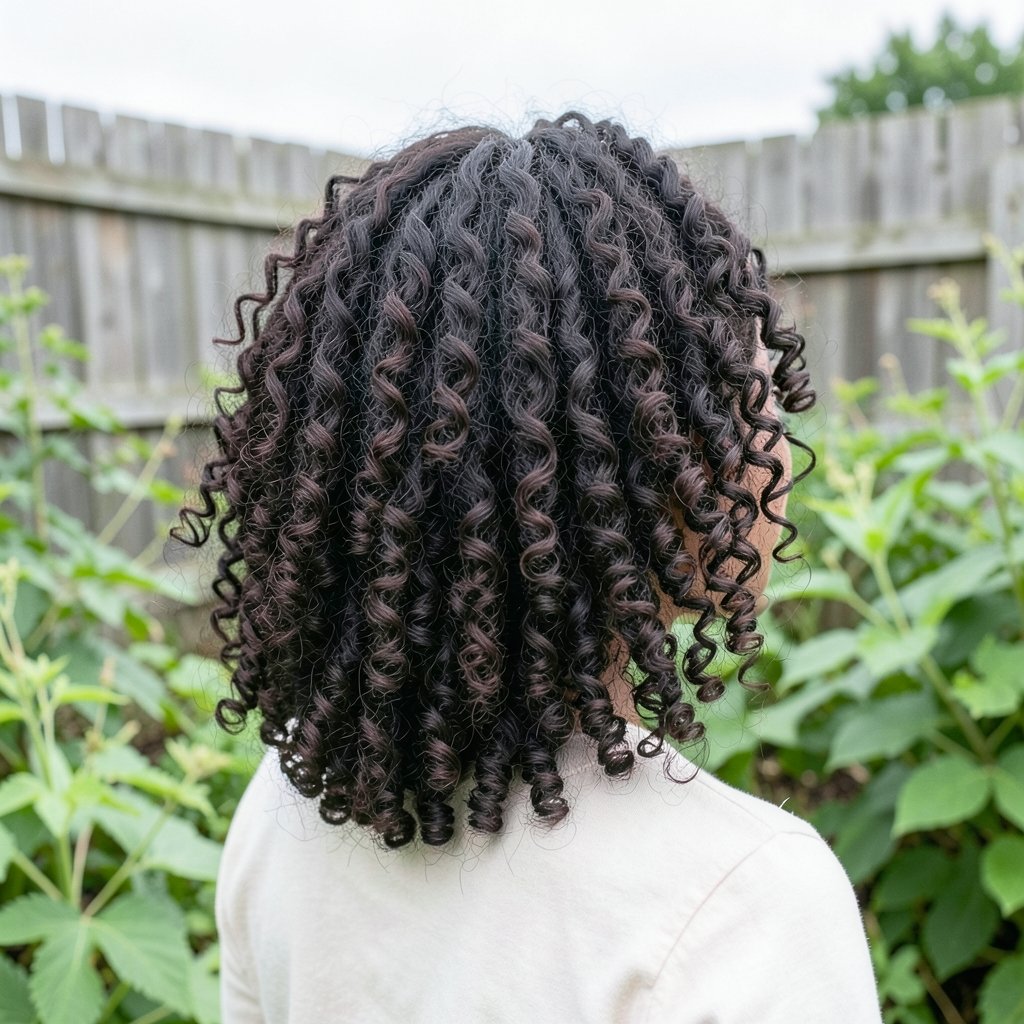
3C hair forms tight corkscrew curls about the width of a pencil or chopstick. It tends to be voluminous, well-defined when wet, and prone to significant shrinkage as it dries. Many people with 3C hair also have looser waves or tighter coils in different areas of the head.
Is 3C hair curly or coily?
It sits right at the border. In the Andre Walker system, 3C is the tightest subtype of Type 3, which is classified as curly. In everyday conversation, many people describe 3C as “curly-coily” because the corkscrew shape is tight enough to behave like a coil, especially regarding shrinkage and dryness.
How often should 3C hair be washed?
Most people with 3C hair do well washing once or twice a week with a sulfate-free shampoo or co-wash. Washing daily tends to strip moisture and increase frizz. Between washes, a water-and-leave-in refresh spray keeps curls defined without a full wash day.
Why does my 3C hair get so dry?
Natural scalp oils travel slowly down spiraled strands, so the ends of 3C curls often lack moisture even when the scalp is oily. High porosity, heat styling, and harsh cleansers make it worse. Weekly deep conditioning, leave-in products, and sealing ends with a light oil are the standard fixes.
Can 3C hair be brushed?
Not when it’s dry. Brushing dry 3C hair disrupts the curl pattern and creates frizz. Detangle only when the hair is wet and saturated with conditioner, using fingers or a wide-tooth comb, working from the ends upward in small sections.
What is the difference between 3B and 3C hair?
3B curls are wider, roughly marker-width, and hold definition with less product. 3C curls are tighter, smaller in diameter, and shrink more as they dry. 3C hair usually needs more moisture and stronger hold to maintain definition, while 3B hair can often get by with lighter styling products.
Does 3C hair need a special haircut? Yes, ideally. Cutting 3C hair dry, curl by curl, lets a stylist see how the ringlets sit at their natural length instead of guessing after shrinkage. Ask for a stylist experienced with textured hair, and book regular trims every 8–12 weeks to remove split ends before they travel up the strand.
Final word: start with the four-step routine above, give it a few weeks, and adjust one variable at a time. Moisture, patience, and gentle handling do more for 3C curls than any single product ever will.